

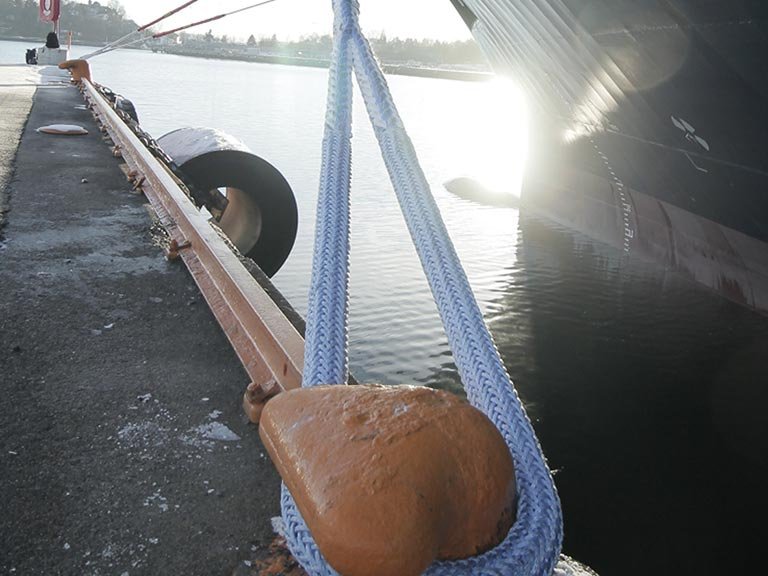
How do ships stay stable and secure while docked in harsh weather? A mooring line connects vessels to fixed structures like docks, piers, or buoys. It prevents unwanted movement and damage to ships and port infrastructure.
Understanding Mooring Lines: Definition and Purpose
Mooring lines are essential for securing marine vessels to docks, buoys, or fixed points. They ensure stability and safety. A mooring line, also known as a mooring rope or dock line, is crucial for securing yachts, large ships, or oil platforms.
Basic Definition of Mooring Lines
A mooring line is designed for stability in harsh weather, preventing dangerous movement. It’s essential for safety, making it a vital part of marine equipment. Its primary function is to secure a vessel to a fixed point, preventing it from drifting or moving uncontrollably.
| Type of Vessel | Typical Mooring Line Material | Primary Use |
| Yachts | Nylon or Polyester | Recreational boating |
| Large Ships | Steel Wire or Synthetic Ropes | Commercial shipping |
| Oil Platforms | High-strength Synthetic or Steel | Offshore oil extraction |
The Critical Role of Mooring Lines in Maritime Operations
Mooring lines are crucial for maintaining vessel position during cargo operations. They ensure efficiency and prevent delays in shipping schedules. Proper mooring is essential for crew safety, preventing unexpected vessel movements that could lead to accidents or injuries.
In challenging weather, reliable mooring systems are even more critical. They must withstand increased forces from wind, waves, and currents. Mooring lines contribute to environmental protection by preventing vessel collisions with port infrastructure or other vessels, which could result in fuel spills or other environmental damage.
- Mooring lines are integral to overall port operations, affecting everything from berthing procedures to emergency response protocols in maritime environments.
- The reliability of mooring lines directly impacts the safety and efficiency of maritime operations, highlighting their critical role.

The Anatomy of a Mooring Line
Understanding a mooring line’s anatomy is crucial for maritime professionals. It’s not just a simple rope; it’s a complex system with various components. Each playing a vital role in its overall performance.
Core Components and Structure
The core of a mooring line is its materials, such as synthetic fibers, wire ropes, or a mix of both. The structure varies, with different ropes and lines for different uses. For example, a mix of wire rope and synthetic line is more elastic and easier to handle than pure wire rope. Yet, it’s less elastic than a pure synthetic line.
- Mooring lines are crafted from materials like nylon, polyester, and polypropylene, each with unique strengths and weaknesses.
- The tensile strength of a mooring line is crucial for its suitability in maritime operations.
- Knowing the technical specs of mooring lines, such as elongation percentages, is key for safe use.
Common Terminology in Mooring Systems
Mooring systems use specialized terms that maritime professionals must grasp. Terms like “breaking strength,” “working load limit,” “elongation,” and “snapback” are vital for safe operation and maintenance. It’s also important to understand the difference between static and dynamic loads for selecting the right mooring line.
- Industry-specific terms like “lay,” “strand,” “braid,” and “core-dependent” are crucial for effective communication about mooring equipment.
- Knowing mooring arrangements, including terms like “breast line,” “spring line,” and “headline,” is essential for setting up complete mooring systems.
Types of Mooring Lines by Material
The material of mooring lines greatly affects their performance and durability in marine environments. Mooring lines are made from various materials, each with its own strengths and weaknesses. This makes some more suitable for specific applications than others.
- Nylon Mooring Lines: Nylon mooring lines are known for their elasticity and resistance to abrasion. They are a popular choice for many maritime applications due to their ability to absorb shock loads and ease of handling.
- Polyester Mooring Lines: Polyester mooring lines offer excellent strength and resistance to stretching. They are ideal for long-term mooring operations due to their chemical resistance and UV protection.
- Polypropylene Mooring Lines: Polypropylene mooring lines are lightweight and float on water, making them easy to handle for temporary moorings. However, they have lower strength and are more prone to UV degradation.
- UHMWPE (Dyneema) Mooring Lines: UHMWPE, or Dyneema, mooring lines are known for their exceptional strength-to-weight ratio. They are incredibly strong while being relatively lightweight, with low stretch and high resistance to abrasion.
- Steel Wire Mooring Lines: Steel wire mooring lines are renowned for their high tensile strength and durability. They are suitable for securing large vessels and offshore structures. However, they are heavy, prone to corrosion, and require regular maintenance.
Steel wire mooring ropes provide exceptional strength and minimal stretch. They are historically important for securing large vessels. Their high tensile strength and resistance to abrasion make them suitable for harsh conditions, despite handling challenges.

Mooring Line Construction and Design
Understanding mooring line construction and design is essential for optimal maritime performance. The construction significantly impacts durability, flexibility, and effectiveness in securing vessels.
- Three-Strand Ropes: Three-strand ropes are a traditional and widely used type of mooring line. They are constructed by twisting three strands together, offering a good balance between strength and flexibility. However, they may not be as resistant to twisting forces as more complex constructions.
- Eight-Strand Braided Ropes: Eight-strand braided ropes provide superior resistance to rotation and are known for their excellent handling characteristics. They are suitable for a variety of mooring applications, offering a good balance between strength and manageability.
- Double-Braided Ropes: Double-braided ropes have a braided core wrapped in another braided layer. This design boosts their strength and durability. They stand out for their resistance to wear and their capacity to handle heavy loads.
- Twelve-Strand Braided Ropes: Twelve-strand braided ropes are crafted with a premium technique. They offer high tensile strength and excellent resistance to twisting. Ideal for large vessels and heavy-duty mooring, they come with several benefits.
Understanding the various structures and designs helps maritime professionals select the appropriate mooring lines. This ensures safe and efficient operations.
Essential Mooring Line Arrangements
Mooring line arrangements are crucial for vessel safety and security at berths. Carefully designed mooring lines can secure ships in place. They prevent excessive movement caused by external forces such as waves, wind, and tides.
- Head Lines and Stern Lines: Head lines and stern lines are key to a mooring system. Head lines are at the bow, while stern lines are at the stern. These lines keep the vessel from moving forward or backward along the dock. We ensure they are securely fastened to withstand various environmental conditions.
- Spring Lines: Spring lines prevent the vessel from moving forward or backward along the dock. They are attached at an angle and are vital for maintaining the vessel’s position. Spring lines work with head and stern lines to ensure a stable mooring.
- Breast Lines: Breast lines keep the vessel close to the dock, preventing sideways movement. They are essential for maintaining the vessel’s position, especially in areas with strong currents or winds. Proper tensioning of breast lines is crucial for vessel stability.
- Complete Mooring Systems: A complete mooring system integrates head, stern, spring, and breast lines into a coordinated setup. The configuration varies based on vessel type, size, berth characteristics, and environmental conditions. Modern systems often include automated tension monitoring and adjustment for optimal line tension.
| Mooring Line Type | Purpose | Attachment Point |
| Head Lines | Prevent forward movement | Bow of the vessel |
| Stern Lines | Prevent backward movement | Stern of the vessel |
| Spring Lines | Prevent longitudinal movement | Angle to the vessel |
| Breast Lines | Prevent sideways movement | Perpendicular to the dock |

Applications of Mooring Lines in Different Maritime Settings
Mooring lines are vital for safe maritime operations, from ports to offshore platforms. Their versatility and reliability make them essential in various maritime applications.
- Port and Harbor Mooring: In ports and harbors, mooring lines secure vessels to docks and buoys. The material and design of these lines vary based on vessel size, environmental conditions, and stay duration. Polyester and UHMWPE ropes are favored for their low elongation, corrosion resistance, and durability.
- Offshore Mooring Systems: Offshore mooring systems secure floating structures like oil platforms and FPSOs. They need specialized lines that can handle harsh marine conditions and heavy loads. UHMWPE ropes are preferred for their strength and abrasion resistance in these environments.
- Recreational Vessel Mooring: Recreational vessels use mooring lines to dock at marinas. The material choice depends on handling ease, abrasion resistance, and durability. Nylon lines are popular for their elasticity and abrasion resistance, making them ideal for recreational use.
- Specialized Applications: Mooring lines serve in specialized tasks like ship-to-ship transfers and temporary moorings during salvage. They also secure floating equipment for offshore construction. Mooring buoys need specific lines to stay in place under changing conditions and accommodate different vessel sizes.
In conclusion, mooring lines face diverse and demanding applications. The right choice and maintenance are crucial for safe maritime operations. Whether in ports, offshore, or recreational settings, the correct mooring line significantly impacts safety and efficiency.
How to Choose the Right Mooring Line
Choosing the right mooring line is crucial for safe and effective mooring. It’s important to consider several factors that affect both safety and efficiency. These factors include the size and weight of your vessel, environmental conditions, and the line’s strength and elasticity.
Vessel Size and Weight Considerations
Choosing the right mooring line is crucial for safe and effective mooring. It’s important to consider several factors that affect both safety and efficiency. These factors include the size and weight of your vessel, environmental conditions, and the line’s strength and elasticity.
- Vessel Size and Weight: The size and weight of your vessel are key in picking the right mooring line. Larger, heavier vessels need stronger, more durable lines to stay securely moored. Assess your vessel’s size and weight to find a line with the right strength and durability.
- Environmental Factors: Environmental conditions like wind, currents, and water conditions are vital in choosing a mooring line. High-elongation nylon ropes are great for reducing impact on vessels and docks. On the other hand, low-elongation ropes like UHMWPE and polyester offer precise control and stability.
- Strength and Elasticity Requirements: The strength and elasticity of a mooring line are critical for its performance. Lines with the right strength and elasticity can absorb shock loads and prevent failure. UHMWPE ropes, for example, are strong with low elongation, making them ideal for stability and strength.
- Budget and Longevity: When selecting a mooring line, balance initial costs with long-term value. Premium lines may cost more upfront but offer better economics through longer service life and less frequent replacements. Regular inspections and replacements are key to extending mooring line life while ensuring safety.

Proper Mooring Line Maintenance and Care
Maintaining your mooring lines is essential for safe and efficient maritime operations. Regular maintenance extends the life of your ropes and prevents accidents from line failures.
Inspection Routines
Regularly inspecting mooring lines is the first step in maintaining their integrity. Look for signs of wear like fraying, cuts, or abrasion. Also, check for any changes in diameter or texture, which can indicate internal damage.
- Check for visible signs of damage or wear.
- Inspect the lines for any changes in diameter or texture.
- Verify that all fittings and connections are secure.
Cleaning and Storage Practices
Keeping mooring lines clean and stored properly can greatly extend their life. We recommend using mild soap and water to clean your mooring ropes, removing dirt and debris. After cleaning, make sure the lines are completely dry before storing them in a cool, dry place. This should be away from direct sunlight.
- Please clean with mild soap and water, avoiding the use of harsh chemicals. This will extend the service life of the mooring rope and prevent damage.
- When not in use, store the mooring rope in a cool, dry place away from direct sunlight. This will reduce the risk of material degradation.
When to Replace Your Mooring Lines
Knowing when to replace mooring lines is key to safety. You should replace them when they show significant wear or have reached their service life. Look for signs like cuts over 10% of the diameter, significant abrasion, visible core exposure, or permanent deformation.
- Replace lines with significant wear or at the end of their service life.
- Look for specific damage indicators like cuts or abrasions.
- Consider environmental factors, such as UV exposure, when assessing line condition.

Safety Considerations and Best Practices
Safe mooring practices are crucial for protecting vessels, crew, and infrastructure. Mooring operations involve complex interactions between equipment, personnel, and environmental factors. Safety is a top priority.
Understanding Snapback Zones
Snapback zones are areas where a mooring line can recoil with significant force if it fails or is released suddenly. It’s vital to understand and identify these zones to prevent injuries and damage. Crew members should be aware of the risks and take precautions to avoid these areas during mooring operations.
Proper Handling Techniques
Proper handling techniques are essential for safe mooring operations. Using synthetic ropes, like UHMWPE mooring lines, is recommended due to their flexibility and ease of handling. Training crew members in the correct methods for handling, securing, and releasing mooring lines can significantly reduce accident risks.
Emergency Procedures
Establishing and practicing emergency procedures for mooring line failures is crucial. This includes protocols for immediate actions to secure the vessel, communication protocols, and the deployment of backup systems. Understanding weather-related emergency procedures, such as adding additional mooring lines or seeking shelter, is also essential. Post-emergency inspections of all mooring equipment are critical to identify potential issues with other lines that may have experienced similar stresses.
- Ensure that all crew members are trained in emergency procedures and understand their roles.
- Regularly inspect mooring equipment to prevent failures and address potential issues promptly.
- Maintain redundancy in mooring arrangements to ensure vessel stability in case of line failure.
Conclusion
Mooring lines are a critical component of maritime safety and operational efficiency. They serve as the connection between vessels and fixed infrastructure in a dynamic marine environment. Proper selection must consider multiple factors. These include vessel size, environmental conditions, operational requirements, and safety considerations.
As a professional marine equipment dealer, Zhonghaihang Shipping Supply is committed to providing professional protection solutions for offshore operations. We offer high-quality pneumatic fenders, rubber fenders, and marine airbags. These products ensure that our customers achieve the highest standards of safety and operational excellence.

FAQ
What factors should be considered when choosing a mooring rope for a vessel?
How often should mooring lines be inspected and maintained?
What are the advantages of using nylon ropes for mooring?
What is the significance of tensile strength in mooring lines?
How do environmental factors influence the choice of mooring lines?
Talk to our team.
Share a few details about your project — vessel, port, or operation. We'll reply within 24 hours.