

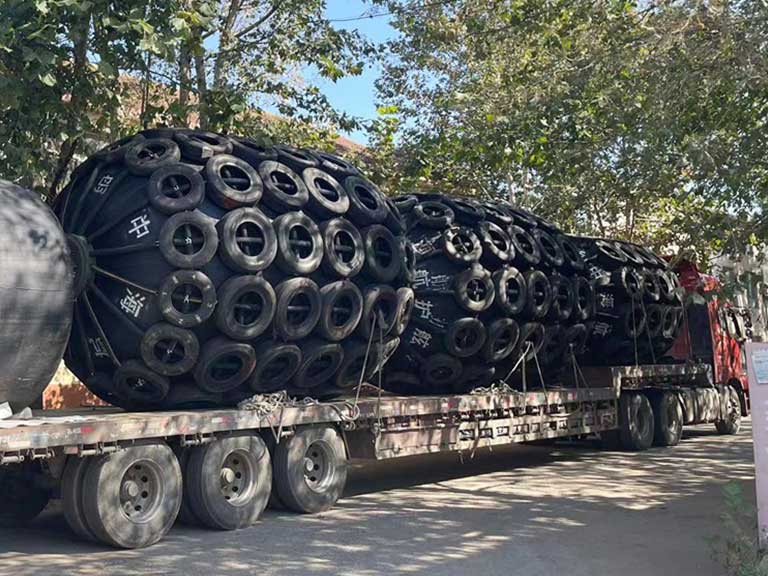
Can your marine fender system handle the impact of a big ship docking at your port? Marine rubber fenders are very important for port operations. They protect both the wharf and the vessel from harm by absorbing the kinetic energy of berthing vessels. Making sure these systems work well and are safe is really important.
Zhonghaihang Shipping Supply has a wide choice of marine equipment supplies, such as pneumatic fenders and rubber fenders. These are meant to give shipyards and harbor owners professional protection.
This post will go over the whole process of fender testing. So that you know how to make sure your marine protection systems satisfy industry standards.
Why it is important to test fenders for maritime operations
Fender testing is critical because it can uncover manufacturing errors, material defects, and design flaws. These defects may not be detected until catastrophic failures occur during actual mooring operations. Regular testing of a fender over its life helps find problems before they affect performance. So, repair or replacement can happen before safety is at risk.
Proper fender performance testing keeps failures and accidents from happening that would cost a lot of money.
- Regular testing finds problems before they get worse. So repairs or replacements can be done on time.
- Thorough testing finds possible failure spots, which shows how extensive testing processes may save money right away.
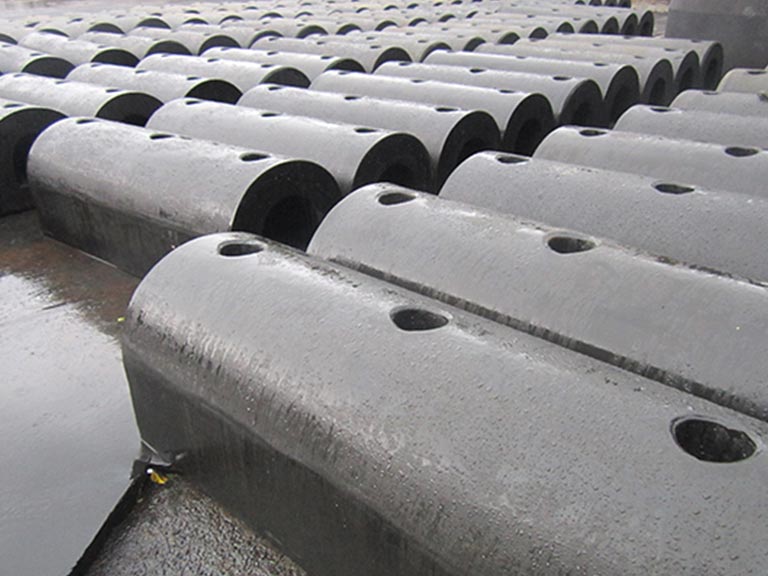
Essential Equipment and Setup for Fender Performance Test
To do a fender performance test, you need to plan carefully and have the necessary tools. To get accurate and dependable findings, the test area must be well-designed.
Tools and machines needed for testing
Rigorous fender performance testing requires specialized equipment that simulates real-world conditions. These testing facilities are equipped with powerful machinery capable of withstanding the immense forces generated during compression and shear testing.
The machines have high-capacity equipment for compression and shear testing, which lets us evaluate fenders in a variety of situations. This equipment is very important for checking that fenders work properly and satisfy the necessary standards.
Making the Right Testing Space
To get accurate test results, it’s important to set up a good testing environment. Need to set up regulated testing rooms with stable bases that can handle the stresses that come up during testing.
- Testing facilities have enough space and safety zones to handle a lot of deformation during maximum compression testing.
- Need lot of safety measures, like pressure relief systems and protective barriers, to keep testing staff safe during high-pressure testing.
- The temperature and humidity in testing facilities stay the same so that outside factors don’t affect the results.
- Testing sets precisely mimic real-world installation situations so that performance verification shows how well the fender works at a berthing site.
Test findings are accurate and dependable by carefully choosing the test location and managing the atmosphere. This gives us useful information about how well the fender works.

Comprehensive Fender Performance Test Methods
For the safety and efficiency of marine operations, it is important to do full fender performance tests. It’s important to know how marine fenders absorb energy and respond to forces in order to dock safely. The way fenders work depends on both reaction force and energy absorption.
Compression Testing Procedures
Compression testing is a basic way to see how well a fender works. It entails squeezing the fender to assess its response force and energy absorption capacity.
- Proper Compression Test Setup: To do a proper compression test, you need to use calibrated tools to apply exact stresses to the fender and measure how much it bends. This technique helps make precise energy absorption curves that show how well the fender works.
- Interpreting Compression Test Results: To understand the results of compression testing, you need to look at the data on energy absorption and response force. This analysis helps us figure out how the fender will work while a ship is docked. This makes sure it can safely absorb the kinetic energy.
Conducting Effective Shear Tests
Shear testing is another important way to check how well a fender works. Especially when it is used at varying berthing angles. It tests how well the fender can handle shear stresses without breaking.
We test the fender’s shear strength by applying controlled shear forces to it and measuring how it reacts. This helps figure out how strong the fender is and how well it can protect both the ship and the berthing structure.
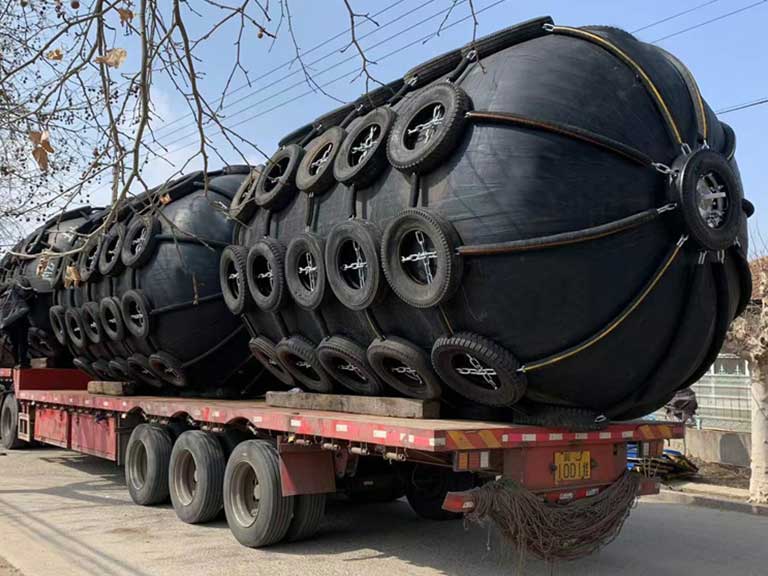
Weather Resistance and Environmental Testing
Marine fenders are exposed to a wide range of weather, such as very hot or cold temperatures, saltwater, and UV rays. Testing for weather resistance checks how well the fender holds up in various situations.
We evaluate fenders in the environment by putting them in settings that are like those in the real world. This testing helps make sure that the fenders can handle the tough sea environment and keep working well over time.
Energy Absorption and Reaction Force Measurement
Measuring energy absorption and reaction force are important parts of measuring the performance of a fender. Energy absorption testing shows how much energy the fender can take when it is hit. And reaction force measurement shows how much force the fender pushes back when it is compressed.
Our testing equipment uses very exact forces and measures deflection at the same time. This lets us make accurate energy absorption curves. We check the response force by measuring the counterforce that the fender makes as it is compressed, making sure it stays within safe limits.
| Testing Method | Purpose | Key Measurements |
| Compression Testing | Evaluate energy absorption and reaction force | Deflection, Reaction Force, Energy Absorption |
| Shear Testing | Assess shear strength and performance under berthing angles | Shear Force, Displacement |
| Weather Resistance Testing | Evaluate durability under environmental conditions | Material Degradation, Performance Retention |
| Energy Absorption and Reaction Force Measurement | Determine energy absorption capacity and reaction force | Energy Absorption, Reaction Force |
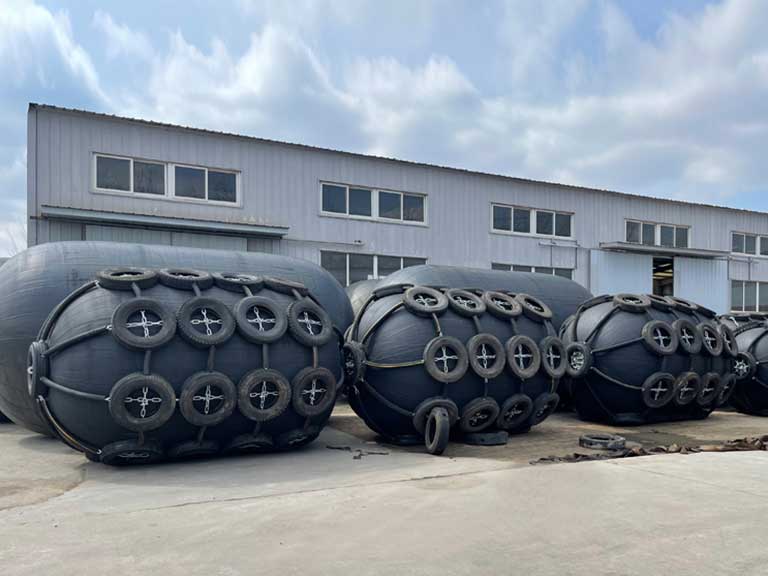
Industry Standards and Compliance in Fender Performance Testing
To make sure that fenders work properly in marine settings, they must meet industry requirements. We follow strict testing procedures to make sure our fenders meet or exceed the standards specified by well-known organizations.
PIANC and BS6349 are two important standards that control fender performance testing. To be compliant, fenders must meet certain testing procedures and performance criteria set out in these standards. We make sure that our testing procedures follow these criteria so that our fenders are reliable and work well.
- PIANC standards provide guidelines for designing and testing fender systems. The focus is on how much energy they can absorb and how much force they can react with.
- BS6349 provides comprehensive guidance on designing, building, and maintaining maritime structures, including fender systems.
Our testing methods are made to meet or go above and beyond these criteria. So, our fenders can be used in a lot of different marine settings.
Conclusion
In the marine business, it is very important to do thorough tests on fender performance. By investing in rigorous fender performance testing, maritime operators can safeguard valuable port infrastructure. This ensures the safety of personnel and equipment.
At Zhonghaihang Shipping Supply, we emphasize the importance of conducting comprehensive fender performance testing. This ensures that marine fenders can absorb energy to protect vessels and port infrastructure.

FAQ
What is the purpose of marine fender testing?
What are the key factors that affect fender performance?
What standards govern marine fender testing?
Can fender testing be conducted in-house?
How do I choose the right fender for my maritime operation?
Talk to our team.
Share a few details about your project — vessel, port, or operation. We'll reply within 24 hours.