


Buoys float on water, anchored or drifting with currents. They aid navigation, monitor weather, and serve as safety markers. Ever curious about how buoys stay afloat, guiding ships and ensuring safety at sea? Buoys are key to maritime safety, and knowing how they work is vital.
Through physics, they stay afloat while performing these roles. We delve into the world of buoys, looking at their design and purpose in marine environments.
The Science Behind Buoys: Understanding Buoyancy
Buoyancy is key to understanding buoys. It’s the upward force water exerts on objects, opposing their weight. This principle guides buoy design and function.
Basic Principles of Buoyancy
Archimedes’ Principle underpins buoyancy. It says the buoyancy force equals the fluid’s weight displaced. For a buoy to float, it must displace more water than it weighs. Its shape and size are crucial for this.
Today’s buoys vary in shape and size for different uses. Their diameter ranges from 30.5-40 cm for drifting buoys to 1.5-12 meters for moored ones. This size variation is essential for their functions, like navigation or weather monitoring.
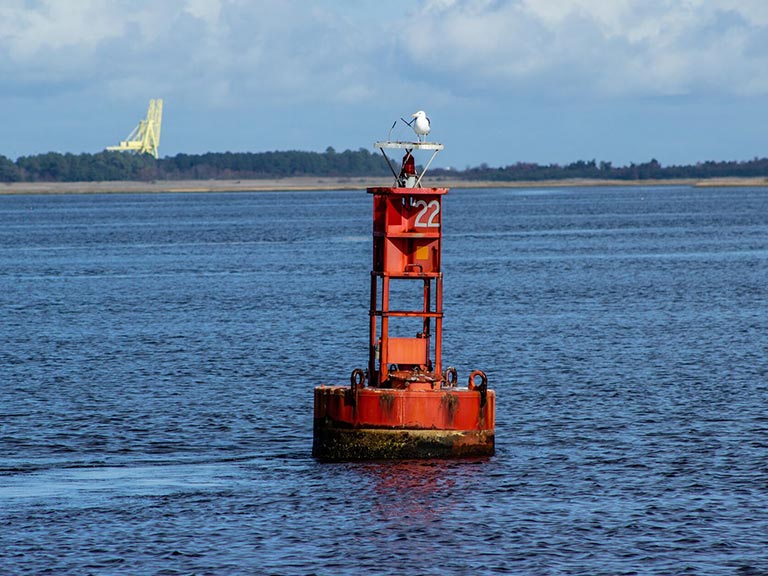
Materials and Design Considerations
Buoy materials have evolved from wooden barrels to composites like fiberglass and plastic. These are chosen for durability against corrosion, freezing, and marine life. Design also considers UV protection, corrosion resistance, and impact from vessels or debris.
| Material | Characteristics | Applications |
| Fiberglass | Durable, resistant to corrosion | Navigational buoys, moored buoys |
| Aluminum | Lightweight, strong | Drifting buoys, special purpose buoys |
| Foam-filled Metal | High buoyancy, durable | Large navigational buoys, mooring buoys |
The mooring system is crucial for buoy design, especially for mooring buoys. The attachment points and configurations are planned for water depth, current strength, and function. This ensures the buoy stays in place and works as intended.
Types of Buoys and Their Functions
Buoys are essential in maritime activities, serving various purposes from navigation aids to scientific research tools. There are many types of buoys, which provide support for safety, scientific research, and military operations.
Navigational Buoys
Navigational buoys are vital for safe sea travel, marking channels and hazards. They are designed with specific colors, shapes, and lights to convey messages. Lateral buoys mark channel edges, while cardinal buoys indicate hazards and safe directions.
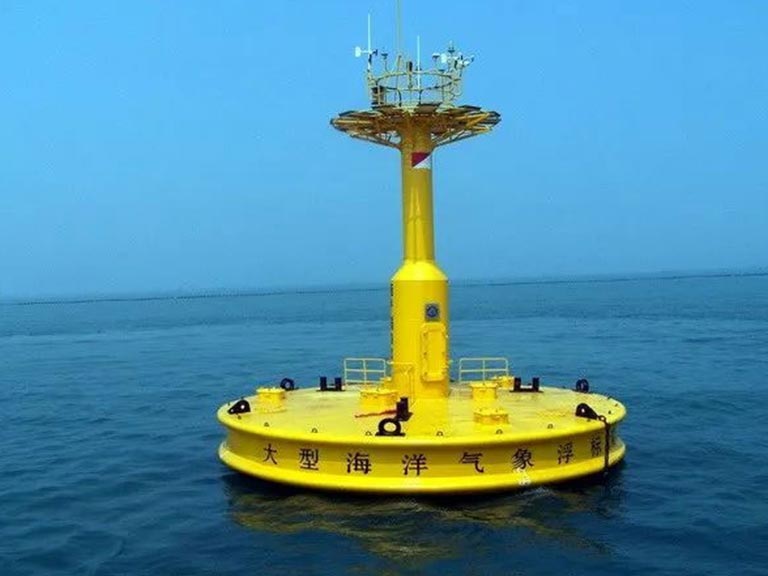
Moored vs. Drifting Buoys
Buoys are categorized into moored and drifting types. Moored buoys are anchored to the seabed, offering stable data or navigation aid. Drifting buoys, however, move with ocean currents. They are used for tracking ocean currents, weather patterns, and transient phenomena.
Mooring buoys are used for long-term deployments, like navigation aids or weather monitoring. Drifting buoys are more flexible for temporary or experimental uses. They are used for tracking marine life or monitoring short-term weather events.
Special Purpose Buoys
Special purpose buoys serve beyond navigation, for scientific, safety, and military uses. Examples include tsunami detection buoys, weather buoys, wave buoys, and research buoys. Each is designed for specific roles. For instance, tsunami detection buoys use pressure sensors to provide early warnings of devastating waves.
- Tsunami detection buoys: Use pressure sensors for early warning systems.
- Research buoys: Collect data for scientific studies, such as tracking marine mammal movements or monitoring ocean acidification.
- Military applications: Include sonobuoys for submarine detection and target buoys for naval gunnery practice.
How Buoys Work in Navigation Systems
Buoys are essential in navigation systems, guiding vessels through complex waterways. They ensure safe passage and prevent accidents.
Understanding Buoy Markings and Colors
Buoy markings and colors are standardized for clear guidance to mariners. Lateral markers indicate channel edges, while non-lateral aids like range markers help with positioning. The colors, shapes, and numbers on these markers are critical for navigation.
| Marker Type | Color | Shape | Purpose |
| Lateral Marker | Red or Green | Cylindrical or Conical | Indicates channel edges |
| Range Marker | Typically white or orange | Rectangular or square | Helps with positioning |
| Non-Lateral Marker | Varies (often yellow) | Varies | Provides additional information |

Reading Channel Markers and Aids to Navigation
Reading channel markers effectively requires understanding their visual characteristics and contextual meaning. Numbered markers follow a sequential pattern, helping boaters confirm their position against nautical charts. This ensures they maintain the correct course through channels.
- Lighted aids to navigation use distinctive flash patterns marked on nautical charts. This allows for positive identification even in darkness or reduced visibility.
- Range markers work in pairs, with alignment indicating the center of a safe channel. This system is particularly valuable in narrow or winding waterways.
- By integrating visual cues from markers with chart information, mariners can navigate safely through complex waterways in all conditions.
Weather and Oceanographic Buoys Work
Weather buoys are essential in modern meteorology, offering real-time ocean condition data. They are equipped with sensors to measure wind speed, wave height, and water temperature.
- Data Collection Capabilities: Weather buoys collect a wide range of data, including atmospheric pressure, air temperature, and ocean currents. This information is vital for understanding weather phenomena and predicting future weather. The data aids meteorologists in issuing timely severe weather warnings.
- Transmission Systems: The data from weather buoys is transmitted to meteorological centers via satellite or cellular networks. Advanced systems enable real-time data transfer, ensuring timely weather updates. This capability is crucial for effective forecasting and warning systems.
- Weather Forecasting and Ocean Monitoring: Weather buoys are key to both weather forecasting and ocean monitoring. They provide essential data for understanding ocean-atmosphere interactions, crucial for accurate weather prediction. The information also aids in climate research, helping scientists study long-term ocean temperature trends and climate change indicators.

Conclusion
Buoys are vital in maritime safety and navigation, with diverse applications and advanced technology. They have evolved from basic navigation markers to complex weather monitoring stations. Advances in materials science, sensor technology, and data transmission systems have driven this evolution.
Zhonghaihang Shipping Supply can provide customers with professional marine equipment. We offer high-quality pneumatic fenders, rubber fenders, and other marine equipment. For professional consultation on enhancing your harbor’s safety and efficiency, contact our expert team today!
FAQ
What is the primary function of navigational buoys in maritime navigation?
How do weather buoys measure wind speed and direction?
What is the difference between moored and drifting buoys?
How do buoys aid in weather forecasting?
What types of data do oceanographic buoys typically collect?
How are buoys used in harbor protection?
What factors should be considered when selecting a buoy system for harbor protection?
Talk to our team.
Share a few details about your project — vessel, port, or operation. We'll reply within 24 hours.