


Tugboats assist large vessels through congested waterways, ensuring safe passage. They are largely classified according to their driving mechanism and intended application. Azimuth Stern Drive (ASD) tugs, Tractor tugs, and Conventional tugs are common varieties. Each with its own set of propulsion and towing characteristics. Harbor tugs, ocean-going tugs, and river tugs are also distinguished by their operational environment.
The Essential Role of Tugboats in Maritime Operations
Tugboats are specialized vessels designed to provide the necessary propulsion to assist larger ships in navigating through congested waterways or during berthing operations. With a history spanning centuries, tugboats play a vital role in modern maritime operations, ensuring the safe berthing of vessels.
Their primary function is to offer towing or pushing services, helping to maneuver vessels in situations where maneuverability is limited. Equipped with powerful engines and advanced propulsion systems, tugboats are capable of generating significant bollard pull, making them essential for the safe operation of ports and harbors.
Classification of Tugboats Based on Purpose
Tugboats are grouped by their purpose, showing their varied roles in maritime work. This grouping helps us understand what each tugboat can do.
Escort Tugboats
Escort tugboats are built for high-performance tasks. They mainly act as escorts for larger vessels, especially in crowded or narrow waterways. They have strong engines and can maneuver well, helping to keep vessels safe.
These tugs are key in preventing accidents. They can steer or brake larger vessels in emergencies. Their power and agility are crucial in ports and harbors around the world.

Support Tugboats
Support tugboats help with towing operations, focusing on berthing and unberthing. They’re not as strong as escort tugboats but can tow smaller vessels. They can also tow without a line when needed.
These tugs work mainly in harbors, helping to position vessels safely. They’re very maneuverable, perfect for busy ports. Many support tugboats can also fight fires and respond to pollution.
Offshore support tugs are for deeper water tasks. They help with oil rig positioning and supply operations.
| Tugboat Type | Primary Operations | Key Features |
| Escort Tugboats | Escorting larger vessels, emergency steering or braking | High bollard pull, advanced maneuverability |
| Support Tugboats | Berthing/unberthing, tethered and untethered towing | Maneuverability, multi-role capabilities (firefighting, pollution response) |
| Offshore Support Tugs | Oil rig positioning, supply operations in deep water | Capability to operate in deeper waters, robust construction |
Types of Tugboats Based on Design
Tugboat designs vary, affecting their capabilities and uses. The main types are Conventional Tugboats, Tractor Tugboats, and Azimuth Stern Drive (ASD) Tugboats. Each has its own strengths and uses.
Conventional Tugboats
Conventional Tugboats are the traditional type. They have a simple design and strong towing abilities. They often have a fixed-pitch or controllable-pitch propeller, making them versatile. Their simplicity and effectiveness make them common in many ports.
Tractor Tugboats
Tractor Tugboats have azimuthing propulsion units at the bow. This design gives them great maneuverability and can push in any direction. They’re excellent for complex towing tasks and navigating tight spaces. Their flexibility makes them popular in various maritime settings.
Azimuth Stern Drive (ASD) Tugboats
Azimuth Stern Drive (ASD) Tugboats blend traditional and tractor tug designs. They have rotating propulsion units at the stern, keeping the familiar hull shape of conventional tugs. Yet, they offer the agility of tractor tugs. ASD tugs boast two azimuthing propulsion units, capable of 360-degree rotation. This allows for precise control during complex maneuvers.
- ASD tugboats have higher bollard pull ratings than tractor tugs, making them ideal for operations needing maximum pulling power.
- Their balanced design suits open water operations, ensuring seakeeping ability while maintaining harbor maneuverability.
Harbor and Port Tugboats
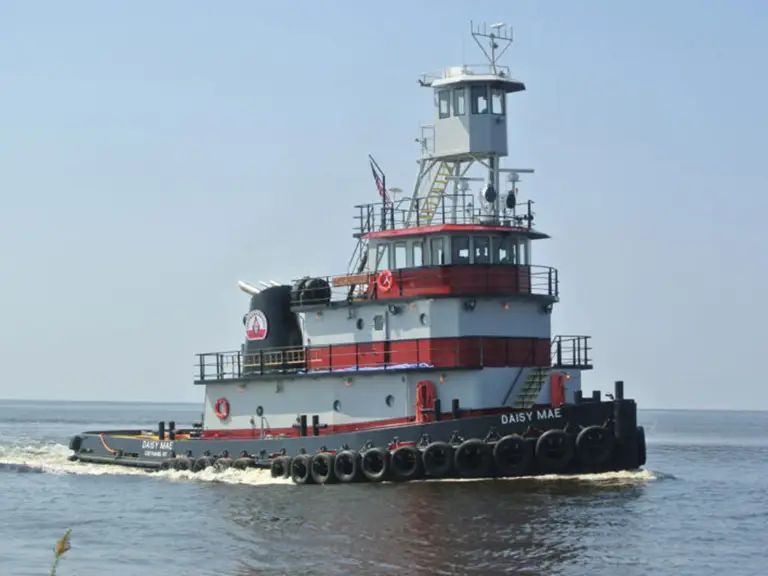
Harbor tugboats are vital for commercial vessel movement in busy ports. They assist large ships in navigating congested waterways and docking safely.
On the other hand, harbor tugboats are equipped with powerful engines and maneuvering systems. They have high bollard pull and robust construction, making them ideal for harbor operations.
Harbor tugboats play a multifaceted role in port operations. They assist in berthing and unberthing, towing and pushing vessels, and provide escort services for safe passage through congested waterways.
Ocean-Going and River Tugboats
Ocean-going and river tugboats serve different purposes in the maritime world. Their designs and capabilities are tailored to their specific environments.
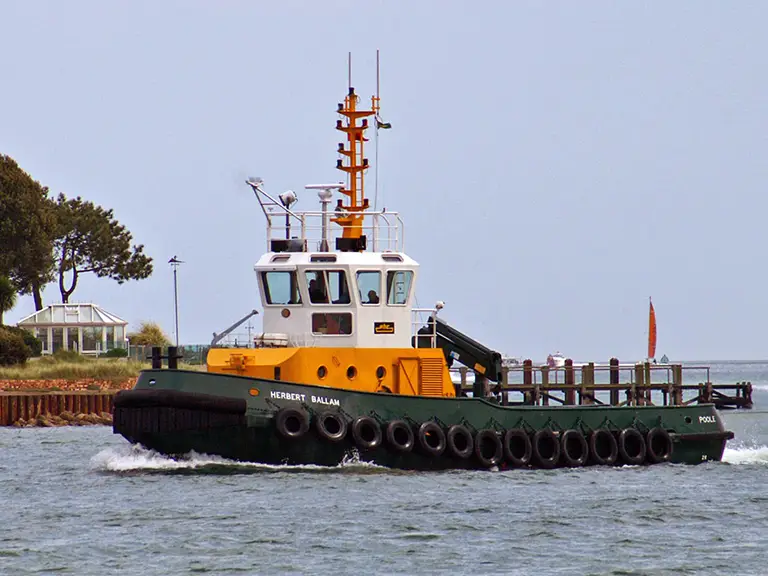
Ocean-going tugboats are built for the harsh open sea. They have robust structures and powerful engines to handle large vessels. These tugs assist ships in congested waterways and provide towing services over long distances.
Their advanced navigation and communication systems enable them to operate effectively in the complex marine environment. Ocean-going tugs are essential for salvage operations, towing disabled vessels, and supporting offshore industries.
River tugboats are specialized for navigating shallow, winding rivers. They have a shallower draft, allowing access to inland waterways inaccessible to larger vessels. These tugs are vital for transporting goods along rivers and canals, playing a key role in regional trade and commerce.
Specialized Tugboat Applications
The maritime industry has seen significant advancements in tugboat technology, leading to the development of specialized tugboats designed for specific tasks. These vessels have become essential for various marine operations, enhancing safety, efficiency, and environmental protection.
- Firefighting Tugboats: Firefighting tugboats are equipped with advanced systems to combat fires on vessels and onshore facilities. They operate in harsh marine environments, providing critical emergency response. With powerful pumps and large water tanks, they deliver substantial volumes of water to combat fires.
- Ice-Breaking Tugboats: Ice-breaking tugboats are built to cut through ice, making paths for navigation. They are strengthened to handle harsh conditions. These tugs are vital for maritime trade in polar areas.
- Salvage and Rescue Tugboats: Salvage and rescue tugboats tackle emergencies at sea, helping vessels in trouble. They come equipped with advanced towing gear and winches. This allows them to rescue damaged ships.
- Articulated Tug Barges (ATBs): ATBs are a combination of tugboats and barges, designed for transporting bulk cargo like petroleum and chemicals. They are fuel-efficient and need fewer crew members. This makes them a cost-effective and reliable choice.
| Type of Tugboat | Primary Function | Key Features |
| Firefighting | Firefighting and emergency response | Advanced firefighting systems |
| Ice-Breaking | Ice navigation | Reinforced hulls |
| Salvage and Rescue | Salvage operations | Towing equipment, winches |
| Articulated Tug Barges | Cargo transportation | Articulated connection, fuel efficiency |
Conclusion
The maritime world relies on tugboats for safe and efficient vessel movement. They are crucial for helping larger vessels navigate through crowded waterways and ports. Companies like Zhonghaihang Shipping Supply are leading the way with innovative solutions for the tugboat industry.
As the industry grows, tugboats will remain key for vessel movement safety and efficiency. The tugboat development is moving towards more sustainable and eco-friendly operations. Advanced marine equipment supply is playing a vital role in this transformation.
Frequently Asked Questions
What is the primary function of a tugboat?
How do tugboats differ from other marine vessels?
What is the difference between a conventional tugboat and an ASD tugboat?
How do tugboats operate in icy or harsh weather conditions?
What role do tugboats play in supporting offshore oil and gas operations?
Talk to our team.
Share a few details about your project — vessel, port, or operation. We'll reply within 24 hours.