

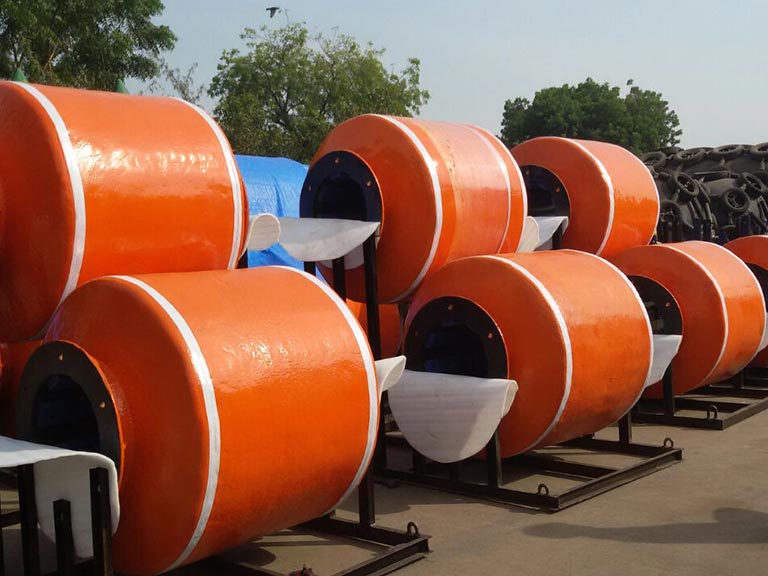
For maritime professionals, protecting vessels and infrastructure during berthing is crucial. Donut fenders are special marine equipment made to protect pile-based structures in ports and harbors. These fenders absorb impact energy, offering reliable protection during tidal changes and vessel movements.
Understanding Donut Fenders
Donut fenders are round marine protection devices with a hole in the center. This hole lets them fit around pile structures, like monopiles in ports and harbors. Their main job is to act as a cushion, absorbing the kinetic energy from vessel impacts. This prevents damage to both ships and the fixed structures.
How They Differ from Other Marine Fenders
Unlike fixed rubber or pneumatic fenders, donut fenders float freely around piles. They move up and down with the water level and can rotate to match a vessel’s angle. This design gives consistent protection in changing tidal conditions and helps guide vessels during berthing. For example, donut fenders can be installed around existing piles without complex mounting. This reduces setup time and costs compared to foam fenders without a central hole. They also avoid the risk of deflation seen in pneumatic systems, offering unsinkable performance.
Here’s a comparison table for clarity:
Feature | Donut Fenders | Traditional Fixed Fenders | Pneumatic Fenders |
|---|---|---|---|
Installation | Slides over existing piles; no mounting | Requires bolting or welding | Inflatable; needs air supply |
Tidal Adaptation | Floats and rises/falls automatically | Fixed position; may need multiples | Floats but risks bursting |
Rotation Capability | 360-degree rotation for guidance | None | Limited |
Maintenance | Low; unsinkable foam core | Moderate; wear on fixed points | High; air pressure checks |
Energy Absorption | High via foam; even distribution | High but position-dependent | High but velocity-sensitive |
Learn More: How To Install And Maintain Donut Fender?
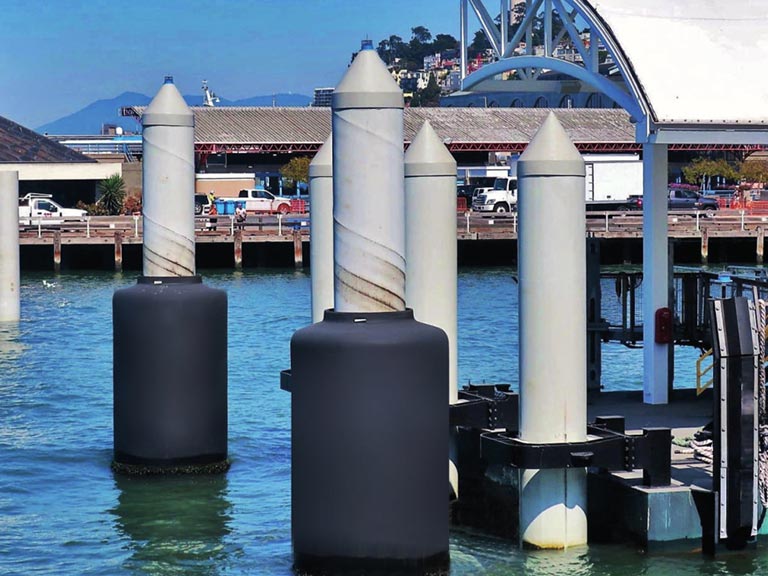
Key Features of Donut Fenders
Donut fenders use advanced materials for durability and performance. These materials align with standards like PIANC WG211 for energy absorption and load distribution.
Foam Core Construction
The core is made of 100% closed-cell cross-linked foam. This foam provides great energy absorption and makes the fender unsinkable. The material stays strong even after repeated impacts, as per PIANC’s durability testing advice.
Reinforced Polyurethane Skin
The outer layer is a polyurethane elastomer reinforced with nylon filaments. This skin resists abrasion, UV rays, and chemicals, which helps it last longer in harsh marine environments.
Inner Steel Tube Design
An inner steel tube is lined with Ultra-High Molecular Weight Polyethylene (UHMW-PE) bearing pads. This allows for smooth, low-friction rotation around piles, ensuring stability and minimal wear.
How Donut Fenders Work
Donut fenders operate by floating and rotating around a monopile. They adapt to environmental changes to provide effective protection.
Floating Mechanism with Water Level Changes
They rise and fall with the tides, staying in the best position without manual changes. This self-adjusting feature is perfect for areas with large tidal swings, as it reduces the need for multiple fenders.
Rotation Capabilities Around Piles
When a vessel makes impact, the fender rotates to spread the forces evenly. This also helps guide the vessel into place. The low-friction pads reduce resistance, improving safety during difficult maneuvers.
Real-World Application Example
In ferry berths with rough seas, donut fenders have proven more effective than laminated pile wraps. They offer 360-degree protection and have lower long-term costs. Case studies show they can cut maintenance needs by up to 30%. In heavy weather, they cushion collisions to reduce impact damage and protect infrastructure.
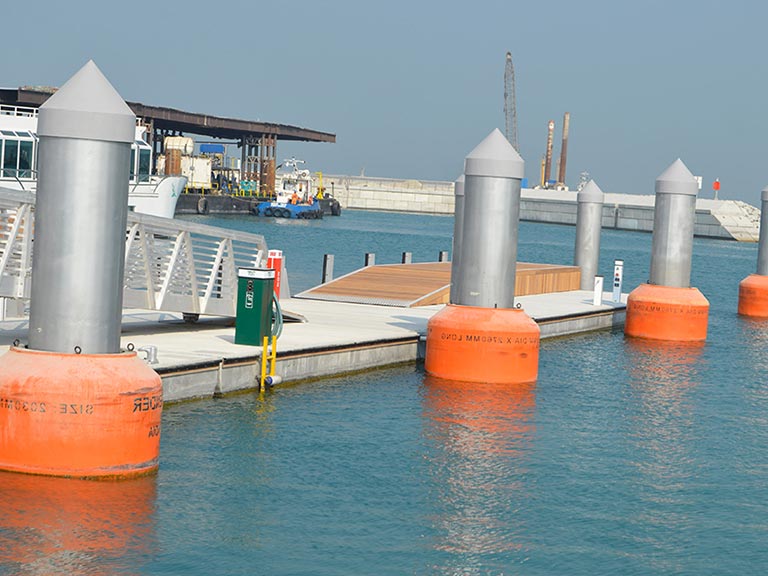
Selection Guide for Donut Fenders
To pick the right donut fender, you should consider several factors based on PIANC recommendations:
- Vessel Size and Speed: Calculate the berthing energy using tools like PIANC’s energy calculation formulas.
- Tidal Range: Make sure the fender’s height can handle the maximum water level changes.
- Pile Diameter: Match the central hole to the pile for smooth rotation.
- Environmental Conditions: Choose reinforced skins for areas with high UV or chemical exposure.
You can use online berthing energy calculators for exact sizing. Always check standards for unusual loads, such as those from heavy weather.
Conclusion
Donut fenders improve safety and lower costs by providing adaptable and durable protection. By absorbing energy and adjusting to conditions, they reduce the risk of damage. For best results, follow the marine equipment manufacturer‘s usage guidelines.
FAQ
How do donut-shaped fenders perform in changing water levels?
Can donut fenders be customized for specific marine projects?
What is the role of reinforced nylon filaments in fender construction?
How do donut fenders help protect vessels and marine structures?
Talk to our team.
Share a few details about your project — vessel, port, or operation. We'll reply within 24 hours.