

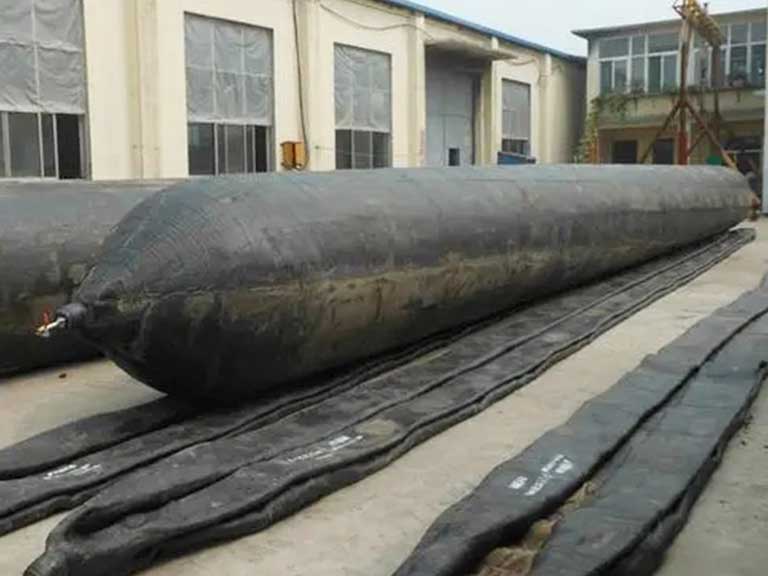
Ship launching is a high-risk process. A heavy hull moves from stable land support to shifting water support in minutes. Most accidents stem from a few controllable causes. These include poor water depth, bad tide timing, or a faulty launch ramp. Other causes are unstable hull support, weak holding systems, and rushed decisions. This guide shows the hazards, a prevention checklist, and a method for launching with marine airbags.
What Makes Ship Launching Risky
Ship launching is risky because gravity, friction, and buoyancy change at once. Small errors can escalate quickly. The process involves complex physics. Gravitational forces, friction, and water dynamics all interact at the same time. This creates many potential points of failure that need careful management. Your goal is simple: keep the vessel aligned, supported evenly, and moving at a controlled speed. You do this until buoyancy takes over.
Learn More: What Are The Methods Of Ship Launching?
The Most Common Ship Launching Risks and Their Root Causes
Wrong Movement or Misalignment
Launching a ship looks simple, but many things can go wrong. Misalignment often starts with uneven support or uneven pulling. A ramp that steers airbags sideways can also be a cause. Early warning signs include drifting off the centerline. You might also see different airbag rotation speeds or “walking” airbags. If alignment changes, stop early. Small angle errors can lead to hull contact and ramp damage later.
Excessive Speed at Water Entry
Uncontrolled speed is dangerous. Water entry impact loads can spike suddenly. This often happens when friction drops fast. It can also occur when the stern “falls” into deeper water after a shallow part. Control the speed with a holding system. Use planned stop points and pressure checks. Never assume the ship will slow down in the water.
Unstable Support Under the Hull
Structural damage is a major concern during launches. Uneven weight distribution or improper support can deform the hull. It can even cause catastrophic failures. The root cause is often a bad airbag layout. Wrong spacing or a pressure imbalance across bags is also a common issue. If one area carries too much load, the hull faces local stress instead of distributed support.

Water Level and Tide Changes
Water level is a firm boundary, even with ship-launching airbags. Launching in low water can cause the stern to drop suddenly. This might burst airbags and fracture ramps. The bow may also lift and hit the ground. If the water depth is minimal, extend the underwater slipway. You can also add buoyancy with tanks or temporary flotation in safe compartments.
Slipway / Launch Ramp Condition
A clean, compacted ramp is a safety system. It is not just a “nice-to-have” feature. Stones, scrap, and sharp debris can make the ramp too rough to roll on. This can cut airbags and scratch the hull. Before the launch, remove debris and level hard spots. Confirm the ramp goes smoothly into the water to avoid a “cliff effect.”
Holding & Control System Failure
Personnel face many safety risks. These include crushing hazards from a shifting vessel. Entanglement in launching gear and falls from height are also dangers. These issues can develop quickly if the launch becomes unstable. Many launches fail because the holding system is seen as secondary. Ground anchors, pulleys, wire ropes, and winches must be sized and checked. Improvised holders, like a bulldozer, can be pulled into the water if their holding strength is not enough.
How Marine Airbags Reduce Launching Risks
Using marine airbags for ship launching greatly reduces risks. Traditional methods are often more hazardous.
- Load Spreading: Marine airbags provide better weight distribution. This minimizes stress on the vessel’s hull during the launch. It matters most during the first movement and on ramp transitions. At these times, the hull is not yet supported by buoyancy.
- Shock Absorption: The air inside the bags absorbs impact. This ensures a smoother move from land to water. Air cushioning helps reduce the “hard hit” effect when motion starts. It also helps when the stern enters the water.
- Surface Adaptability: Marine airbags can adapt to uneven ground or rough surfaces. This removes the need for a perfect slipway. That flexibility helps, but it does not replace the need for a clean ramp and stable holding control.
- Speed Control: Speed control comes from a mix of airbag pressure balance and a real holding system. Pressure affects the contact area and rolling resistance. Holding gear prevents sudden acceleration.
- Practical Fit: Airbags work for many ship types and sizes. The launch plan must match the site conditions. The main limits are usually the water depth window, ramp condition, and control capacity. The “idea” of airbags is not the limiting factor.

How to Choose the Right Marine Airbags for a Safe Launch
You choose marine airbags to match the hull shape, load, and site conditions. This keeps the vessel evenly supported and controllable. The selection process should follow this order:
- Diameter and Length: Size and diameter are very important when matching airbags to your vessel. Larger diameter airbags are usually needed for greater displacement. The diameter must also suit the hull’s curve. If the diameter is too small for the hull shape, contact becomes narrow. This makes the pressure uneven.
- Layer Rating and Rubber Quality: Layer strength and material quality directly affect the safety of your launch. Multi-layer airbags offer better puncture resistance. They also improve pressure retention and durability. Prioritize abrasion resistance if the ramp surface is not perfect. Choose UV and oil resistance if storage and handling are harsh.
- Working Pressure: Working pressure is a control tool, not just a spec. You need enough pressure to maintain shape and support. But you must avoid over-pressure. This raises risk during a shock or steep drop. Plan a pressure check schedule before movement, during travel, and before water entry.
- Quantity and Spacing Logic: Calculating the number of airbags depends on vessel weight, length, and beam width. It also depends on the launch angle. Spacing must stop airbags from touching. It must also avoid high bending moments from gaps in support. Add extra bags only if you can still control alignment and pressure. More bags do not fix a weak plan.
- Verification: Use only airbags with clear test documents and traceable IDs. Before the launch, inspect for cuts, bulges, and valve issues. Check for air retention. Reject any bag that fails a hold test.
Pre-Launch Preparation That Removes Most Risks
Good preparation removes most ship launching risks. It locks in the site, the control system, and the decision rules before the vessel moves. It can remove more than half the risks tied to launching a vessel. Focus your prep on three failure areas: water level, ramp condition, and holding control.
- Site Survey: A site assessment is vital for a successful launch. Check the ground level, slope, and tidal data. Also check water depth and seabed conditions. Confirm the minimum safe water depth for your hull. Plan a tide window with a stop or hold option.
- Slipway / Ramp Prep: Slipway preparation should create a clean and compacted ramp. Remove stones, shells, scrap, and sharp debris. Verify the path is compacted and smooth. Confirm the ramp extends into the water with a gradual slope. This helps avoid a sudden stern drop.
- Launch Plan: A launch plan documents airbag positions and pressure specs. It also includes movement details and backup procedures. You must evaluate weather and tidal conditions when scheduling the launch. Add “stop points” and “go/no-go” rules. These cover alignment drift, pressure changes, and weather or tide shifts.
- Holding & Guidance Setup: Treat holding gear as mandatory. Check anchors, winches, pulleys, and wire ropes. Also check shackles, brakes, and guide cables for rating and wear. Make sure the rigging is correct. Do a dry-run pull test at a low load. This confirms control response and communication timing.
- Team Briefing: Clear communication protocols are essential. They ensure all team members understand their roles and can respond quickly. Use radios, cameras, or simple hand signals for quick reactions. Set exclusion zones near pinch points, cable lines, and the vessel’s path. Assign one launch commander with the authority to stop the process.

Step-by-Step: Safe Launching Process With Airbags
A safe airbag launch is a controlled, monitored movement. It is never a “let it slide” event. The process has several key steps to ensure a safe operation. Do not move to the next step until the previous one is stable and checked.
Placement and Re-Check: Positioning, Alignment, and Contact Quality
Proper airbag positioning and spacing are vital. They provide balanced support for the hull structure. Spread airbags evenly under the hull. Keep spacing consistent based on diameter to prevent interference. Re-check the centerline alignment. Confirm each bag has clean, full contact. No bags should sit on debris or edges.
Inflation and Pressure Balancing: Uniform Support Before Movement
Pressure management is a critical control point during the launch. Verify all airbags have the right inflation levels before movement starts. Balance pressure across all bags. Then, hold for a short time to check for fast leaks or “soft zones” under the hull.
Controlled Movement: Winch Speed, Guidance, and Avoiding Sudden Pulls
Controlled movement uses winches, braking systems, and guide cables. These tools regulate the descent speed. Prevent uncontrolled acceleration. This could lead to dangerous momentum at water entry. Use slow, steady pulls. Avoid sudden tension spikes that can shift bags or twist the hull.
Monitoring During Travel: What to Watch and When to Stop
Watch four things at all times. Monitor alignment to the centerline. Check airbag rotation consistency. Note any pressure changes. Look for ramp surface changes. Stop right away if you see uneven movement or strange sounds. Also, stop if a bag walks out or pressure drops fast. One leader should watch the ship and give clear instructions.
Water Entry Control: Managing Momentum and Hull Protection
Water entry must be a planned, controlled phase. It is not the end of the plan. Hold speed before the stern reaches the critical transition. Then, release slowly while keeping guidance tension. If the tide or wind shifts, pause. Restarts are safer than “pushing through.”
Emergency Handling and Post-Launch Care
Emergency handling means stopping early and re-balancing support. Restart only when the root cause is fixed. Emergency response plans must be set before the launch. These include steps for airbag failure, vessel misalignment, or environmental changes. Keep spare airbags, spare rigging hardware, and a clear stop command that everyone obeys.
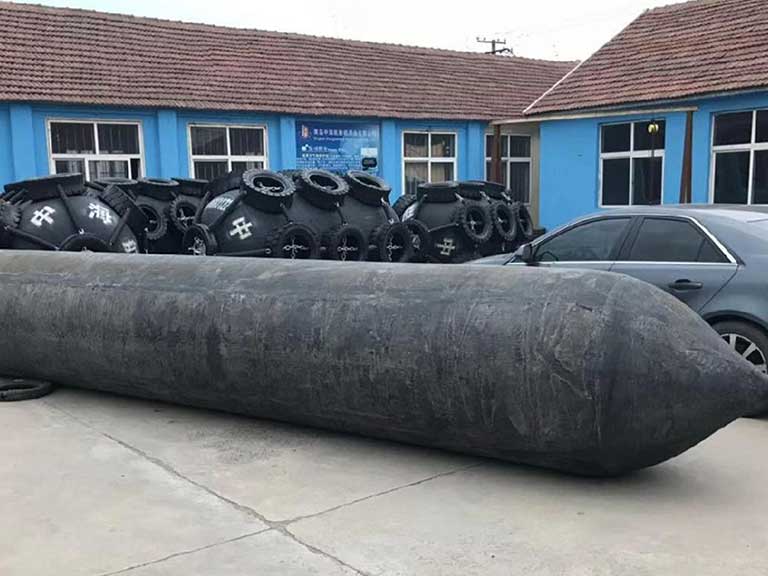
Common Problems: Symptom → Likely Cause → Immediate Action
Symptom | Likely cause | Immediate action |
|---|---|---|
Vessel drifts off centerline | Uneven pulling / ramp steering / bag “walking” | Stop, re-center, re-check guidance tension, reposition bags |
One area sinks or hull tilts | Pressure imbalance / missing support / debris under a bag | Stop, relieve load, clear debris, re-balance pressure |
Sudden speed increase | Holding system weak / friction drop / stern drop | Increase holding control, re-define stop point, reassess water depth |
Bag slips or shows damage | Ramp debris / wrong contact / over-stress | Stop, replace with spare, inspect ramp, restart only after correction |
Post-launch equipment care keeps future launches safe. Clean off sand and debris. Inspect for cuts and cracks. Store bags away from the sun and chemicals. Perform periodic air retention checks.
Conclusion
You can avoid ship launching accidents. Control a small set of root causes: water depth, tide timing, and ramp condition. Also, control hull support and the holding system. By choosing the right airbags and planning well, shipyards can make launching a predictable process. Monitor alignment and speed. If anything looks wrong, stop early. Correct the cause, then restart with the same care.

FAQ
What are ship launching airbags?
What is the biggest cause of airbag launching accidents?
How do I know my water depth is not enough?
When should we stop the launch immediately?
How do we extend the service life of marine airbags?
Talk to our team.
Share a few details about your project — vessel, port, or operation. We'll reply within 24 hours.