


When you hear the term “marine salvage”, you may think of salvaging long-sunken ships from the bottom of the sea. But in fact, marine salvage is much more common than that. Nevertheless, this service is very important. It helps shipowners and cargo owners around the world get their things back. In addition, it keeps trade routes open and protects the environment.
This article will show you the different types of marine salvage and the process of marine salvage. Read on to find out more.
What Is Salvage?
Marine salvage is the act of assisting a vessel or its property in navigable waters when facing imminent danger. These include refloating, repairing, or removing wrecks to mitigate risks. It applies to seagoing vessels, cargo, and even aircraft at sea. But excludes inland waters unless specified. Salvors—specialized companies or individuals—operate under “no cure, no pay” principles, earning rewards only upon success.
Key international frameworks include:
- The 1910 Brussels Convention unified rules for assistance and salvage, emphasizing voluntary services and equitable rewards.
- The 1989 International Convention on Salvage (IMO) was expanded to include environmental protection. It allows special compensation for pollution prevention even if traditional salvage fails.
These treaties ensure fair practices globally, with salvors hired by owners or insurers.
The Salvage Process
In general, maritime salvage can be divided into two main categories: pure salvage and the use of Lloyd’s Open Form. Let’s take a look at these two different salvage processes.
Pure Salvage
When a ship and its cargo are salvaged, this is referred to as “pure salvage” if there is no contract. Instead, the salvors should exercise their legal right to be paid for salvaging the ship. The court will then decide on the reward that the salvors should receive.
Typically, a reward of between 10% and 25% is given to the salvors. Factors such as the difficulty of the salvage operation, the value of the property, and the possible impact on the environment can influence the amount of compensation. Under the 1989 Convention, “special compensation” (up to 30-100% of expenses) applies for eco-friendly efforts.
Lloyd’s Open Form
For contract salvage, LOF—introduced in 1908 and updated to LOF 2024—is the global standard “no cure, no pay” agreement. It outlines salvor obligations, rewards via arbitration (e.g., Lloyd’s Salvage Arbitration Branch). And it includes SCOPIC clauses for environmental costs. LOF minimizes disputes by setting terms upfront, ideal for urgent scenarios.
The Lloyd’s Open Form can be administered by the Lloyd’s Open Form Salvage Arbitration, which regulates salvage at sea. All those involved, from the ship or cargo owner to the salvors, should consider using it. This will avoid any disputes during or after the operation.
Different Types of Salvage
Marine salvage varies by location, vessel state, and goals. Below is a table of key types, expanded with examples and challenges.
| Type | Description | Challenges/Examples | Tools/Methods |
|---|---|---|---|
| Offshore Salvage | Recovery in open, deep waters far from shore, often involving sunk or stranded vessels. | High waves, depths; e.g., the 2023 Dali bridge collision in Baltimore required offshore teams for refloating. | ROVs, submersibles, cranes, and drones for assessments. |
| Harbor/Port Salvage | Refloating or towing vessels in calmer port areas to clear berths quickly. | Traffic hazards, urgency; sunken ships block ports, risking collisions. | Tugs, airbags, pumps. |
| Wreck/Sunken Ship Salvage | Recovering all or part of submerged vessels/cargo, from recent to historical wrecks. | Depth, visibility; e.g., Nuestra Señora de Atocha (1622 sink, 1985 recovery with $450M treasure). Record: 2021 Sea Hawk helicopter at 19,075 ft. | Divers, CURV ROVs, and sonar. |
| Equipment/Cargo Salvage | Prioritizing valuable items (e.g., engines, containers) when full vessel recovery is uneconomical. | Selective extraction is common in container spills. | Cranes, cutting tools. |
| Afloat Salvage | Stabilizing and towing vessels still afloat but disabled (e.g., due to fire or listing). | Balance risks; e.g., 2006 MV Cougar Ace listed 60° with 4,812 cars; salvaged, but most cargo lost. | Ballast adjustments, tugs. |
| Clearance/Wreck Removal | Removing debris to clear channels or protect environments, not necessarily salvaging value. | Pollution focus: e.g., 2012 Costa Concordia removal. | Demolition, barges. |
Summary
Marine salvage is a complex and critical field. It plays a pivotal role in protecting the environment, safeguarding valuable assets, and ensuring safety at sea. Whether it is wreck removal, cargo recovery, or wreck floating. Each type has its unique purpose and is used to tackle specific challenges in the maritime industry.
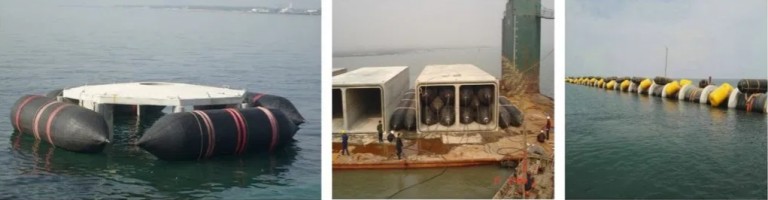
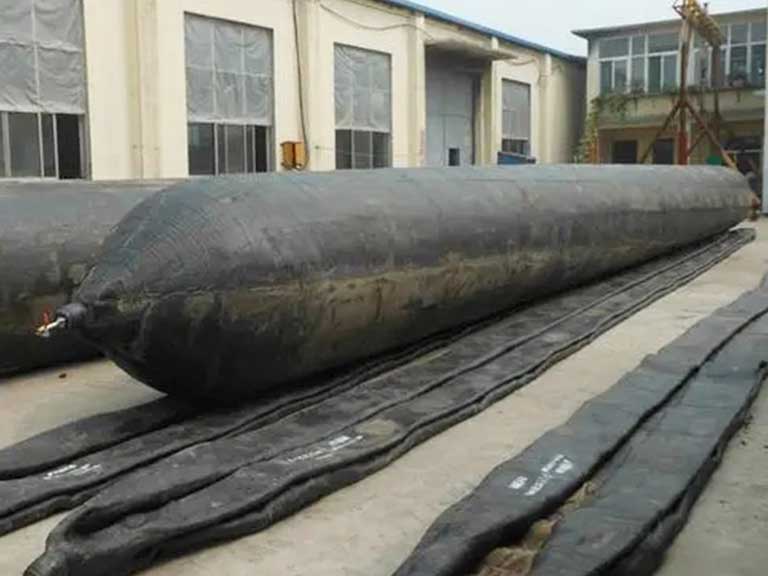
By understanding the different types of salvage operations, you will appreciate the expertise and precision involved in each. Marine salvage is constantly evolving as technology and processes advance. It provides effective solutions to minimize risk and restore stability, even in the most challenging situations. And Zhonghaihang’s marine salvage airbags are an important aid in this endeavour. Contact our team today, and we will provide you with a professional salvage airbag design solution that
FAQ
What is the Difference Between Salvage and Wreck Removal?
Salvage is the retrieval of a vessel or cargo that still has value. Wreck removal, on the other hand, usually means that the vessel and its cargo are lost forever. Wreck removal aims to prevent damage to other vessels or the environment.
What is the Role of the Insurance Company During Salvage?
If you want to recover your vessel or cargo, you need to get in touch with your insurance company. This is because most types of marine insurance cover salvage costs. It is important to note that not all insurance plans cover salvage costs. Therefore, it is important to check this before taking out any insurance.
Talk to our team.
Share a few details about your project — vessel, port, or operation. We'll reply within 24 hours.