


At Zhonghaihang Shipping Supply, we lead in the maritime field with advanced marine gear. This includes pneumatic fenders and marine airbags. Ship launching airbags, also known as inflatable marine airbags or launching air balloons.
They are made for launching ships of all sizes, from small boats to large ships up to 100,000 DWT. Our launching technology has changed how ships are launched. It makes the process more efficient, cost-effective, and safe. Ship launching airbags are now widely used by shipyards around the world.
Understanding Ship Launching Airbags
What are ship launching airbags? They are inflatable devices for launching ships. They offer a safe, efficient, and cost-effective way to launch ships.
Airbags in ship launching are widely accepted globally. They save time, money, and are safer. This technology is becoming more popular in shipyards worldwide.
We’ve always been innovating in design, materials, and manufacturing. This ensures our airbags are flexible, safe, and reliable. This evolution has made airbag launching a preferred method for many shipyards.
Advantages Over Traditional Launching Methods
Compared to conventional slipway or cradle methods, airbags deliver measurable benefits:
| Aspect | Airbag Systems | Traditional Methods | Quantifiable Gain (Example) |
|---|---|---|---|
| Cost Savings | Reusable with minimal setup; no large-scale infrastructure needed | High initial build costs for ramps/cradles | Up to 40-50% reduction in total launch expenses |
| Time Efficiency | Quick inflation/deflation; portable setup | Lengthy assembly and alignment | 44% fewer labor hours |
| Flexibility | Adaptable to various ship sizes/shapes and water levels | Limited by site geometry | Suitable for 500-100,000 DWT vessels |
| Safety | Elastic cushioning absorbs shocks; lower crew exposure | Risk of structural failure or tipping | Reduced incident rates by 30-50% |
| Environmental Impact | Reusable and non-polluting; minimal site disturbance | Potential for oil spills or habitat disruption | Lower carbon footprint from reduced machinery use |
These advantages stem from airbags’ ability to adapt to uneven terrain and fluctuating tides, as validated by industry analyses.
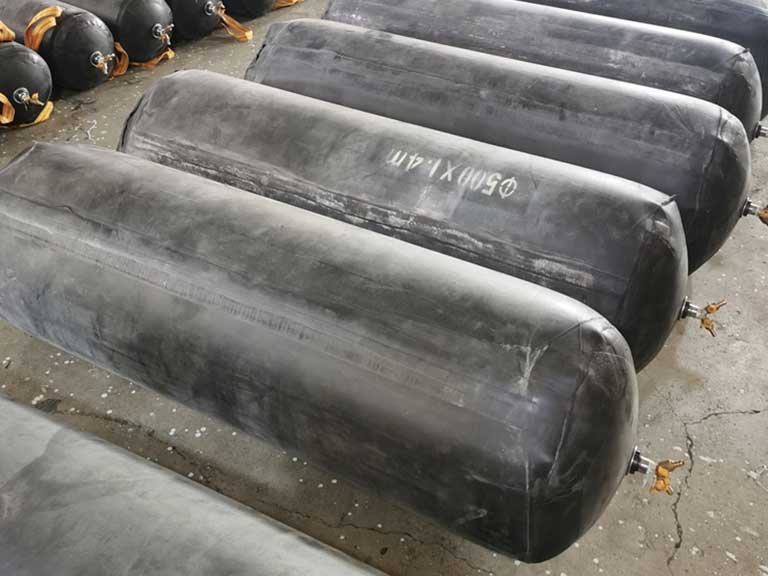
Construction and Technical Specifications of Ship Launching Airbags
Understanding the build quality is essential for safe deployment. Our airbags adhere to rigorous standards, ensuring performance under extreme conditions.
Material Composition and Layers
Ship launching airbags feature a multi-layer construction for optimal strength and sealing:
- Synthetic-Tire-Cord Layers: Typically, 4-8 layers of nylon or polyester cord fabric provide tensile strength and prevent bursting, forming the structural core.
- Inner and Outer Rubber Layers: Made from natural or synthetic rubber compounds, these ensure airtightness, abrasion resistance, and protection against saltwater corrosion.
This design, with reinforced dipping processes, withstands pressures up to 250 kPa.
Classification and Types of Ship Launching Airbags
Airbags are categorized by diameter (0.8-2.0 m), effective length (6-20 m), and layers (3-11), tailored to vessel weight and launch angle. For instance, multi-layer types suit heavier ships, while single-layer options work for smaller crafts.
ISO 14409 Standards and Compliance
All our airbags comply with ISO 14409:2011, the international benchmark for ship launching airbags. This standard governs design, materials (e.g., synthetic-tyre-cord reinforcements), manufacturing, and testing protocols. These include hydrostatic pressure, compression, and burst tests to verify gas-tightness and load capacity. Independent lab certifications confirm our products exceed minimum requirements, such as withstanding 1.5 times the rated pressure without failure.
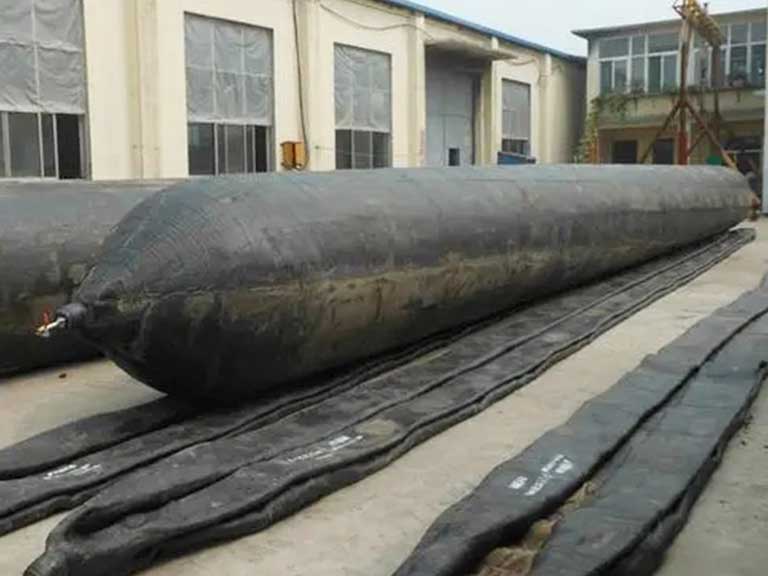
How Ship Launching Airbags Work
Launching airbags overcome the limitations of traditional static systems by providing dynamic support. This approach has revolutionized the ship launching process.
Launching Process Using Airbags
- Preparation: Position the vessel on greased rollers atop inflated airbags aligned along the slipway.
- Initiation: Use winches or gravity to roll the ship forward. And airbags compress and provide buoyancy.
- Transition: Gradually deflate to guide the vessel into the water, with tugs for final positioning.
This applies to both end and side launches, with setup times as low as 1-2 days.
Bearing Capacity and Pressure Calculations
The strength of the ship launching airbags is key. It depends on the airbag’s material, size, and how much air it holds. Getting the pressure right is important for a safe and smooth launch.
End Launching vs. Side Launching Techniques
- End Launching: Vessel moves stern-first along the length. Airbags are placed parallel to the slipway. Ideal for narrow sites.
- Side Launching: Broadside entry, airbags oriented perpendicularly. Suited for wider beams but requires more space.
Our systems support both, with customizable configurations for optimal stability.

Zhonghaihang Shipping Supply’s Professional Ship Launching Airbag Solutions
We prioritize quality and client success, delivering tailored solutions for seamless launches.
- Quality Manufacturing Process: Our ISO-certified facilities employ automated dipping and vulcanization. Each airbag undergoes 100% non-destructive testing. This ensures a 6-10 year lifespan and zero failure rate in over 500 global deployments.
- Product Range and Specifications: From 1.0m diameter basics to 2.0m heavy-duty models, our range covers 500-100,000 DWT. Custom options include reinforced layers for arctic conditions.
- Customer Support and Service Advantages: From initial consultation to post-launch audits, our experts provide 24/7 technical support, on-site training, and rapid global shipping. Competitive pricing starts at value-driven packages without compromising standards.
Maintenance and Best Practices for Ship Launching Airbags
Keeping airbags in good shape is crucial for safe launching. We provide detailed guides for airbag maintenance. Regular checks, cleaning, and storage can extend their life and keep them working well.
Cleaning airbags properly is important. Rinse them with fresh water after each use to remove dirt. Then, dry and powder them with French chalk to prevent sticking.
Storing airbags correctly is also key. Keep them in a cool, dry place, away from harmful chemicals. Follow the manufacturer’s guidelines for pressure to avoid damage.
Regular inspections help spot wear and damage early. In addition, you can learn how to repair boat launching airbags. By following these tips, you can ensure safe and efficient launches while protecting your airbags.

FAQ
How do marine airbags handle different vessel sizes and types?
What is the rated working pressure of your ship launching airbags?
How are the inner rubber layers and cord fabric layers constructed?
Can your airbags be used for both end-launching and side-launching techniques?
What kind of customer support and service do you offer for your airbag products?
Are your airbags manufactured and tested according to industry standards?
Talk to our team.
Share a few details about your project — vessel, port, or operation. We'll reply within 24 hours.