


The marine salvage airbag is an innovative tool. It can be used to assist in the recovery and transfer of sunken or stranded vessels. The airbag is cylindrical in shape and is a high-strength rubber device. The airbag is filled with compressed air, which provides buoyancy. During salvage operations, the airbag is placed under or alongside the sunken vessel. When inflated, the airbag generates sufficient buoyancy. This buoyancy can lift the vessel to the surface or move it to the desired location.
The flexibility of the marine salvage airbag makes it suitable for a variety of salvage operations. These include ship recycling, underwater construction, and floating heavy objects. Its durability, portability, and ease of use make it an important resource for the marine and offshore industries. In addition to salvage operations, the marine salvage airbag can also help keep a ship afloat. For example, when it is necessary to save a normal or sinking ship.
Salvage and rescue projects at sea require fast and heavy machinery and are costly. If salvage operations use standard lifting methods, they are likely to involve high costs or the use of large lifting equipment. The marine salvage airbag is a faster and more flexible method of rescue and salvage.
What Is a Marine Salvage Airbag?
Marine salvage airbags are based on the design of ship-launching airbags. They are extremely robust and can be used as floating salvage buoys for salvage and floating. Marine salvage airbags can be used to rescue sunken ships, pontoons, dock constructions, and other floating structures. The robust marine airbags are the perfect choice for heavy salvage work in rough conditions.
The marine airbag is a closed cylindrical buoyancy device. It consists of a highly tensile outer rubber layer, multiple layers of heavy-duty synthetic tire cord fabric, and a strongly vulcanized inner rubber layer. In addition, the airbag is wrapped with slings and shackles. When the marine airbag is used in deep water, safety valves at both ends of the airbag can automatically release internal pressure.
The Zhonghaihang rubber airbag is cylindrical in shape, with two conical heads and an end opening. The end opening is fitted with an airtight swivel ring and an air intake kit. Straps made of polyester fabric are wrapped around the entire body of the Zhonghaihang rubber airbag. When these straps are fully raised, the buoyancy is maintained at a safety factor of 6:1. In addition, it can be equipped with an automatic pressure relief valve. The automatic pressure relief valve can be opened when the internal pressure reaches the rated pressure.
In addition, Zhonghaihang marine airbags are particularly effective in buoyancy work such as pipe floating, beach towing, and river crossing. Zhonghaihang marine airbags can also be used to reduce the draft of ships and platforms when the water level is low. In addition, they can be used as salvage pontoon bridges for temporary piers and bridges. Rescue workers can use marine rubber airbags to salvage sunken ships, pontoons, and pier structures.
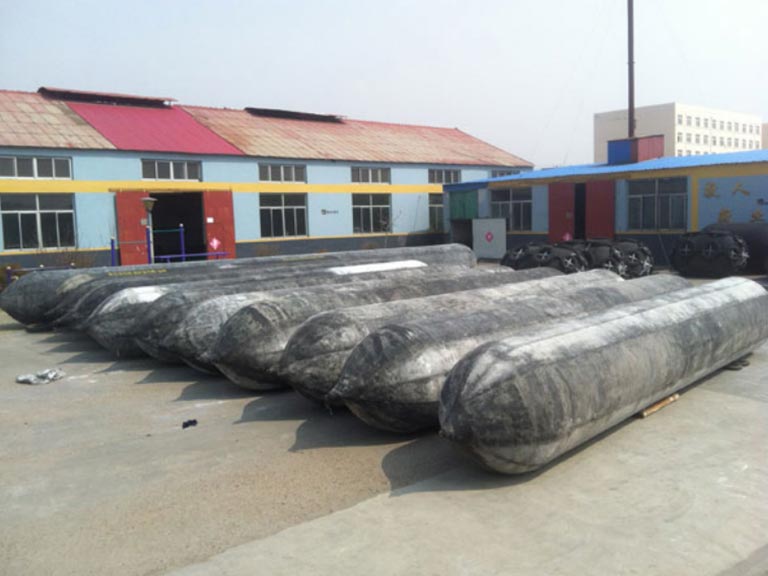
Types of Marine Salvage Airbags
The recovery of sunken vessels is facilitated by different types of marine salvage airbags and buoyancy solutions. These devices play a crucial role in marine salvage operations. They provide the necessary lift for salvaging ships from underwater.
- Totally Enclosed Marine Salvage Airbags: Totally enclosed marine salvage airbags are designed for heavy-duty salvage operations. They are made from durable materials that can withstand the harsh conditions of underwater environments. These airbags are completely enclosed, providing a high level of buoyancy and stability.
- Marine Salvage Rubber Airbags: Marine salvage rubber airbags are another type of buoyancy device used in salvage operations. They are made from high-quality rubber and are designed to be flexible and durable. These airbags can be inflated to provide the necessary lift for recovering sunken vessels.
- Pillow Flotation Lift Bags: Pillow flotation lift bags are used for lifting and stabilizing objects underwater. They are typically made from robust materials and are designed to withstand the pressure of deep-water environments. These bags are often used in conjunction with other salvage equipment.
- Steel Salvage Pontoons: Steel salvage pontoons are rigid buoyancy devices constructed from welded steel plates. They are designed to provide consistent lift regardless of depth and are ideal for deep-water salvage operations.
Each type of marine salvage airbag or buoyancy device has its unique characteristics and applications. The choice of device depends on the specific requirements of the salvage operation. These include the depth of the water and the size of the vessel being recovered.
What Are the Uses of Marine Salvage Airbags?
These airbags can be used as floats to support piers and other floating structures. They can also provide buoyancy for pipe laying and other underwater construction work. However, the main use of marine salvage airbags is to salvage sunken ships, build pontoons and piers, rescue people, and move sunken or stranded vessels.
- Salvage Airbags: Marine salvage airbags can be used to rescue aircraft that have crashed underwater. They can also be used to salvage sunken ships and other objects.
- Vessel Floating: Marine salvage airbags can be used as buoyancy aids to help a vessel surface and navigate into a dry dock or out of shallow water.
- Laying Pipe and Cable: Marine airbags can be used to lay oil and gas pipelines and cables, for example.
- Floating Aids: They can be used for other floating equipment such as power plant equipment, box culvert installation, and floating airbag bridge construction.
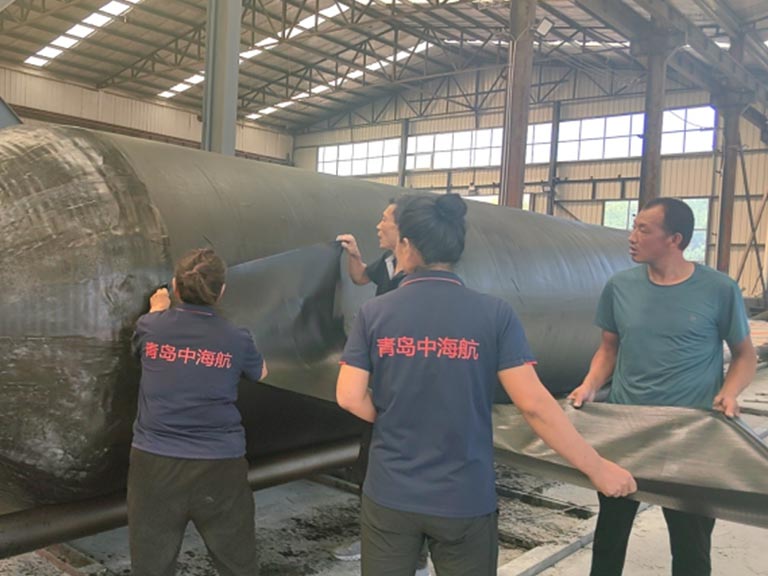
How Are Marine Salvage Airbags Used for Salvage Operations?
Marine salvage airbags work by inflating them to make them float, thereby lifting sunken or stranded vessels back to the surface. They are basically large inflatable bags placed around the vessel, which are then inflated to create lift. This means that rescue operations can often be carried out without the help of heavy cranes.
Salvage work at sea is always tricky and requires many different tools to get the job done. When a barge crane is not enough to lift an object, a salvage airbag can be used to float the vessel. To increase the buoyancy of the vessel, the salvage airbag can be fixed to the ship or stuffed into the hold. One should control the lifting speed so that the airbag has enough time to release the inflated air through the overpressure valve. The lifting speed is usually set to 1 meter per minute.
In addition, the way in which the salvage airbags are tied is important for salvage work. Therefore, the salvage airbags are tied differently for different operations. You should calculate the length and material of the tying straps. Rubber straps are usually used to connect and tie the salvage airbags, while nylon ropes are suitable for securing the airbags to objects. Therefore, when people want to combine airbags together to refloat an object, they prefer to use carefully selected nylon ropes and braided nets.
Salvage airbags can be placed between the bottom of a ship and the seabed. This increases the buoyancy of the wreck and thus helps to a certain extent to refloat the vessel. Each salvage airbag can lift more than 200 tons. This lifting capacity is very useful for salvaging stranded vessels. After a ship has run aground, an airbag is the easiest way to get it back into the water. The airbag is placed under the ship and inflated. With the help of a bulldozer or tugboat, the ship can be easily launched.
Marine salvage airbags have played an important role in launching some ships. If the water level is insufficient for launching, people have to work again after the ship is launched. During the dry season, Zhonghaihang has used marine salvage airbags to help launch 5,000-ton light ships and 8,000-ton medium ships.
What Are the Advantages of Marine Salvage Airbags?
- Diverse Buoyancy: Zhonghaihang can manufacture marine airbags with 50 tons, 100 tons, 200 tons, 300 tons and other conventional large tonnages. In addition, we can also manufacture specific sizes according to customer needs.
- High Safety: We use 1400dtex/3 high-strength nylon thread. This nylon thread is very strong and not easily torn or cut. Its burst pressure is more than three times the safety factor, so it is highly safe.
- Safety Valve Technology: This technology prevents the airbag from becoming overpressurized. It can especially well maintain the relative pressure of the airbag when it is floating from the bottom during salvage.
- Simple and Effective: A mesh sleeve and a shackle connection are used to transfer forces and prevent the flotation airbag from slipping. These components make the operation process very simple and effortless.
- Easy to Secure: The salvage airbag is very easy to install and provides excellent stability when inflated.

Summary
Marine salvage airbags provide an efficient and economical solution for the recovery and transfer of sunken or stranded vessels. Their durability and adaptability make them an essential tool for a wide range of underwater operations. Whether it’s bringing a vessel to the surface, assisting with launching, or supporting underwater construction, marine salvage airbags simplify demanding tasks while ensuring safety and precision.
By understanding how these airbags work, marine professionals can harness their full potential and succeed when performing complex salvage operations. If you need 100 to 2,000 tons of buoyancy, Zhonghaihang’s marine salvage airbags are the best choice. They are easy to move and store and require little maintenance. This makes rescue operations more flexible and cost-effective.
FAQ
What are the primary benefits of using marine salvage airbags in salvage operations?
How do you manage pressure when using lift bags underwater?
Can salvage airbags be used in shallow water?
Are there different types of airbags available for various salvage operations?
What is the role of buoyancy in salvage operations?
Talk to our team.
Share a few details about your project — vessel, port, or operation. We'll reply within 24 hours.