


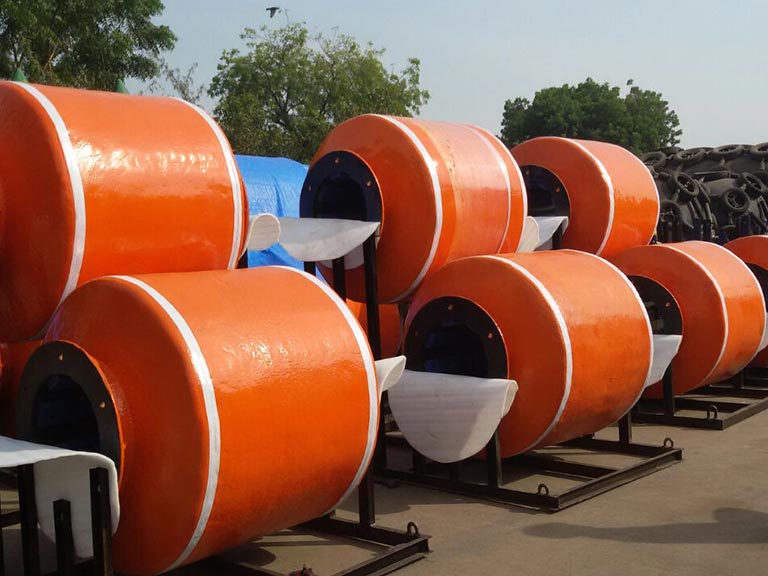
Donut fenders are a type of foam-filled fender that is made to float around a central pile. They rotate and move up and down with the tides, making them great for protecting corners and guiding ships through narrow passages. Both types of fenders have foam cores that absorb a lot of energy and don’t puncture easily. However, normal foam fenders are usually attached to walls, whereas donut fenders are free-floating and made for anchoring and turning dolphins.
Fender Definitions and Scope
Defining donut and foam-filled fenders for working berths depends on how they are mounted and whether they need to rotate around a pile.
Foam-filled fenders are buoyant, energy-absorbing units with a closed-cell foam core and a protective skin. They are usually fixed to a quay, dolphin face, or structural frame. We define them as a type of construction that can come in many shapes and mounting styles.
Donut fenders are a specific type of foam-filled fender. They are designed as a ring that slides on a pile. The ring can rotate and move up and down with water level changes. This pile-mounted operation changes how they handle shear forces from vessel movement. The skin, reinforcement, and hardware vary by manufacturer, so you should check these details in the submittals.
Learn More: What is a Foam Fender?
Common Fender Selection Misconceptions
Wrongly choosing between donut and foam-filled fenders often happens when people treat product names like ratings instead of checking the pile fit, clearance, and contact direction. The idea that “donut is better” ignores pile diameter compatibility and the shear forces created by the vessel’s approach angle. The idea that “foam-filled is fixed” ignores that this type of construction can be used in various layouts that are not pile-mounted. We tie the selection to berth limits and the commissioning method to avoid these mistakes.
Another misconception is that following the tide is always a benefit. A donut fender moves with the water level because the ring travels on the pile. However, its suitability still depends on the pile length, travel limits, and where the contact band is relative to the vessel’s freeboard. We also want to correct the notion that closed-cell foam means zero maintenance. Access for inspection and skin repair depends on reach, abrasion, and the operator’s maintenance plan.
Best Berthing Scenarios for Each Fender
The best fit for donut versus foam-filled fenders depends on whether a pile is present, clearance limits, and if rotational guidance is needed. Donut fenders are often chosen when a vertical pile is the main contact structure. Rotation can reduce shear as a vessel slides along the contact zone. Foam-filled fenders are often chosen for a fixed berth face where a mounted array can control the contact area.
Scenario Decision Point | More Typical Fit | Why the Fit Works | What Should Be Verified |
|---|---|---|---|
Pile-based guidance and corner protection | Donut fender | Rotation and vertical travel can reduce shear while keeping contact around a pile. | Pile diameter compatibility, ring travel range, clearance to other structures. |
Fixed quay wall berthing line | Foam-filled fender | Fixed mounting creates a predictable contact band and spacing along the berth. | Fender spacing plan, contact height range, attachment frame limits. |
Lock entrances and dry dock corners | Depends on scenario | Guidance and abrasion risk vary with geometry and approach angles. | Approach direction, corner clearance, skin abrasion exposure. |
Bridge pier and constrained channel protection | Often donut with pile-like geometry | Rotating contact can reduce friction and snagging around a cylindrical element. | Allowable outer diameter, navigation clearance, debris and abrasion. |
Turning Dolphins and Monopile Guides
The use of donut fenders for turning dolphins and monopile guides depends on a vertical pile acting as the contact element. A donut fender can rotate around the pile, reducing shear when a vessel slides along it. Before recommending a pile-mounted ring, you should have pile drawings, navigation clearances, and expected contact directions. Large tidal ranges can make managing contact height with fixed fenders difficult. The ring’s travel and contact band still depend on the pile length, stop collars, and water levels, so you should verify these inputs during design review.
Quay Walls and Fixed Berths
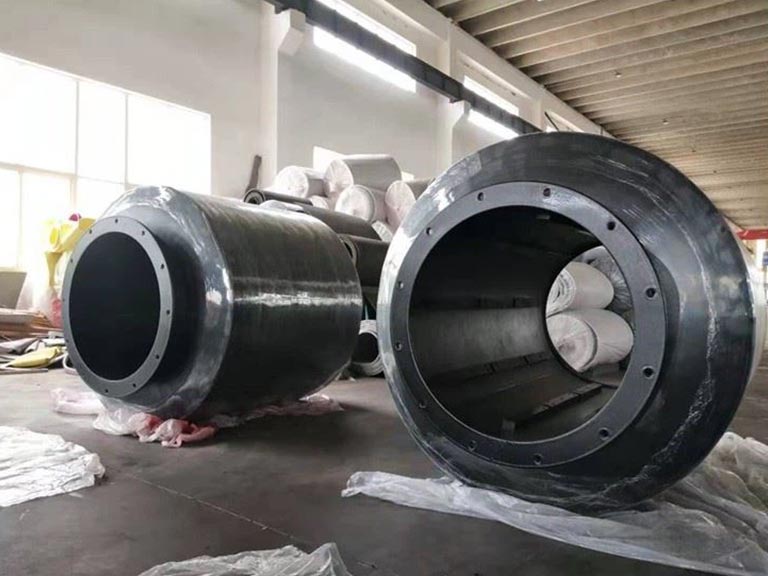
Foam-filled fenders on quay walls rely on fixed placement and consistent spacing to control the contact band. A foam-filled fender mounted on a wall or frame can be arranged to match the berth line and expected vessel sizes. You compare the berth geometry and desired contact area because a fixed system can be tuned by its layout, not by pile rotation. A foam-filled system can be used near a pile without being a donut system. The key question is whether the berth needs a controlled face contact zone or a wrap-around pile interface.
Lock Entrances and Dry Dock Corners
Choosing between donut and foam-filled fenders for lock entrances and dry dock corners depends on the corner’s geometry, approach angle, and abrasion risk. Corners often face mixed motions, including side slides and intermittent contact, which can increase skin wear. You verify the approach path and clearance to nearby structures to prevent a wrong selection. Some corners benefit from a rotating interface if a vertical element is the contact point. Others need a fixed buffer to control how the vessel lands. The right choice depends on mounting options and maintenance access.
Bridge Piers and Constrained Channels
Protection for bridge piers and channels depends on navigation clearance and whether the protected element acts like a pile. A donut fender is useful when the protection concept relies on a ring moving and rotating around a cylindrical element. You verify clearance to navigation lanes and debris conditions because these sites can increase abrasion and impact frequency. When the element is not a true pile, a foam-filled fender mounted on a frame can provide a more predictable protective zone. The deciding factors are geometry, allowable outer diameter, and inspection access.
Conclusion
Recommendations for donut versus foam-filled fenders depend on berth geometry, tidal motion, and the project’s acceptance method. Donut fenders usually fit best when a vertical pile is the contact structure, and rotation can reduce shear. Foam-filled fenders are a better fit when the berth face is fixe,d and the project requires a controlled contact band.

FAQ on Fenders
Are donut fenders the same as foam-filled fenders?
Donut fenders are a special type of foam-filled fender designed for pile-mounted use. The difference is whether the fender must slide and rotate around a vertical pile. “Foam-filled” describes a construction family, while “donut” describes a ring shape plus a pile interface.
When does a donut fender make more sense?
A donut fender is better for pile-based guidance, where rotation can reduce shear. This often applies to turning dolphins and guided monopiles. You should verify pile diameter compatibility and ring travel limits before you buy.
What geometry details prevent installation mismatch?
Mismatch risk depends on pile diameter compatibility, allowable outer diameter, clearance to other structures, and the required contact band height. Donut designs also need uninterrupted travel along the pile. You should verify drawings, site measurements, and installation access together.
Can foam-filled fenders handle tidal variation?
Yes, foam-filled fenders can work with changing water levels. Effectiveness depends on the contact band design. A fixed array can be laid out to cover a range of contact heights, but you should verify this against low-water and high-water conditions.
Talk to our team.
Share a few details about your project — vessel, port, or operation. We'll reply within 24 hours.