


To choose the right marine fenders, you need to think about the length of your boat to figure out how many and what size you need. Then you need to choose the type of fender that fits your hull shape and docking conditions. In addition, you also need to make sure you have enough fenders to put them in the right places on the beam and at key impact points.
Choosing the appropriate marine fenders is very important. They safeguard your boat and the infrastructure around it by absorbing the shock of berthing and mooring. As a professional marine equipment manufacturer, Zhonghaihang Shipping Supply can help you resolve related issues.
Types of Marine Fenders Available in the Market
Zhonghaihang Shipping Supply makes a lot of different types of maritime fenders. These include rubber, pneumatic, and foam fenders to fulfill the needs of all of our clients. Choosing the proper fender type depends on a number of things, such as the type of boat, the conditions at the dock, and the amount of impact energy needed.
- Rubber Fenders: Rubber fenders are one of the most common types of fenders. They can be used in many different ways and are good at absorbing and dissipating kinetic energy. Rubber fenders come in various types, including cylindrical fenders, D-shaped fenders, and W-shaped fenders.
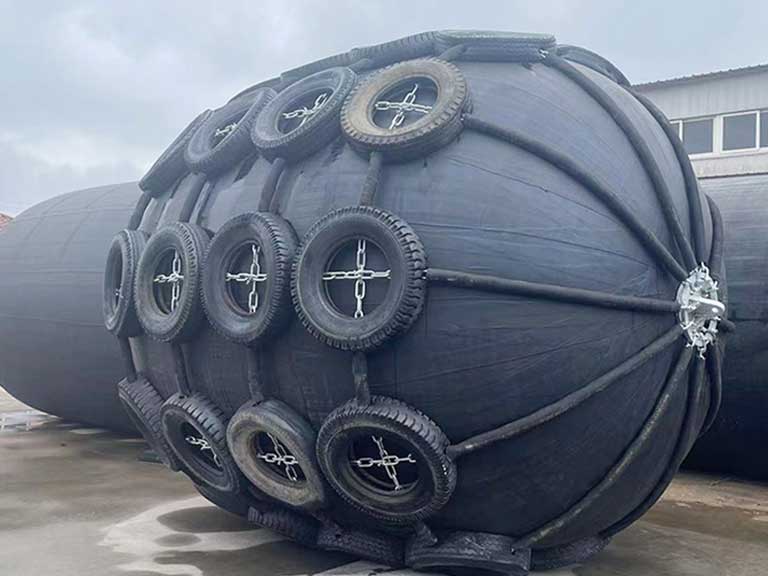
- Pneumatic and Foam Fenders: Air-filled fenders, often called pneumatic fenders, use air pressure to absorb the energy of an impact. Foam fenders are strong and light, which makes them good for certain types of naval architecture.
- Specialized Fenders: Cone fenders and other specialized fender shapes are great at absorbing energy in small spaces. Cell fenders have new hollow-cell designs that absorb a lot of energy with very little response force. Donut fenders with a toroidal shape are great for anchoring boats offshore.
We provide a wide choice of marine fenders. All of which are made to protect ships and other nautical structures.

Key Factors to Consider When Choosing The Right Marine Fenders
When selecting fenders for vessels, it is essential to consider several key factors. This ensures your berthing facilities remain durable and reliable, safeguarding both vessels and the surrounding infrastructure. Choosing the appropriate fenders requires a thorough understanding of numerous factors. These factors influence the fenders’ effectiveness in protecting vessels and the surrounding wharf infrastructure during mooring operations.
Vessel Size and Type Considerations
When choosing fenders, the size and kind of boats that will be docking or mooring at a facility are quite important. Different types of vessels produce different amounts of kinetic energy when they dock. Thus, fenders need to be able to absorb and spread this energy properly. For example, tankers and container ships need stronger fender systems since they are so big and heavy.
Berthing Environment and Conditions
The selection of fenders is largely influenced by the layout and arrangement of the mooring location. Factors such as water depth, tidal variations, and available space must be considered. Additionally, careful consideration should be given to the environmental conditions at the mooring site. This includes the strength of currents, tidal fluctuations, and the typical behavior of waves.
Impact Energy Requirements
It’s very important to determine the expected impact of energy when a vessel docks. This means looking at things like the speed, weight, and angle of approach of the vessel to figure out how much energy your fender system needs to absorb. To make sure there are enough safety margins, professional impact energy calculations should include the worst-case situations.
Material and Construction Quality
Choosing the correct material for maritime fenders is important to make sure they work well and last a long time. The materials used to make fenders have a big effect on how long they last and how well they work.
Rubber Quality and Durability Factors
The kind and quality of rubber used in fenders are quite important. High-quality rubber compounds make things last longer and make them less likely to be damaged by things like UV rays, ozone, and changes in temperature. High-quality rubber compounds are more resistant than other types of rubber. They keep their suppleness and energy-absorbing characteristics even after years of being compressed.
- The material composition of marine fenders directly determines their performance longevity.
- High-quality marine fenders are typically made with specially formulated rubber.
Reinforcement and Corrosion Resistance
To make the structure stronger, fenders may use materials like steel or nylon to reinforce them. The type of reinforcement material you choose should match how you want to use it. If you want your fenders to last longer, you need to choose materials that don’t corrode, such as stainless steel parts, in corrosive situations.
- Internal reinforcement structures significantly enhance fender durability.
- Corrosion-resistant components are essential for marine fenders, particularly in saltwater environments.
Sizing Guidelines for Marine Fenders
For the safety of everyone at sea, it is important to know the rules for sizing marine fenders. Selecting the correct fender size is crucial for keeping your boat safe when you dock or berth it.
Fender Diameter to Vessel Length Ratio
The diameter of a marine fender should be in line with the length of the boat. A good rule of thumb for cylindrical fenders is to have one inch of diameter for every four to five feet of boat length. Two inches is the optimum size for round fenders.
Number of Fenders Needed Based on Boat Size
The size of the boat will determine how many fenders it needs. A decent rule of thumb is to have one boat bumper for every ten feet of waterline on each side. Even the tiniest boats should have at least three. Most maritime experts say that boats under 25 feet should have at least three fenders on each side. For every 10 feet of waterline length, they should add another fender.
Here are some key considerations for sizing and placement:
- Proper fender sizing follows industry standards. For example, cylindrical fenders should have a diameter of one inch for every four to five feet of vessel length to give enough protection.
- Along with length measures, the vessel’s displacement (weight) must also be taken into account. This is because heavier boats create stronger impact forces that need larger diameter fenders.
- Strategic fender placement is just as crucial as the number of fenders. Placing fenders at the broadest beam points and places that are most likely to make contact during docking gives full protection.
- Oversized fenders provide additional safety margins but must be balanced against practical considerations, including storage space, handling weight, and deployment efficiency.
- Specialized vessels may need special sizing calculations that don’t follow normal rules. Working with marine protection experts makes sure that the size is right for each vessel’s unique structure.
Conclusion
Choosing the correct marine fenders is an important investment. It will keep your boat safe and ensure it can operate safely. Zhonghaihang Shipping Supply can provide you with professional marine protection solutions.
You can save a lot of money on repairs, cut down on downtime, and make your boat last longer by choosing the right fenders. We encourage you to talk to our marine protection experts to find the best fender solutions for your needs. This will make sure your boat has the protection it needs.
FAQ
What are the primary functions of marine fenders in maritime operations?
How do I determine the correct size of fender for my vessel?
What are the different types of marine fenders available?
What factors should I consider when selecting a marine fender material?
Talk to our team.
Share a few details about your project — vessel, port, or operation. We'll reply within 24 hours.