

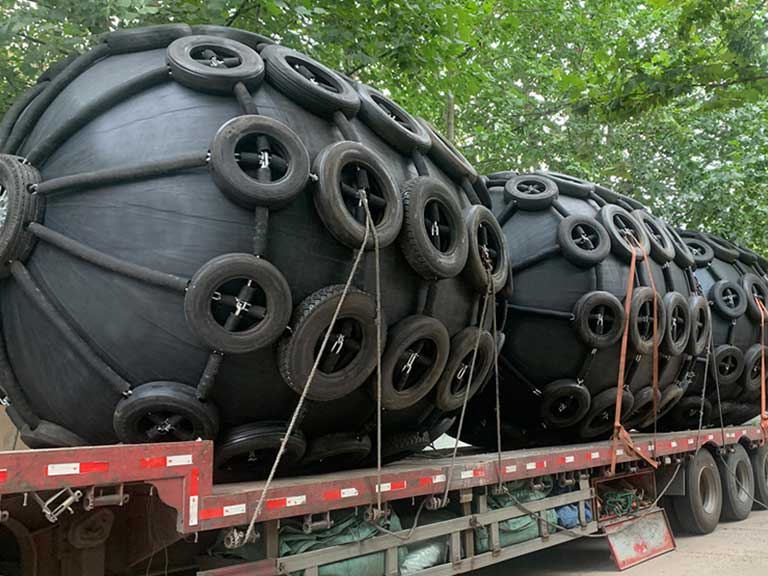
Maritime professionals often need to protect vessels and port structures. What solutions are there to keep these assets safe? Pneumatic fenders are great for protecting ships and ports. They can be deflated for easy moving. This makes them a smart choice for tough conditions — and a key reason why pneumatic fender demand is growing across commercial shipping and offshore energy sectors.
At Zhonghaihang Shipping Supply, we focus on protecting ships and harbours. We make marine equipment, like fender pneumatic and rubber fenders, to do this.
Understanding Pneumatic Fenders
Pneumatic fenders are inflatable rubber devices. They protect ships and port structures during berthing and mooring. When a vessel makes contact, the fender compresses and absorbs the impact energy. This prevents damage to both the hull and the dock.
They float freely on the water surface. This makes them highly adaptable to tidal changes and different vessel sizes.
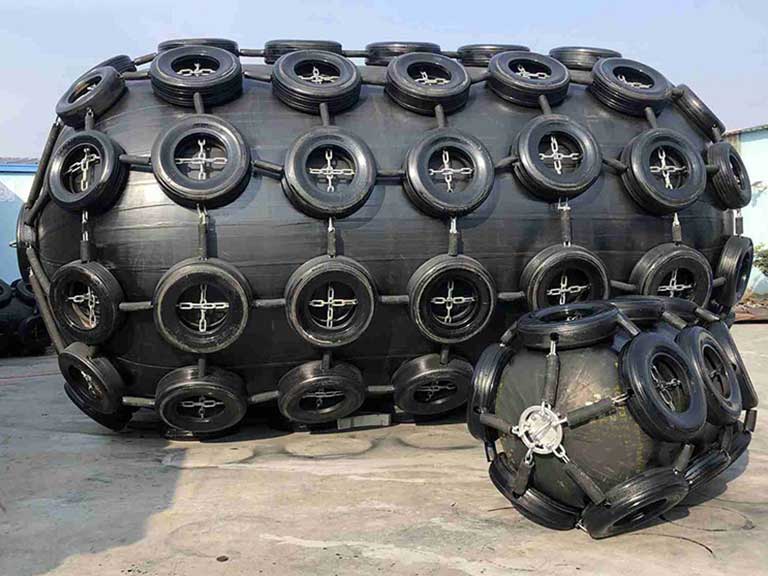
Structure of Pneumatic Fenders
A pneumatic fender has three main components:
- Rubber body: Multiple reinforced rubber layers form the main structure. The layers are bonded together to handle repeated compression without failure.
- Air chamber: The interior is filled with compressed air. This creates a progressive resistance as the fender compresses.
- Protective outer layer: A chain-and-tyre net or sling assembly covers the rubber body. This protects it from abrasion and impact damage.
ISO 17357-1:2014 Compliance
All standard pneumatic fenders must meet ISO 17357-1:2014. This standard covers three key areas:
- Material requirements: Minimum tensile strength and elongation values for the rubber layers
- Performance testing: Energy absorption and reaction force must be verified at rated compression
- Pressure testing: Fenders are tested at 150% of their rated internal pressure to confirm structural integrity
Fenders that meet this standard deliver consistent, verified performance. Always request test certificates from your supplier before purchase.
Key Applications of Pneumatic Fenders
Pneumatic fenders are versatile and essential in many applications. They ensure safe and efficient operations in different contexts.
| Application | Description | Benefits |
| Ship-to-Ship Operations | Facilitates safe cargo transfers between vessels | Enhances safety, absorbs wave and current impacts |
| Port and Harbor Protection | Protects infrastructure and vessels during docking | Safeguards against impact damage, enhances maritime safety |
| Temporary Berthing Solutions | Enables the quick establishment of safe mooring points | Offers portability and versatility, ideal for remote or changing environments |
Ship-to-Ship (STS) Operations
Pneumatic fenders are the standard choice for STS cargo transfers. Both vessels are moving. The fender must absorb wave motion and the relative movement between ships.
Because pneumatic fenders float freely, they stay positioned between the two hulls at all times. They adapt to changes in freeboard as cargo is transferred. This is something fixed fenders cannot do.
Port and Harbour Protection
Pneumatic fenders are used in ports with large tidal variations. A fixed rubber fender only contacts the vessel hull at one height. A floating pneumatic fender maintains contact across the full tidal range.
They are also deployed at berths that handle a wide variety of vessel sizes. A single fender size can protect vessels of different hull profiles.
Temporary Berthing Solutions
Pneumatic fenders require no permanent installation. This makes them ideal for temporary or emergency berthing. They can be deployed quickly at any location with a suitable anchor point.
They are commonly used at offshore oil and gas facilities, anchorage areas, and remote terminals without fixed infrastructure.

Maintenance Requirements
Pneumatic fenders require regular inspection to maintain safe performance.
| Inspection Item | Frequency | Action if Problem Found |
|---|---|---|
| Internal pressure check | Before each deployment | Re-inflate to rated pressure |
| Outer surface inspection | After each use | Repair cuts or abrasions promptly |
| Chain and tyre net condition | Monthly | Replace worn or corroded components |
| Valve inspection | Every 3 months | Replace faulty valves immediately |
| Full performance check | Annually | Return to supplier for certified testing |
Store fenders in a shaded area away from direct sunlight, ozone sources, and oil. Clean with fresh water and a neutral detergent after each deployment.
Frequently Asked Questions
What is the main difference between a pneumatic fender and a solid rubber fender?
How do I choose the right fender size for my vessel?
What internal pressure should a pneumatic fender be maintained at?
How often should I inspect a pneumatic fender?
Can pneumatic fenders be repaired if damaged?
What is the service life of a pneumatic fender?
Talk to our team.
Share a few details about your project — vessel, port, or operation. We'll reply within 24 hours.