

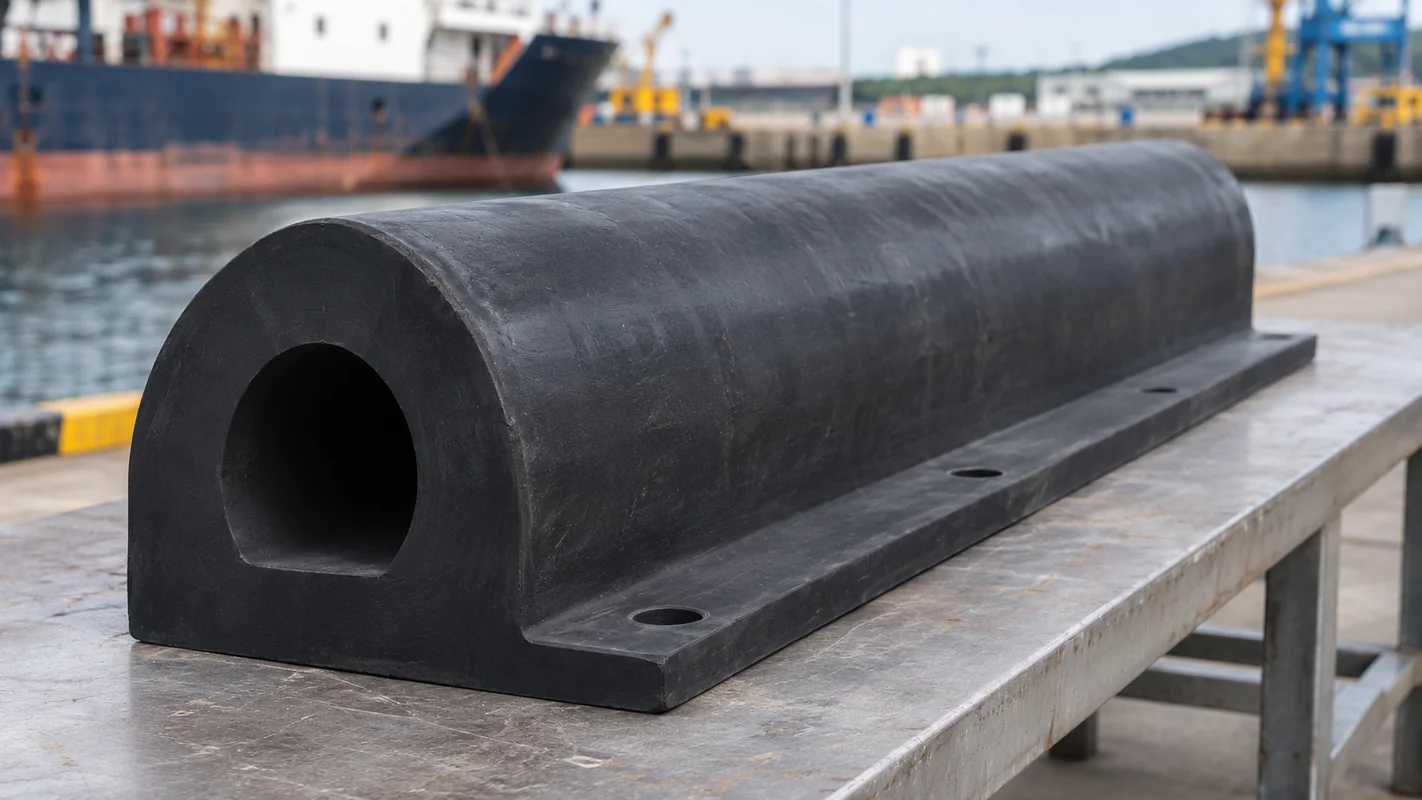
A rubber fender is an elastomeric marine buffer that compresses between a vessel and a dock, absorbing berthing energy and limiting the force passed to the hull and the structure. A typical design case shows the scale: a 10,000-tonne cargo ship approaching a sheltered berth at about 0.19 m/s (0.63 ft/s) needs a fender system rated for roughly 290 kN·m (214 ft·kip) once an abnormal-berthing factor is applied. Each Rubber Fender is commonly described using three linked values: energy absorbed, reaction force and deflection. The following sections cover the kinds, functions, applications and advantages of rubber fenders, and how to maintain them for longer-lasting durability.
What is a Rubber Fender?
A rubber fender is a cushioning device consisting of elastomeric materials. They are typically intended to absorb and disperse kinetic energy. Docks and water vehicles both need high-quality rubber fenders to absorb this energy. Most ports, harbors, and offshore installations make this their first line of defense. This defensive mechanism is primarily designed to absorb collisions and impacts. As a consequence, they protect boats and structures and help keep crews safe. A molded rubber fender’s physical qualities depend on its compound and application:
Elasticity: Rubber fenders are quite stretchy. In this scenario, they enable them to deform and absorb energy during impacts. Then it returns to its previous form.
Tensile Strength: A rubber fender generally has high tensile strength. This implies they can tolerate significant stretching pressures without breaking.
Resistance: A rubber fender is also resistant to a variety of environmental conditions. Abrasion, weather, chemicals, and temperature are all important factors to consider.
Compression Set Resistance: A rubber fender is quite resistant to compression set. It may keep its shape and performance even after repeated squeezes. Furthermore, it ensures the product’s longevity.

Why Rubber Fenders Are Essential for Maritime Safety
Maritime safety heavily depends on the effectiveness of rubber fenders. These are designed to absorb impact energy during docking and mooring. They are vital for protecting vessels and docks from damage. Rubber fenders are crafted from durable materials, capable of withstanding harsh maritime conditions. Their main role is to absorb kinetic energy when a vessel meets a dock or another vessel, reducing damage to both the vessel and the docking infrastructure.
Vessel Impact Protection Mechanisms
Rubber fenders protect vessels through their ability to deform upon impact, absorbing energy. This deformation is reversible, allowing the fender to regain its original shape post-impact. The effectiveness hinges on several factors, including rubber type, fender design, and installation.
Rubber fenders distribute impact force across their surface, reducing pressure on any point. With a facing panel, the target is the ship’s allowable hull pressure: fender manufacturers’ design manuals give preliminary values of about 200 kPa (29 psi) for bulk carriers and 400–700 kPa (58–102 psi) for general cargo ships up to 20,000 DWT.
They minimize damage risk to vessels and docking structures through energy absorption.
Proper installation and maintenance are key to their impact protection effectiveness.
Energy Absorption and Distribution Properties
The energy absorption and distribution of rubber fenders are crucial to their performance. They are engineered to absorb significant energy through deformation, which is then dissipated. This reduces the impact on vessels and docks. The design and material properties of the fender influence energy distribution. For example, rubber extrusion techniques enable the creation of complex geometries. These enhance energy absorption capabilities. The energy a fender must absorb is calculated from the design vessel and berth, as shown in the berthing energy example below.
Rubber Fender Materials and Composition
Rubber fenders are made from various materials, each chosen for its unique properties. These properties contribute to the fender’s durability and performance. The right materials ensure rubber fenders protect ships effectively in different marine environments.
Natural vs. Synthetic Rubber Compounds
The main material in rubber fenders is rubber, which can be natural or synthetic. Natural rubber comes from the latex of the rubber tree. It’s known for its excellent elasticity and resistance to abrasion. Synthetic rubbers, made from petroleum, can be compounded for better heat, oil, and chemical resistance; the compound datasheet shows the actual resistance. We use both natural and synthetic rubber in our fenders, based on the application. Natural rubber is best for high elasticity needs. Synthetic rubber is better for chemical and oil exposure.
Reinforcement Materials and Performance Additives
Reinforcement materials are key to enhancing rubber fender strength and durability. Cord fabric, steel wire, and polyester are common reinforcements. They improve resistance to compression and impact. Performance additives are added to the rubber compound to boost specific properties. Anti-aging agents help resist UV light and ozone. Silica and carbon black fillers improve the rubber’s mechanical properties. By selecting and combining materials and techniques, Zhonghaihang Shipping Supply creates rubber fenders with superior ship protection. They are a crucial part of marine protection systems.
Manufacturing Process of Quality Rubber Fenders
The creation of top-notch rubber fenders is a detailed process, ensuring they are durable, flexible, and perform well. Zhonghaihang Shipping Supply craft a broad spectrum of marine gear, including rubber fenders, with cutting-edge methods. These methods adhere to the highest quality and reliability benchmarks.
Rubber Extrusion and Molding Techniques
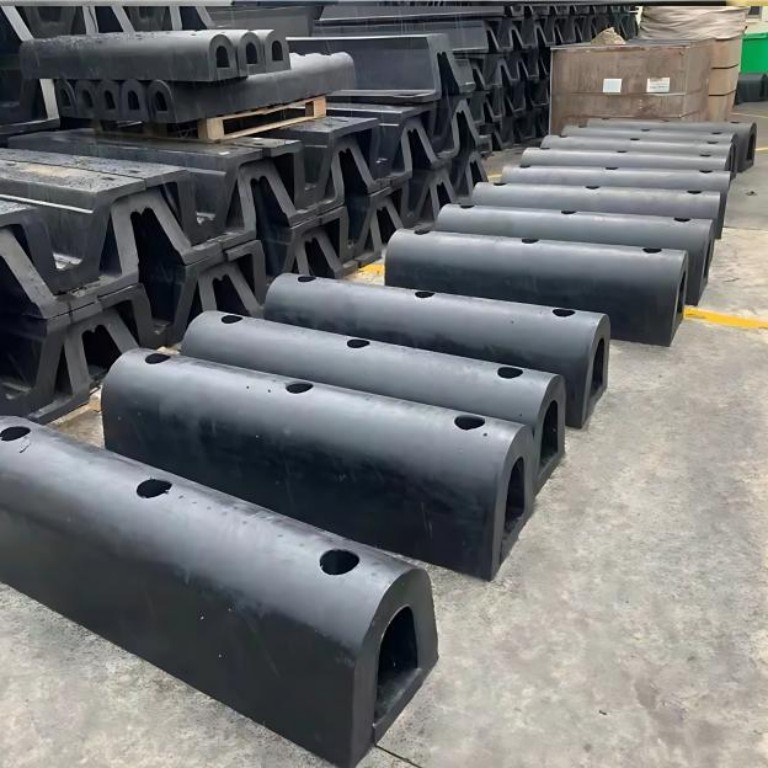
Rubber fenders are produced by extrusion or molding. Extrusion forces the rubber compound through a die to form a continuous section; molding shapes the rubber in a mold, which varies by fender type.
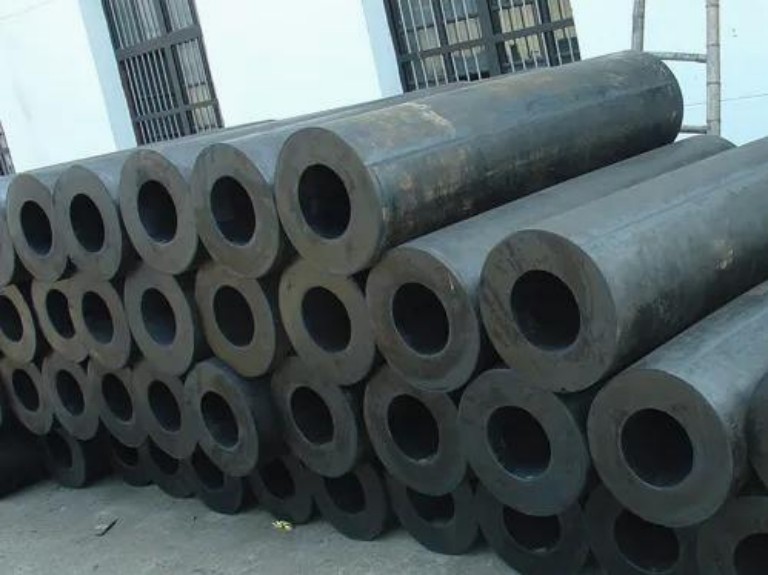
- Smaller-diameter cylindrical fenders are extruded, while larger diameters are wound.
- D-Type fenders are extruded or molded, depending on the section and length.
- W-Type and Arch fenders are designed for specific applications, requiring precise molding techniques.
The process is one factor in how closely a unit matches its catalog curve: one fender manufacturer’s design manual gives a typical performance tolerance of ±10% for molded rubber fenders and ±20% for extruded ones.

Quality Control and Testing Procedures
Quality control is a crucial part of our manufacturing process. We conduct thorough testing to confirm our rubber fenders meet expectations under different conditions.
- Material inspection to verify the quality of the rubber compound.
- Physical testing, including compression and shear tests, with rated performance reported at reference conditions such as the 0.15 m/s initial deflection velocity and 23 ± 5 °C temperature in ASTM F2192-05(2022).
- Performance evaluation under simulated operational conditions.
By following these quality control steps, we ensure our rubber fenders offer dependable protection for vessels and marine structures.
How Do Rubber Fenders Work?
A rubber fender functions based on elasticity and molecular deformation. The process collects and releases kinetic energy when it collides or makes contact with structures. Fender rubber is made from natural or synthetic rubber compounds, which consist of long polymer chains. These polymer chains are extraordinarily flexible and known for their elasticity. A collision applies pressure on the rubber surface. The polymer chains begin to stretch and distort. When a force is applied via polymer chains, they align in the same direction as the applied force. As the chains stretch, the energy from the impact is absorbed and stored as potential energy. Once the external force is eliminated, the polymer chains will naturally revert to their relaxed condition. At present, they are gradually releasing the accumulated potential energy. This absorbed energy is transformed into heat and discharged via various channels. This mechanism for releasing energy serves as a cushion. It lowers the amount of force delivered to the vessel or structure. Rubber fenders use this mechanism to absorb and gradually release energy during impacts. This elasticity and molecular-level deformation protect vessels and structures.
Berthing Energy: How Much a Fender Must Absorb
The energy a fender system must absorb is commonly estimated with the conventional kinetic-energy method of PIANC 2002, which fender manufacturers’ design manuals still use; PIANC’s Fender Guidelines 2024 move to characteristic values and partial factors, so a final design follows the current edition:
EN = 0.5 × MD × vB² × CM × CE × CC × CS, and the abnormal berthing energy EA = EN × η.
| Term | Meaning | Typical values (PIANC 2002 method, as tabulated in published fender manufacturers’ design manuals) |
|---|---|---|
| MD | Displacement of the design vessel (t) | From vessel data |
| vB | Berthing velocity normal to the berth (m/s) | Conventional merchant vessels with tug assistance, by displacement: 10,000 t, 0.094 (easy, sheltered) to 0.448 (difficult, exposed); 100,000 t, 0.083 (difficult, sheltered) to 0.201 (difficult, exposed) |
| CM | Added (hydrodynamic) mass | 1.5 for deep water to 1.8 for small under-keel clearance |
| CE | Eccentricity of the contact point | About 0.5 at quarter point, 0.7 at third point; 1.0 for end berthing |
| CC | Berth configuration | 1.0 open piled; 0.8–0.9 solid quay wall at small berthing angles (taken as 1.0 when CM comes from the PIANC added-mass method) |
| CS | Softness | Conventional approximation: 1.0 when fender deflection is at least 0.15 m |
| η | Abnormal berthing factor | PIANC 2002 values: tankers and bulk carriers 1.25 (largest) to 1.75 (smallest); general cargo 1.75; RoRo and ferries ≥2.0; tugs and workboats 2.0; cruise ships 2.0 (manufacturer recommendation) |
Worked example. A 10,000 t general cargo ship berths at a sheltered, open-piled berth in difficult conditions (vB = 0.192 m/s), with CM = 1.8, CE = 0.5, CC = 1.0 and CS = 1.0:
- EN = 0.5 × 10,000 × 0.192² × 1.8 × 0.5 ≈ 166 kN·m (122 ft·kip)
- EA = 166 × 1.75 ≈ 290 kN·m (214 ft·kip)
- Allowing for a −10% molded-fender tolerance, the catalog rated energy should be at least 290 ÷ 0.9 ≈ 323 kN·m; for an extruded profile at −20%, about 363 kN·m.
The inputs are illustrative; a real berth uses its own design vessels and approach conditions.
Advantages of Using Rubber Fenders
The functioning concept of rubber fenders demonstrates that this compound offers a variety of advantages. For example, it has exceptional shock-absorbing capabilities. Because of its distinctive features and design, rubber fenders are used in a wide range of sectors. Here are some major advantages of adopting rubber fenders:
- A fender rubber seal protects both boats and buildings from harm. It also improves safety against accidents and injuries.
- It also lowers maintenance and repair expenditures.
- Rubber fenders are a flexible alternative. It comes in many forms and sizes.
- They are simple to install, minimizing downtime during setup.
- Rubber fenders can handle a variety of environmental conditions. They can also adjust to variations in water levels and tides.
- Rubber fenders help decrease noise while docking and mooring.
- These rubber products can be customized. Thus, it may satisfy particular needs such as size, shape, and performance characteristics.
Types of Rubber Fenders
Rubber fenders are classified into several categories, each of which is designed for a unique use. Fenders are used to protect boats and docks, as well as automobiles and aircraft. Here are a few popular rubber fender varieties.
Cylindrical and D-Type Fenders
Cylindrical Fender units are simple yet effective in absorbing energy. They fit well in berthing structures and suit different vessel sizes; ZHH’s product chart covers outside diameters from 100 mm (3.9 in) to 2,700 mm (106 in). D Fenders, shaped like the letter ‘D’, offer a flat surface for easy installation on docking structures. Their versatility and performance make them a popular choice.
Dock Fenders
Dock fenders are commonly used in ports and harbors. They are carefully placed around the quay walls and docks. It protects both the vessel and the port infrastructure during docking and mooring. For example, “extruded rubber boat dock bumper” is notable.
Bumper Dock Fenders
These rubber fenders are widely used in heavy-duty applications. For example, rubber fenders protect piers and docks from bigger boats such as cargo ships and oil tankers. For example, “boat dock fender bumper” is an interesting illustration.
D-shaped Rubber Fender for Plane
This sort of white rubber fender is fitted to the plane. These fenders may be seen on pylons and platform ladders, passenger steps, or double-ended platforms. “D-shaped rubber fender for the plane” is an ideal illustration.
Pneumatic Fenders
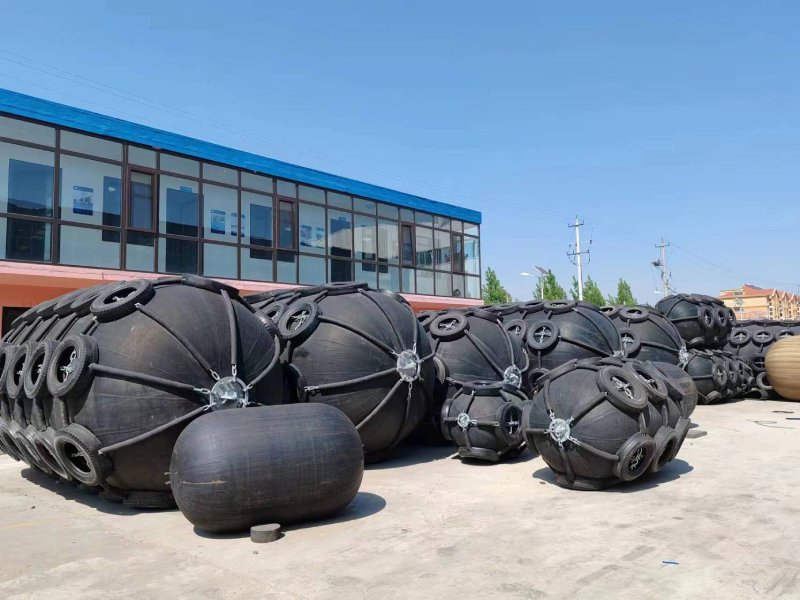
Pneumatic fenders are also known as Yokohama fenders. They are another type of marine fender that is widely used. These rubber boat fenders are inflatable and filled with high-pressure air. They are commonly utilized for ship-to-ship transfers. ZHH states that its pneumatic fenders are manufactured in accordance with ISO 17357-1:2014 in 50 kPa (7.3 psi) and 80 kPa (11.6 psi) pressure classes, in standard sizes from Ø500 × 1,000 mm to Ø4,500 × 12,000 mm, with chart values given at 60% deflection.
W-Type and Arch Fenders
W-Type fenders excel in energy absorption, ideal for high berthing energies. Arch fenders, with their arched shape, provide a large contact area during berthing. This reduces pressure on both the fender and the vessel hull. They’re perfect for high energy absorption and low reaction forces.

Cell and Cone Fenders
Cell rubber fenders consist of individual cells that compress to absorb energy. They offer flexibility and energy absorption, suitable for various applications. Cone fenders, with their conical shape, provide a gradual increase in reaction force as they compress. They’re versatile for different berthing conditions. In one manufacturer’s comparison of systems sized for about 450 kN·m (448–491 kN·m across its examples, after tolerance), the energy-to-reaction ratio was 0.43 for a single cone, 0.40 for foam-filled, 0.34 for pneumatic and dual cone, and 0.23 for cylindrical; a higher ratio means less force on the hull for the same energy, while peak reaction and hull pressure are still checked for each design. We offer a variety of rubber fenders, including M, W, D, square, and arch fenders. These cater to diverse maritime needs. Understanding each type’s characteristics and applications helps shipyard managers and harbor owners protect their assets effectively.
What Are Rubber Fenders Used For?
Rubber fenders have a wide range of uses throughout industries. Their high stress-absorbing capabilities make them useful in a variety of applications. Rubber fenders are popular in the following major sectors:
- Ports and Harbors: Dock fenders are often built along quay walls and docks. They protect vessels during docking and mooring operations. Dock fenders protect water vehicles and the port. They facilitate smooth marine operations.
- Shipping Industry: Boat and dock fenders are widely used in the manufacture of ships and boats of various kinds. The boat’s rubber fenders protect the hull against accidents with other water vehicles. It also protects the hull from locks and piers.
- Maritime Terminals: Marine rubber fenders are necessary for marine terminals. They protect loading and unloading equipment, such as cranes and freight handling machines. Marine rubber fenders guarantee the safe and seamless transportation of products.
- Building Interiors: Rubber fenders are placed into the building’s interior to absorb impacts. These rubber goods are commonly utilized in high-traffic places such as parking garages and warehouses. They assist in protecting indoor walls, columns, and automobiles.
- Recreational Boating: Boat dock fenders are widely used in recreational boating production. These rubber materials are used on boats and yachts to protect the hull from damage during docking and mooring. These fenders extend the life of vessels while keeping their beauty and usefulness.
Installation Methods and Mounting Systems
In order to maximize the protective advantages of fenders, it is crucial to understand how to install rubber fenders. Zhonghaihang Shipping Supply offers professional protection solutions tailored to diverse maritime needs. This ensures the safety and integrity of vessels and docks.
Dock and Pier Mounting Hardware
The choice of mounting hardware is critical for the secure and effective installation of rubber fenders. Common types include:
- Chain and anchor systems for securing fenders to the dock or pier.
- Bolted mounting systems that provide a rigid attachment.
- Rubber fender brackets that allow for flexibility and adjustment.
Each system has its advantages and is suited to different environmental conditions and fender types. For instance, D fenders are known for being easy to install, inexpensive, and capable of adapting to harsh environments with minimal maintenance.
Installation Best Practices and Considerations
Effective installation of rubber fenders requires careful planning and execution. Here are some best practices to consider:
- Assess the environmental conditions, including tidal ranges and water currents, to determine the optimal fender placement.
- Select the appropriate fender type and size based on the vessel traffic and berthing conditions.
- Ensure that the mounting hardware is compatible with the fender and the dock or pier structure.
- Regularly inspect the installation to identify any signs of wear or damage.
By following these guidelines, we can ensure that rubber fenders perform optimally. They provide reliable protection for maritime infrastructure. We understand that the right installation method can significantly enhance the performance and longevity of rubber fenders. Our team is dedicated to providing expert guidance and high-quality products. We aim to meet the evolving needs of the maritime industry.

Maintenance Requirements and Longevity Factors
The longevity of rubber fenders heavily relies on regular inspections and maintenance. Effective maintenance not only extends the service life of rubber fenders. It also ensures that they provide first-class collision protection for ships.
Inspection Protocols and Schedules
Regular inspections are key to spotting issues early. Inspection intervals follow the manufacturer’s instructions and the site’s maintenance plan, with more frequent checks at high-traffic or harsh-environment berths. Inspections should cover:
- Visual checks for signs of wear, such as cracks, cuts, or abrasions
- Assessment of the fender’s attachment system for any signs of loosening or damage
- Measurement of the fender’s dimensions to detect any deformation
Keeping detailed records of inspections aids in planning maintenance and replacements. Using inspection checklists ensures thoroughness and consistency.
Common Damage Patterns and Wear Issues
Rubber fenders face various damage types, including:
- Cracking due to UV radiation or extreme temperatures
- Abrasion from repeated contact with vessels or structures
- Deformation resulting from excessive force or improper installation
Recognizing these damage patterns aids in crafting more effective inspection and maintenance plans. For example, fenders under high UV exposure may need more frequent checks for surface cracks.
Strategies for Extending Service Life
To extend rubber fender lifespan, several strategies are effective:
- Regular cleaning to remove dirt and marine growth that can cause abrasion
- Application of protective coatings to enhance resistance to UV and ozone
- Ensuring proper installation and alignment to minimize uneven stress
Replacement timing depends on application, environment, material quality, and maintenance history, as recorded in the inspection log. A proactive maintenance program can significantly extend their service life, ensuring reliable protection.

Comparing Rubber Fenders to Alternative Protection Systems
Rubber fenders are a top choice for maritime protection, but how do they compare to other options? Zhonghaihang Shipping Supply designs and manufactures a wide range of marine equipment. We know the importance of picking the right fender system for your needs.
- Pneumatic Fenders: Pneumatic fenders are made for efficient cargo transfers between ships and need little upkeep. They float and adjust to water levels, ensuring they work well in many conditions.
- Marine Airbags: Marine airbags are another option for maritime protection, especially during launching and landing. They provide a cushioning effect and can be reused many times.
- Foam Fenders: Foam fenders are light and easy to put in place. Manufacturers typically quote a ±15% performance tolerance for foam, against ±10% for molded rubber, so compare rated energy and reaction at the same tolerance and test conditions.
By looking at these comparisons, we can see the pros and cons of each fender system. This helps us make informed decisions for maritime protection.
Cost Considerations and Return on Investment
When evaluating marine protection solutions, cost is a key factor. Maritime professionals and harbor owners must weigh the initial investment against long-term benefits and maintenance expenses. Rubber fenders represent a significant investment for ports and maritime infrastructure. Yet, their durability and effectiveness in preventing damage justify their cost over time.
Initial Investment vs. Long-term Value
The cost of rubber fenders varies with size, material, and type. Although the initial expense may seem high, their long-term benefits and value are crucial to consider.
- Reduced repair costs due to minimized damage from vessel impacts
- Extended lifespan of dock structures and equipment
- Enhanced safety for both vessels and personnel
Rubber fenders reduce repairs and replacements over time; the actual saving depends on site-specific repair, downtime and maintenance costs.
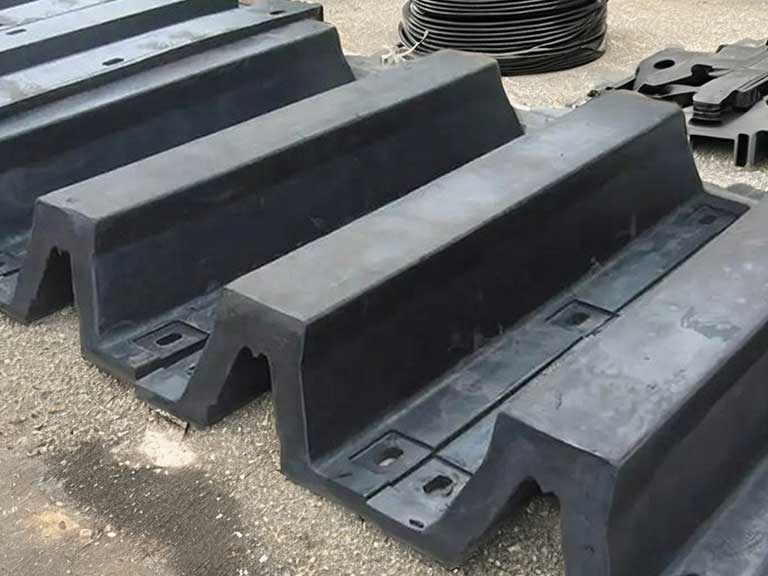
Maintenance Costs and Replacement Cycles
Regular maintenance is essential for rubber fenders’ longevity and effectiveness. We advise regular inspections to catch issues early.
| Maintenance Activity | Frequency | Cost Impact |
| Visual Inspections | Monthly | Low |
| Detailed Inspections | Quarterly | Moderate |
| Replacement of worn parts | As needed | High |
Understanding maintenance costs and replacement cycles is crucial for budgeting. This knowledge helps maritime operators make informed investment decisions. Reliability and expertise in managing rubber fender systems are paramount. Our team offers professional guidance and support to maximize your investment’s return.
Selection Criteria for the Optimal Rubber Fender
Choosing the right rubber fender requires a detailed analysis of several factors. These include vessel traffic and environmental conditions. Our team offers professional protection solutions tailored to your maritime infrastructure’s specific needs.
Vessel Traffic Analysis and Sizing Requirements
Understanding vessel traffic patterns is key to selecting the correct rubber fender. The size of the vessel, berthing velocity, and docking frequency are critical. These elements determine the necessary fender size and type.
- Vessel size and type
- Berthing velocity and angle
- Docking frequency and operational patterns
By examining these factors, we ensure the rubber fender meets your docking system’s demands. This enhances safety and reduces maintenance costs.
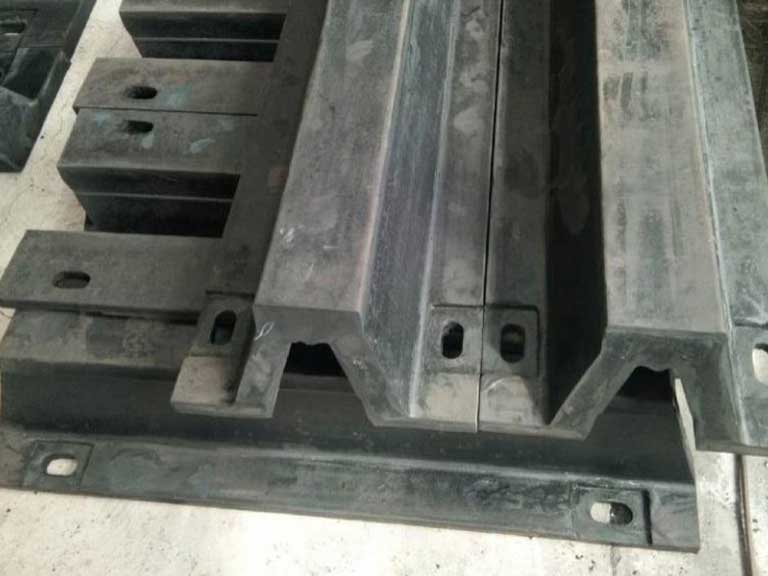
Environmental and Climate Considerations
Environmental conditions, such as sea currents, wave action, and climate, greatly affect rubber fender performance and longevity. We take these into account to recommend fenders that can withstand harsh marine environments.
- Sea currents and wave action
- Temperature fluctuations and climate conditions
- Chemical exposure and pollution levels
Our expertise in environmental assessment guarantees the chosen rubber fender offers optimal protection under various conditions.
Performance Specifications and Energy Absorption Needs
The performance specifications of rubber fenders, especially their energy absorption, are crucial for effective vessel impact protection. We assess these specifications to ensure the fender meets your vessel’s operational needs.
- Energy absorption and reaction force
- Fender compression and deflection characteristics
- Durability and resistance to wear
- Rated values after manufacturing tolerance, and correction from the test reference conditions to site speed and temperature
By concentrating on these performance aspects, we assist you in selecting rubber fenders. They protect your infrastructure and enhance operational efficiency.
Conclusion
Rubber fenders are crucial for protecting maritime assets and maintaining the integrity of docking facilities. Choosing the right rubber fender is essential for maritime needs. Factors like vessel size, docking conditions, and environmental factors must be considered. As a China Marine Equipment Supplier, Zhonghaihang Shipping Supply recognizes the importance of high-quality rubber fenders. They protect vessels and docks from damage, ensuring reliable and efficient maritime operations. Our custom design and manufacturing capabilities offer tailored solutions for each client. Investing in our rubber fender solutions enhances safety, reduces maintenance costs, and improves operational efficiency.

FAQ
Why are maritime fenders necessary?
What do fenders prevent?
What are the different types of rubber fender systems available?
How do I choose the right rubber fender for my specific needs?
How much energy does a rubber fender need to absorb?
What materials are used in the manufacture of rubber fenders?
How do I maintain my rubber fenders to extend their service life?
What are the cost considerations when investing in rubber fenders?
Can rubber fenders be custom-designed for specific applications?
Talk to our team.
Share a few details about your project — vessel, port, or operation. We'll reply within 24 hours.