


Pneumatic rubber fender is essential for protecting vessels and docking structures in marine environments, particularly during severe weather conditions. While these fenders provide robust protection, understanding their advantages and limitations is crucial for effective utilization.
Zhonghaihang Shipping Supply pneumatic rubber fenders have a special design. They use a synthetic-cord-reinforced rubber sheet and air inside. This lets them float and absorb shocks between vessels or ships and docks. Their design keeps them working well, even in harsh weather.
What are Pneumatic Fenders?
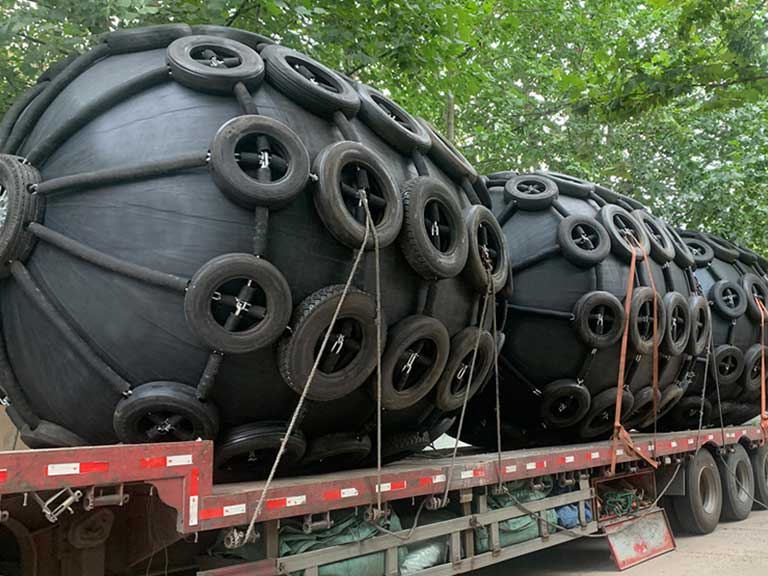
Pneumatic rubber fenders, commonly known as Yokohama-type fenders. They are inflatable devices used to cushion impacts during ship berthing or mooring operations. They consist of a rubber body filled with compressed air, which absorbs kinetic energy from vessel movements.
The core structure includes an inner rubber layer for air sealing, reinforcement layers of synthetic tire-cord for pressure maintenance, and an outer rubber layer for abrasion resistance. This design allows the fender to float and compress under load, distributing forces evenly.
ISO 17357 Standards and Compliance
Our fenders meet ISO 17357, a global standard for quality and performance. This standard covers both high and low-pressure fenders.
- All quality pneumatic rubber fenders must be made and tested to ISO 17357 standards.
- ISO 17357 sets strict rules for materials, performance, and size.
- It has two parts: ISO 17357- 1 for high-pressure and ISO 17357- 2 for low-pressure fenders.
- Following this standard means fenders work well in extreme weather.
We test our fenders to make sure they meet or beat these standards.

The Engineering Behind Weather Resistance
Pneumatic rubber fenders are weather-resistant thanks to advanced design. In addition, pneumatic fenders’ design construction, and reinforcement tech keep them strong in all weather.
Multi-Layer Construction Technology
The multi-layer design is key to their weather resistance. A synthetic-tyre-cord layer gives strength to keep air inside. The inner rubber seals this air. Together, they keep the fender working well.
| Layer | Function | Material |
| Inner Layer | Seals pressurized air | Rubber |
| Reinforcement Layer | Maintains internal air pressure | Synthetic-tyre-cord |
| Outer Layer | Protects against abrasion | Rubber |
Synthetic-Cord Reinforcement Design
The synthetic-cord design is crucial for weather resistance. High-strength synthetic cords are woven into the rubber. This creates a network that spreads stress evenly. It keeps the Yokohama fender’s air pressure steady, even under extreme pressure.
- It gives great strength while staying flexible.
- It resists damage from moisture, salt, and temperature changes.
- It keeps absorbing energy even after many compression cycles.
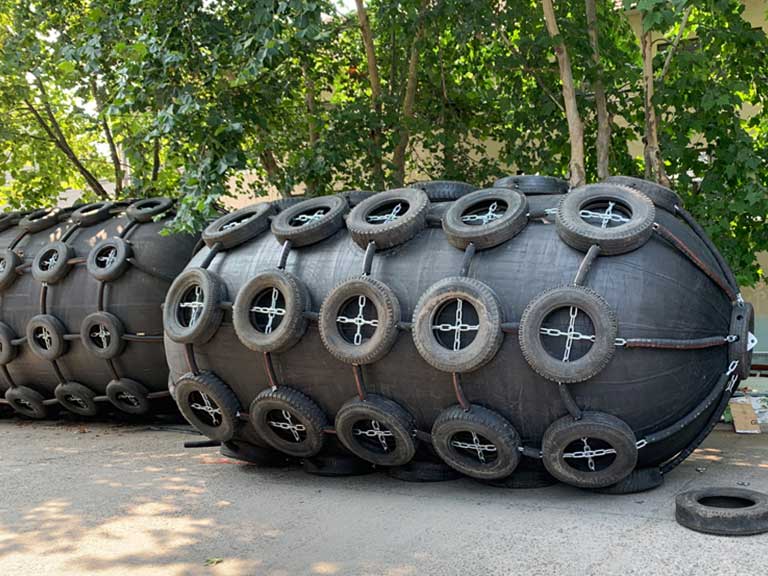
Pneumatic Rubber Fenders Handle Adverse Weather Through Innovative Design
Pneumatic rubber fenders are made to handle tough weather. They work well in extreme conditions, making them a top choice for the sea.
Air Compression Mechanics
Upon impact, the internal air compresses, absorbing energy progressively. Unlike solid rubber fenders, which stiffen in cold or degrade over time, pneumatic types maintain consistent absorption as long as air pressure is controlled. They typically exhibit no significant under inclined compression up to 15 degrees.
Consistent Performance Under Extreme Temperatures
Pneumatic rubber fenders keep working well, no matter the temperature. Their special rubber doesn’t crack or get too hard or soft. This means they protect ships reliably, even when it’s very hot or cold.
Key aspects of pneumatic rubber fenders’ performance in adverse weather include:
- Unlike regular rubber, they stay flexible in cold. They keep absorbing energy even when it’s below -50°C.
- They don’t get damaged by temperature changes. They work the same in hot tropical weather and cold arctic conditions.
- They perform well in changing weather, which is important for ships in different places.
- In addition, they stay strong and work right, even when the temperature changes fast, like during storms.
Performance in Rough Sea Conditions
In high winds and storms, pneumatic fenders stay stable. Their size and buoyancy make a safe buffer zone. This reduces the force on mooring lines. Energy absorption remains high, reducing mooring forces and vessel damage. For example, in typhoon-prone areas, they have protected ports by maintaining performance under cyclic loads.
| Feature | Benefit | Impact |
| Multi-layered construction | Effective wave impact absorption | Reduced damage to vessels and infrastructure |
| Substantial size and buoyancy | Stable buffer zone creation | Lower mooring forces and enhanced safety |
| Flexible rubber material | Temporary deformation without loss of functionality | Continuous protection during extreme weather |

Types of Pneumatic Rubber Fenders
The type and design of pneumatic fenders matter a lot. We have different types to meet various needs at sea.
- Molded vs. Wrapped: Molded fenders offer thicker, more durable construction for severe weather. While wrapped versions are lighter and cost-effective for milder conditions.
- Net-Type vs. Sling-Type: Net-type (Type I) includes chain-and-tire nets for added abrasion resistance in rough seas. Sling-type (Type II) is simpler and easier to deploy.
Pressure Ratings and Their Significance
Knowing the pressure ratings of pneumatic fenders is key. We have two initial ratings for our fenders.
50kPa Initial Pressure Systems
Our Pneumatic50 (P50) systems start at 50kPa. They work well for many uses and absorb energy well.
80kPa Initial Pressure Systems
The Pneumatic80 (P80) systems start at 80kPa. They are our top choice. In addition, they can absorb about 40% more energy than P50 systems.
They are perfect for big vessels or places with bad weather. Their higher pressure means they can handle bigger impacts.
- These systems are for places that need to handle a lot of energy in bad weather.
- They offer extra safety in tough weather, great for ports in hurricane areas.
- Even though they need stronger construction, they are easy to install and need little upkeep.
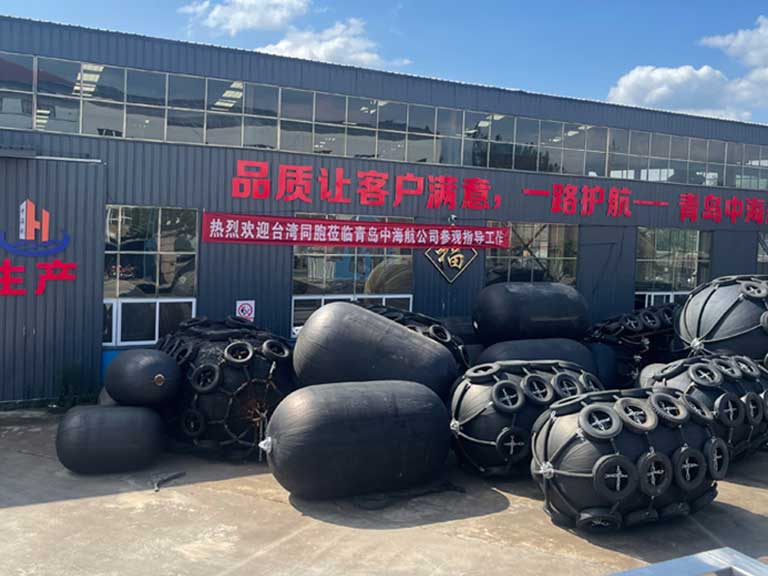
Safety Features for Extreme Weather Protection
Our pneumatic rubber fenders have important safety features for bad weather. These features help keep the fenders working well in harsh conditions.
Our fenders have advanced safety valves. They keep the pressure right, even in bad weather. This prevents damage from too much pressure.
In addition, the outer rubber layer of our fenders protects against the environment. We make it with special additives to fight off UV, ozone, saltwater, and extreme temperatures.
- The outer layers protect against bad weather.
- Our advanced polymers keep the layers flexible and effective over time.
- Some of our top fenders have extra coatings for even better weather protection.
Chain and Tire Net Protection Systems
Pneumatic fenders use strong chain and tire net systems for bad weather. These systems help the fenders last longer in harsh marine environments.
- Advantages of Additional Protection: The chain and tire net systems add extra protection to the fender. They make it stronger against damage from bad weather. Using tires and rubber sleeves, except for fiber nets, shows how effective these systems are.
- Durable Chain Materials: The quality of the chain materials is key for these systems. Hot-dip galvanized chains resist corrosion well, even in saltwater and weather. The chains fit the fender size, ensuring they are strong in bad weather.
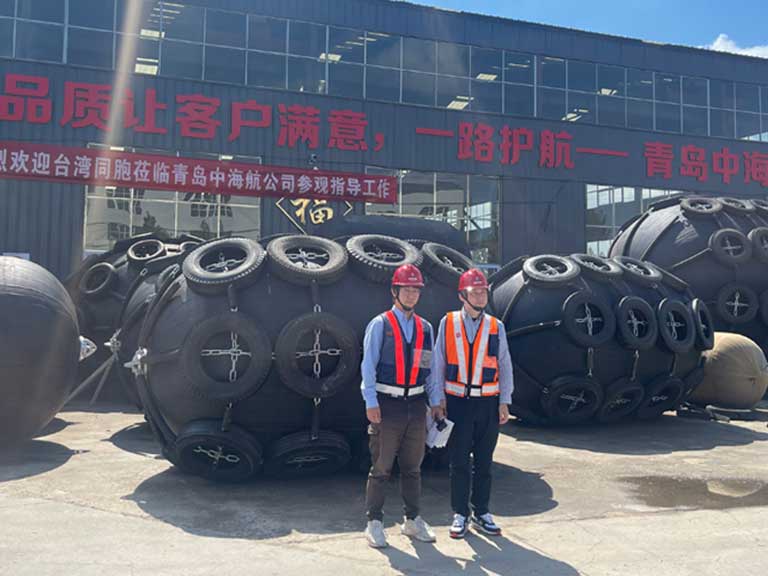
Adaptability to Tidal Variations
These fenders can float on water, adapting to tide changes. This keeps them working well, protecting ships consistently. This is key to keeping maritime operations safe and sound.
They also handle a ship’s vertical movements in bad weather. This keeps contact and pressure even, which is crucial during docking in rough seas.
| Feature | Pneumatic Rubber Fenders | Conventional Fenders |
| Adaptability to Tidal Variations | Excellent, due to floating capability and vertical movement accommodation | Limited, as they are fixed and do not adjust to changing water levels |
| Protection During Adverse Weather | High, as they maintain consistent contact with vessels despite wave action | Variable, as their fixed nature can lead to damage from wave-induced vessel movements |
| Maintenance Requirements | Regular inspections and pressure checks are necessary | Generally lower maintenance, but can be more labor-intensive to replace or repair |
Installation Advantages in Harsh Environments
Pneumatic fenders are easy to install in tough weather. Installing pneumatic fenders is cheap and simple. They don’t need special tools. We use guy rope or chain systems, which are both effective and affordable.
Guy ropes and chains help pneumatic fenders work better in bad weather. They keep the fenders in place but let them move a bit. This makes them work well.
- These systems make pneumatic fenders work better in harsh weather. They keep the fenders in place but let them move a bit.
- You can set up these mooring systems in different ways. This depends on the weather at the site. You can add more points for really tough places.
- Guy ropes soak up shock from storms. Chains are strong for places that always have bad weather.
- You can change how the mooring is set up with the seasons. You add more points in stormy times and take them off when it’s calm.
- You can install and keep up these systems without special tools. This is great for places that are hard to get to in bad weather.
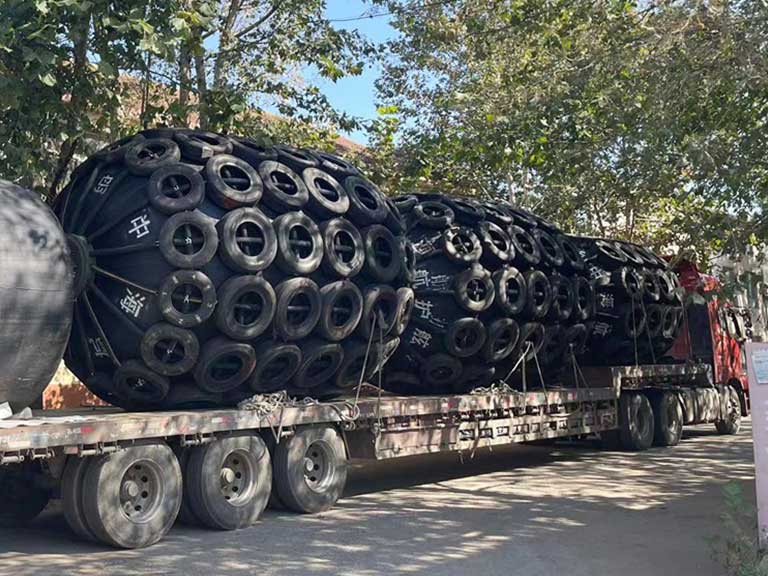
Maintenance Requirements in Adverse Weather
Keeping pneumatic rubber fenders in good shape is important in bad weather. It’s not just about regular checks. It’s also about making sure they work well in tough conditions.
Checking the pressure every year is key. It makes sure the fenders are at the right pressure. This stops damage from bad weather.
Keeping fenders in top shape is more than just checking pressure. After bad weather, look for damage. Before storms, check mooring gear and adjust pressure for better protection. Good fenders stay in place, even in tough weather.
- Visual inspections after severe weather events to identify potential damage.
- Checking the condition of mooring chains or ropes before storm seasons.
- Adjusting initial pressure slightly higher before storm seasons for additional energy absorption.
- Leveraging the self-buoyancy characteristics of quality pneumatic fenders for minimal readjustment.
Applications in Challenging Weather Environments
Pneumatic rubber fenders are great for tough weather. They protect ships and docks in bad weather. They’re key for safe maritime work. For example, they help move cargo or people safely between ships. They absorb shock and protect ships from damage.
In stormy ports, pneumatic fenders are a must. They offer many benefits, like:
- They keep ports running even when the weather gets worse.
- They absorb shock, protecting ships and docks from storms.
- Unlike hard fenders, they don’t pass on damage to docks in storms.
- They stay in place, even with fast-changing water levels.
- They’re reliable in hurricane or typhoon zones, too.

Hydro-Pneumatic Fenders for Specialized Weather Conditions
Hydro-pneumatic fenders are made for submarine docking in bad weather. They’re essential for safe and efficient work in harsh seas.
- Submarine Docking in Adverse Weather: Submarine docking needs special fenders for bad weather. Hydro-pneumatic fenders are designed for this. They protect submarines and docking areas well.
- Water-to-Air Ratio Optimization: The water-to-air ratio is key for hydro-pneumatic fenders. It affects their buoyancy, stability, and shock absorption. For submarines, the ratio is usually 55/45 to 65/35. This balance is crucial for stability and shock absorption.
Certification and Testing for Weather Resistance
At Zhonghaihang Shipping Supply, we know how important certification and testing are. Our pneumatic rubber fenders are tested to meet international standards like ISO17357-1:2014.
We get third-party certifications to prove our fenders’ quality. Independent bodies test our products to ensure they meet international standards.
Our testing includes:
- Accelerated weathering tests to mimic years of UV exposure, saltwater, and temperature changes.
- Advanced compression testing to simulate storm conditions.
- Cyclic loading tests to check our fenders’ performance after many uses.
| Test Type | Description | Benefits |
| Accelerated Weathering Tests | Simulates years of UV exposure, saltwater immersion, and temperature cycling in compressed timeframes. | Ensures long-term durability and resistance to environmental factors. |
| Compression Testing | Replicates dynamic loading patterns experienced during storm conditions. | Verifies energy absorption capabilities under worst-case scenarios. |
| Cyclic Loading Tests | Confirms fenders’ ability to maintain performance after thousands of compression events. | Simulates years of service in high-traffic, storm-prone locations. |
Conclusion
Our pneumatic rubber fenders offer top-notch protection in all weather. They keep your vessels and facilities safe. At Zhonghaihang Shipping Supply, we focus on creating these amazing devices.
Our fenders use air compression, multi-layer reinforcement, and weather-resistant materials. This makes them perform well in any weather. You can rely on them in extreme weather, giving you peace of mind.
We’re committed to quality, testing, and certification. You can trust our fenders to protect your vessels and facilities. Choose Zhonghaihang Shipping Supply for quality, service, and fast delivery!
FAQ
What makes pneumatic fenders resistant to extreme weather?
How do I choose the right initial pressure for my fender?
Can pneumatic fenders be used in tidal variations?
What safety features are included in your fenders?
How often should I perform maintenance on my pneumatic fenders?
Are your fenders suitable for ship-to-ship operations during rough seas?
Talk to our team.
Share a few details about your project — vessel, port, or operation. We'll reply within 24 hours.