

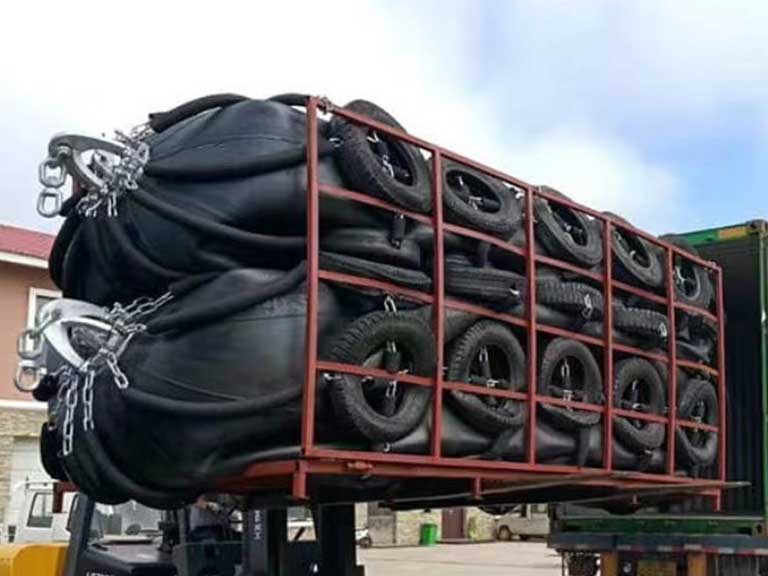
Yokohama fenders usually work at an initial internal pressure of 50 kPa or 80 kPa, depending on the size of the ship and the energy it uses to dock. Higher pressure means more energy absorption but also a stronger reaction force. The pressure should be kept within ±5% of the standard, which means checking it often.
Why Correct Pneumatic Fender Pressure Matters?
Inflating Yokohama fenders to the right pressure is crucial for optimal performance and vessel protection. Under-inflation reduces shock absorption, leading to potential hull damage. And over-inflation makes the fender too rigid, limiting its ability to compress and absorb impacts effectively. According to ISO 17357-1:2014, standard Yokohama fenders are categorized into low-pressure (10 kPa) and high-pressure types (50 kPa or 80 kPa initial internal pressure at 20°C).
Key benefits of proper inflation include:
- Enhanced Energy Absorption: At 60% deflection (compression), a well-inflated fender absorbs significant kinetic energy. For example, via the formula E = ∫ F dx, where E is energy, F is reaction force, and x is deflection distance.
- Stable Reaction Force: Unlike solid fenders, pneumatic ones maintain a soft, consistent force even under inclined berthing (up to 15°), distributing loads evenly.
- Durability: Regular pressure checks prevent premature wear, extending lifespan in harsh marine environments.
Factors influencing pressure include vessel size, berthing conditions (e.g., wave height, wind), and temperature. The pressure can drop in cold weather or rise in heat, so adjust accordingly (e.g., +1-2 kPa per 10°C change).
Always consult manufacturer’s specifications. For Yokohama, use 50 kPa for standard operations or 80 kPa for heavier-duty applications like larger tankers. A rule of thumb: Inflate until firm but squeezable (about 10-20% give when pressed firmly by hand).
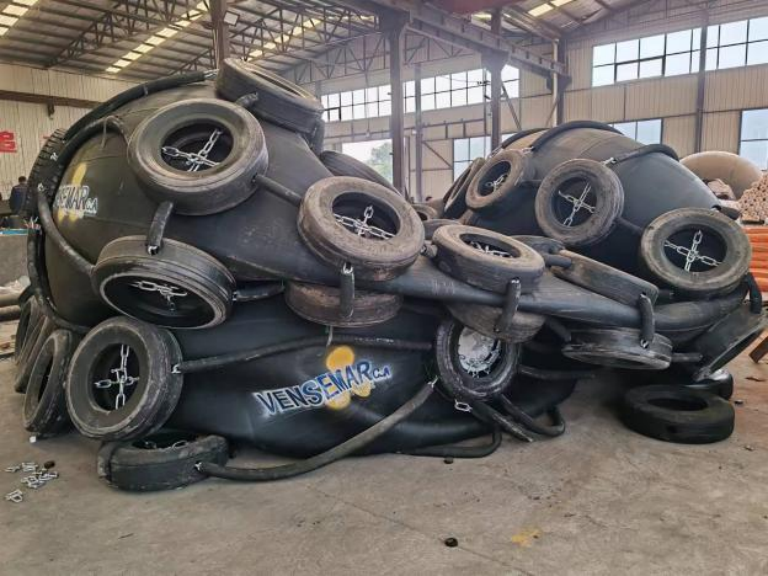
Preparation Stage
When we receive the pneumatic fender, it does not contain much air. A small pneumatic fender may be inflated with a simple hand or foot pump. It is critical to have the correct nozzle while using an inflatable. Indeed, it is vital to have a system that enters the valve and properly seals.
You can ask the Yokohama fender suppliers for help in choosing a matching inflatable. It is also possible to select a universal compact adapter, which typically serves various purposes. Instead of a screwdriver, it opens the valve cover and connects to the “Schrader valve” on the car’s tires.
Step-by-Step Inflation Guide
- Inspect the Fender: Check for damage or defects. Ensure it’s at ambient temperature (ideally 20°C) for accurate inflation.
- Remove Valve Cover: Unscrew carefully; this exposes the check valve, which prevents deflation post-inflation.
- Attach Inflator: Connect the pump nozzle securely to the Schrader valve.
- Inflate Gradually: Pump air while monitoring pressure. Target the initial internal pressure (50 kPa or 80 kPa based on model).
- Check Firmness: Use a gauge for exact readings. If unavailable, press with your thumb—aim for slight give (not floppy or rock-hard).
- Secure the Valve: Close with the plug once at target pressure. Do not exceed safety valve settings (e.g., 175-250 kPa) to avoid rupture.
- Repeat for All Fenders: Inflate others similarly.
- Install: Mount using proper rigging (e.g., chains for net-type or slings for sling-type).
Common Adjustments:
- For small yachts: Start at 50 kPa; monitor during light docking.
- For large vessels: Use 80 kPa for better rigidity under high loads.
- Troubleshooting: If pressure drops quickly, check for leaks (soap water test). Re-inflate monthly or after heavy use.
Learn More: How To Properly Inflate Pneumatic Fenders?
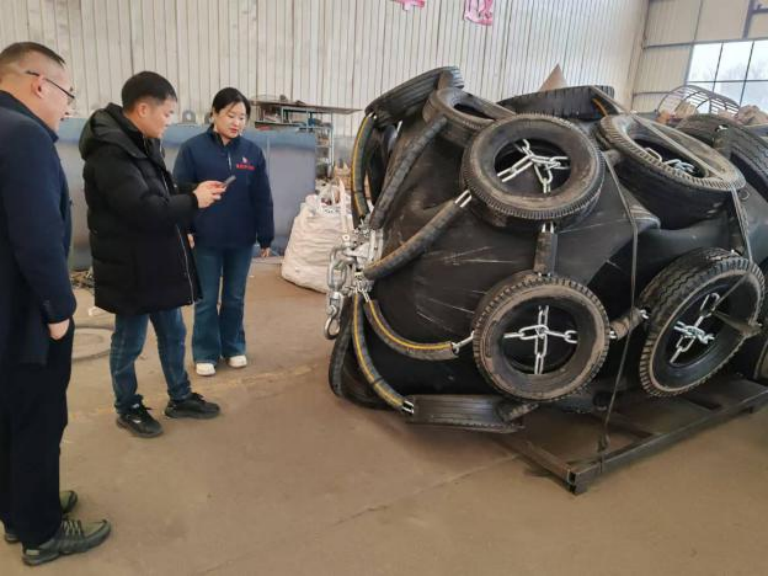
Common Yokohama Fender Dimensions and Performance Table
Below are standard specifications compliant with ISO 17357-1:2014. Data includes Guaranteed Energy Absorption (GEA) at 60% deflection, reaction force at GEA, hull pressure, safety valve setting, and testing pressure. All measurements at 0% deflection unless noted.
Pneumatic 50 Standard Sizes (Initial Pressure: 50 kPa)
| Nominal Size (Diameter x Length, mm) | GEA (kNm) | Reaction Force (kN) | Hull Pressure (kPa) | Safety Valve (kPa) | Testing Pressure (kPa) |
|---|---|---|---|---|---|
| 500 x 1000 | 6 | 64 | 132 | – | 200 |
| 600 x 1000 | 8 | 74 | 126 | – | 200 |
| 700 x 1500 | 17 | 137 | 135 | – | 200 |
| 1000 x 1500 | 32 | 182 | 122 | – | 200 |
| 1000 x 2000 | 45 | 257 | 132 | – | 200 |
| 1200 x 2000 | 63 | 297 | 126 | – | 200 |
| 1350 x 2500 | 102 | 427 | 130 | – | 200 |
| 1500 x 3000 | 153 | 579 | 132 | – | 200 |
| 1700 x 3000 | 191 | 639 | 128 | – | 200 |
| 2000 x 3500 | 308 | 875 | 128 | – | 200 |
| 2500 x 4000 | 663 | 1381 | 137 | 175 | 250 |
| 2500 x 5500 | 943 | 2019 | 148 | 175 | 250 |
| 3300 x 4500 | 1175 | 1884 | 130 | 175 | 250 |
| 3300 x 6500 | 1814 | 3015 | 146 | 175 | 250 |
| 3300 x 10600 | 3067 | 5257 | 158 | 175 | 250 |
| 4500 x 9000 | 4752 | 5747 | 146 | 175 | 250 |
| 4500 x 12000 | 6473 | 7984 | 154 | 175 | 250 |
Pneumatic 80 Standard Sizes (Initial Pressure: 80 kPa)
| Nominal Size (Diameter x Length, mm) | GEA (kNm) | Reaction Force (kN) | Hull Pressure (kPa) | Safety Valve (kPa) | Testing Pressure (kPa) |
|---|---|---|---|---|---|
| 500 x 1000 | 8 | 85 | 174 | – | 250 |
| 600 x 1000 | 11 | 98 | 166 | – | 250 |
| 700 x 1500 | 24 | 180 | 177 | – | 250 |
| 1000 x 1500 | 45 | 239 | 160 | – | 250 |
| 1000 x 2000 | 63 | 338 | 174 | – | 250 |
| 1200 x 2000 | 88 | 390 | 166 | – | 250 |
| 1350 x 2500 | 142 | 561 | 170 | – | 250 |
| 1500 x 3000 | 214 | 761 | 174 | – | 250 |
| 1700 x 3000 | 267 | 840 | 168 | – | 250 |
| 2000 x 3500 | 430 | 1147 | 168 | – | 250 |
| 2500 x 4000 | 925 | 1815 | 180 | 230 | 300 |
| 2500 x 5500 | 1317 | 2653 | 195 | 230 | 300 |
| 3300 x 4500 | 1640 | 2476 | 171 | 230 | 300 |
| 3300 x 6500 | 2532 | 3961 | 191 | 230 | 300 |
| 3300 x 10600 | 4281 | 6907 | 208 | 230 | 300 |
| 4500 x 9000 | 6635 | 7551 | 192 | 230 | 300 |
| 4500 x 12000 | 9037 | 10490 | 202 | 230 | 300 |
Terminology Explained:
- GEA: Guaranteed Energy Absorption—the minimum energy the fender can absorb at 60% deflection.
- Reaction Force: Force exerted back on the vessel at GEA.
- Hull Pressure: Contact pressure on the ship’s hull.
- Deflection: Percentage compression (0% = uncompressed).
Maintenance and Best Practices
Regularly inspect and re-inflate fenders every 1-3 months, or after intense use. Store deflated in cool, dry conditions. For enhanced durability, consider options like rubber sleeve nets or double covers. Proper care ensures safety and longevity.
By following these steps and standards, your Yokohama fenders will provide reliable protection, allowing worry-free operations at sea. For specific models or custom sizes, refer to official manufacturer documentation.
Summarise
A properly inflated Yokohama fender protects your boat while parked or moored, reducing damage to both the boat and the dock. Regular maintenance and close monitoring of the pneumatic fender pressure will ensure the safety and reliability of your boat. This will allow you to spend quality time at sea without any worries. So please take the time to determine the optimum pressure for your Yokohama flaps, and your boat will be safe for many more years.
Frequently Asked Questions
What is the standard initial internal pressure for Yokohama pneumatic fenders?
What is the difference between 50 kPa and 80 kPa fenders?
How often should I check the air pressure?
Talk to our team.
Share a few details about your project — vessel, port, or operation. We'll reply within 24 hours.