


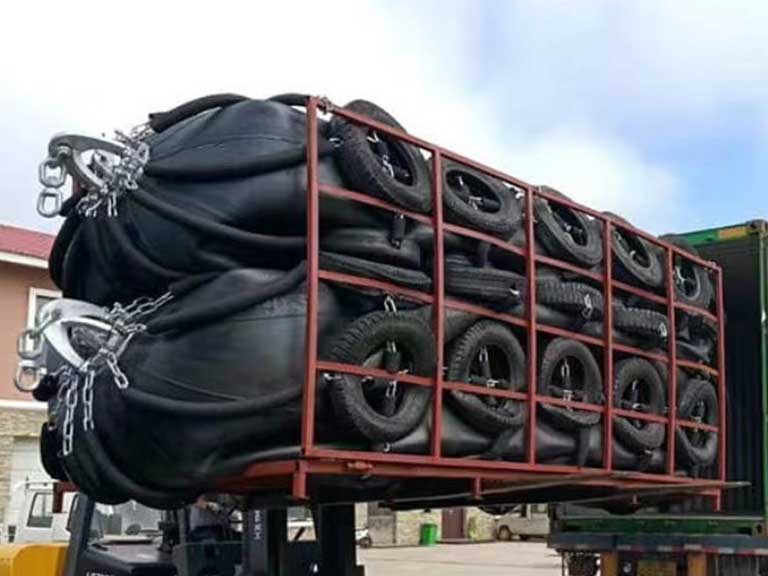
The main material used to make pneumatic fenders is tough, abrasion-resistant rubber. Inside, they are strengthened with many layers of synthetic tire cord fabric (such hias gh-tensile D3 yarn) for strength. And they are filled with compressed air to make them float and cushion them. The main parts are an exterior rubber layer, an interior airtight bladder, and a cord reinforcement layer. These often come with metal parts like shackles made of galvanized steel or stainless steel to withstand corrosion.
Understanding Pneumatic Fenders
Pneumatic fenders are floating guards made of synthetic-cord-reinforced rubber sheets with air inside. They’re designed to absorb shock during ship-to-ship and ship-to-dock docking. This helps prevent damage to ship hulls and port structures.
Key Applications:
- Ship-to-ship transfers, such as oil/gas loading and unloading.
- Berthing in ports with large tidal ranges.
- Temporary or permanent mooring in harsh environments.
- Offshore operations where flexibility and low reaction forces are critical.
They’re better than solid fenders because they can adjust to different docking angles.

Core Materials of Pneumatic Fenders Made From
The heart of pneumatic fenders is synthetic-cord-reinforced rubber sheets. These materials are key for their performance and lasting power in sea tasks.
Synthetic-Cord-Reinforced Rubber Sheet
The synthetic-cord-reinforced rubber sheet is a vital part that gives pneumatic fenders strength and flexibility. This is done by:
- Using high-tensile polyester or nylon for the synthetic-cord reinforcement, which has a great strength-to-weight ratio.
- Arranging the reinforcement cords in patterns that help the fender keep its shape under pressure.
High-Quality Rubber Compounds
The rubber in the top pneumatic fenders is made to resist wear, tears, and holes. It has:
- Special additives that help it resist ozone and prevent early aging.
- Keeps its elasticity over time, ensuring it always works well.
- Meets strict ISO 17357:2014 standards.
At Zhonghaihang Shipping Supply, we pick only the best rubber and materials. This makes sure our pneumatic fenders perform well in tough conditions.
Construction Layers of Pneumatic Fenders
The layered design of pneumatic fenders is key to their shock-absorbing power and durability in harsh sea conditions. This design is essential for their top performance and lasting use.
Outer Rubber Layer Properties
The outer rubber layer is the first line of defense against damage. It’s made to resist wear and weather, using special rubber compounds. These compounds can handle repeated impacts and harsh sea environments.
Reinforcement Synthetic-Tire-Cord Layer
The middle layer has synthetic-tire-cord plies arranged in patterns. These cords give the fender strength and flexibility. They also resist pressure and allow controlled deformation during compression.
Inner Rubber Layer Function
The inner rubber layer acts as a seal, stopping air from leaking. It keeps the fender’s air inside for a long time. This is key for the fender to float well and work consistently.
At Zhonghaihang Shipping Supply, we make each layer carefully. Our pneumatic fenders absorb energy well and stay consistent, even after many uses.
- Pneumatic fenders have a special three-layer design. This design helps them perform well and last long.
- The layers are stuck together through a special process. This makes the fender strong against big forces.
- We choose the thickness and material of each layer. This depends on the fender’s size and what it’s meant to do.
Performance Standards and Certifications
Pneumatic fenders must meet strict standards to be reliable at sea. We make our fenders to these high standards.
ISO17357 Compliance
Our fenders follow the ISO 17357 standard. This standard sets rules for materials, how they perform, and their size. It also lists tests to check if the fenders work well under different conditions. These tests include checking the fender’s air pressure, usually at 50kPa or 80kPa.
Third-Party Certifications
Our pneumatic fenders meet ISO 17357 standards and have certifications from top maritime bodies. These include Bureau Veritas (BV), China Classification Society (CCS), American Bureau of Shipping (ABS), and Lloyd’s Register (LR). These certifications prove our products’ quality and performance. They ensure our customers get reliable and safe solutions for marine use.

Conclusion
People know that high-strength synthetic rubber and polymer composite materials are very good at resisting corrosion and aging. They can make fenders last a lot longer. Also, when choosing materials, you should think about the special needs of the location where they will be used, like changes in temperature and UV intensity. This makes sure that pneumatic fenders will work well for a long time, even in bad weather.
Zhonghaihang Shipping Supply is a top pneumatic fender manufacturer. They protect your vessels and docking structures well. Our fenders use the best rubber and synthetic-cord materials for durability and performance.
FAQ
What are the primary materials used in the production of rubber fenders?
How do I determine the appropriate size and type of fender for my ship?
Can pneumatic fenders be used in various marine environments and conditions?
How do the construction layers of a pneumatic fender contribute to its overall performance?
Are there different production methods for pneumatic fenders, and how do they impact quality?
Talk to our team.
Share a few details about your project — vessel, port, or operation. We'll reply within 24 hours.