

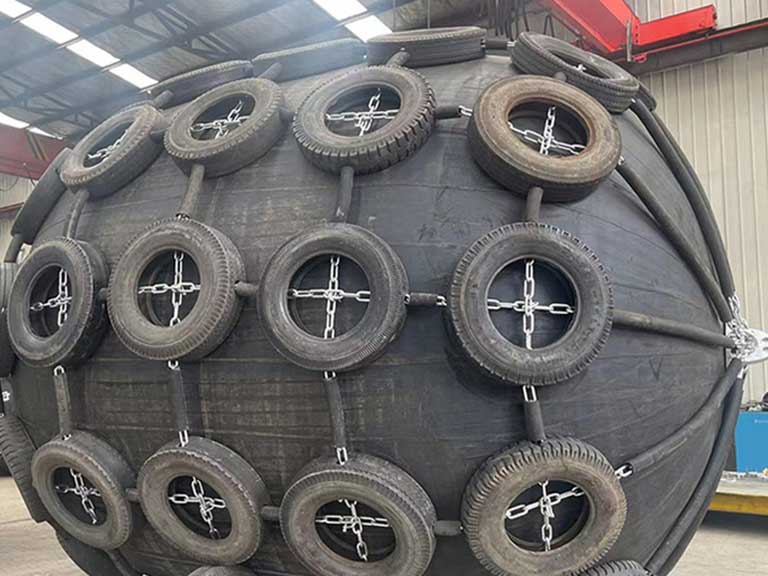
Are you making sure your pneumatic fenders are inflated right? This is key for protection when docking and mooring. Proper inflation is the key to ensuring the performance and lifespan of pneumatic fenders. It stops damage to ships and fenders during sea operations.
At Zhonghaihang Shipping Supply, we know how important it is to keep marine equipment in top shape. Our guide will show you how to inflate the fender pneumatic. This keeps them working well and lasting longer. By following our easy steps and the maker’s inflation tips, you’ll get the most out of your fenders. They’ll be safer and more valuable.
Understanding Pneumatic Fenders and Their Importance
Pneumatic fenders, also known as Yokohama fenders. They are inflatable rubber devices used in marine settings to absorb kinetic energy during ship-to-ship or ship-to-dock contacts. They function as shock absorbers, compressing air inside to cushion impacts and protect hulls from scratches, dents, or structural damage. Therefore, pneumatic fenders have many advantages, and they are able to cope with rough sea conditions.
Why Proper Air Pressure is Critical to Fender Performance
Maintaining the correct internal pressure within pneumatic fenders is critical for energy absorption and structural integrity. Under-inflation reduces compressive strength, leading to inadequate protection. And over-inflation can cause material fatigue, seam bursts, or deformation. According to ISO 17357-1:2014, standard initial pressures range from 50 kPa to 80 kPa. It depends on fender type and size, ensuring compliance with performance curves for reaction force and energy absorption.
| Fender Size | Recommended Initial Air Pressure (kPa) | Load Capacity (tons) | Notes |
|---|---|---|---|
| 1.0m x 1.5m | 50 | 10 | Suitable for small vessels; adjust for temperature variations. |
| 1.5m x 2.0m | 60 | 15 | Common for mid-sized operations; monitor for leaks. |
| 2.0m x 2.5m | 70-80 | 20 | Ideal for heavy-duty use; compliant with ISO 17357. |
Understanding the interplay between size, pressure, and capacity helps in selecting the right fender. For instance, in a case study at a busy Asian port, properly inflated fenders reduced docking incidents by 35% by maintaining optimal hull pressure distribution.

Step-by-Step Guide to Inflate Pneumatic Fenders Correctly
To get the best out of your fenders, follow our guide on how to inflate them. Inflation is key to their long life and good performance.
- Pre-Inflation Inspection for Damage: Inspect the fender thoroughly for cracks, abrasions, punctures, or valve wear. Check seams and reinforcement layers. If damage is found, do not inflate. You should repair or replace them to avoid failures during use.
- Setting Up Your Inflation Equipment: Use a compatible air compressor or pump with a pressure gauge (e.g., capable of 0-100 kPa output). Ensure adapters fit the fender’s valve type, such as standard Schrader or proprietary OCEAN valves. Secure all connections to prevent air leaks.
- The Inflation Process: Start by turning on the compressor or pump. Inflate slowly to avoid over-pressurizing the fender.
- Opening the Valve Properly: For OCEAN valves, insert a tool (e.g., a coin or specialized key) and turn counterclockwise half a turn. Do not fully remove the valve core.
- Monitoring Pressure Levels: Inflate to an initial pressure of 0.15 bar (15 kPa), where the fender should depress easily under finger pressure. Use a calibrated gauge for accuracy. In cold weather (below 0°C), pressure may drop due to air contraction, so inflate slightly higher and recheck after stabilization.
- Securing the Valve After Inflation: Turn the valve clockwise half a turn with moderate force. Apply a cap if provided to protect against debris.
- Final Safety Checks: Examine for even inflation, secure valve seating, and no hissing leaks. Test in water if possible to detect bubbles.
For advanced scenarios, like extreme weather, in high temperatures (>40°C), reduce pressure by 5-10% to account for expansion. By following these steps, you can ensure your pneumatic fenders are properly inflated. This maximizes their performance and lifespan.
Avoiding Over-Inflation Damage
Over-inflation stresses materials, potentially deforming rope holes or seams. Stop if the fender feels rigid.
| Pressure (bar) | Fender Condition | Recommended Action |
|---|---|---|
| 0.15 | Easily pressed with a finger | Optimal; stop inflation. |
| >0.15 | Too hard, minimal give | Deflate immediately to 0.15 bar. |
| <0.15 | Soft, excessive sag | Continue inflating slowly; recheck gauge. |
Conclusion
Correctly inflating your pneumatic fenders is key to their reliability and durability. At Zhonghaihang Shipping Supply, we stress the importance of proper inflation and regular maintenance. Regular checks and adjustments of inflation pressure extend the life of inflatable fenders. This ensures they protect vessels and docks effectively.
By following manufacturer guidelines and our expert advice, you can keep your fenders in top shape. Trust us for quality pneumatic fenders and expert knowledge on maintaining them at peak performance through proper inflation and care.
FAQ
What is the recommended pressure for inflating fenders?
How often should I inspect my pneumatic fenders for damage?
Can I use any air compressor or pump to inflate my fenders?
What are the consequences of under or over-inflating pneumatic fenders?
Can pneumatic fenders be used in extreme weather conditions?
How do I store my pneumatic fenders when not in use?
Talk to our team.
Share a few details about your project — vessel, port, or operation. We'll reply within 24 hours.