

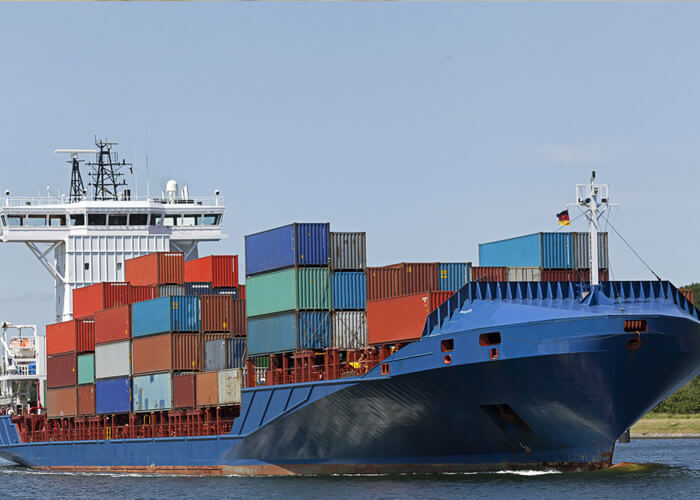
Boat fender is part of the marine equipment. It is used to prevent collisions between ships and other vessels in ports. These special devices are used to protect ships and docks from collisions. They are also called marine bumpers.
Boat fenders are an important piece of nautical marine equipment because they prevent damage to the hull. Boat fenders have changed over time. Today’s marine fenders are designed to ensure that the boat is moored accurately.
History and Evolution of Marine Fenders
Marine fenders have come a long way from simple solutions to complex engineering systems. In the early days of sailing, big ships used simple things like wood or even dead whales as temporary barriers. The change to rubber started in the middle of the 20th century, which was a big step forward in terms of durability and performance.
The Yokohama Rubber Company made the first pneumatic rubber fender in 1958. They were motivated by cylindrical shapes that could absorb more energy and by natural shapes like whales. Modern fenders are made of high-performance materials like polyurethane and closed-cell foam that exceed international standards set by groups like PIANC.
Things to Consider When Choosing Boat Fenders
During the course of a voyage, a ship must dock to load and unload people and goods. The ship is therefore usually docked alongside another ship to deliver and receive goods. There is a risk that the two ships will collide. This operation is often referred to as Ship-to-Ship Transfer (STS). If this happens, a huge amount of energy is transferred, causing damage to the ship, the port, and the goods.
Boat fenders ensure that the bow and deck do not hit other objects in the water. Before installing boat fenders, the port authorities need to ensure the following:
- The marine fenders should be made of high-performance materials that require little maintenance.
- They should be made in a way that meets all the requirements of their intended use.
- The boat fenders should be able to function properly in all weather conditions.
- Boat fenders should be durable, which means they should be made using more durable manufacturing processes.
Boat Fenders of Different Material Types
Marine fenders are categorised primarily by material, each offering unique benefits in energy absorption, durability, and application. Below is a comparison table based on industry standards:
| Material Type | Key Subtypes | Pros | Cons | Typical Energy Absorption (at 60% compression) | Applications |
|---|---|---|---|---|---|
| Rubber | Pneumatic (e.g., CTN, Sling, Low-Pressure, Hydro-Pneumatic), Super-Conical, SCK Cellular, Arch, Leg, Parallel-Movement, Sliding, Cylindrical, Extruded | High energy absorption; low reaction force; versatile for various angles; low maintenance for some (e.g., Arch) | Can deflate if punctured (pneumatic); heavier for fixed types | 50-500 kNm (varies by size; e.g., pneumatic up to 50% reduction in reaction force) | Ports, STS operations, and naval vessels; ideal for high-traffic areas |
| Foam | Sea-Guard, Sea-Cushion, Doughnut/Ring | Unsinkable; reusable even if damaged; low water absorption; floating capability | Higher initial cost; less compression in extreme loads | 100-1,000 kNm; maintains performance in rough conditions | Offshore platforms, ship-to-ship, and harsh environments like the open sea |
| Composite | Tugboat (e.g., Cylindrical, Conical, Keyhole, M-Shaped, W-Shaped) | Extremely durable; resistant to abrasion and tearing; customizable shapes | More expensive; heavier installation | 200-800 kNm; designed for high wear | Tugboats, workboats; heavy-duty pushing/towing operations |
Rubber Fenders
Rubber fenders come in a variety of styles and can therefore be used in many different situations. These rubber fenders reduce reaction forces and protect the hull from collision damage. Among them, Pneumatic rubber fenders are the most popular boat fenders on the market. These fenders have also benefited rubber companies around the world.
Over the past decade, the use of rubber on ships has driven progress and development in the rubber industry. Different companies that manufacture boat accessories produce a variety of rubber fenders. Here are some examples:
Pneumatic Fenders
These boat fenders are best suited for moving ships between ports and for other uses around the port. Pneumatic rubber fenders can be installed quickly and reliably. They protect people and goods from damage when the ship is docked. In addition, there are usually four different types of pneumatic fenders:
- Chain-tire net (CTN) pneumatic fenders
- Sling-type fenders
- Low-pressure pneumatic fenders
- Hydro-pneumatic fenders
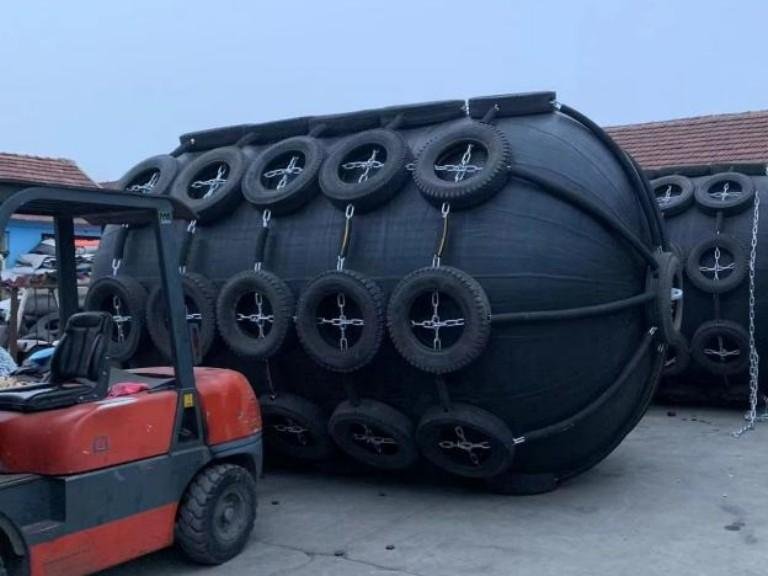
CTN pneumatic fenders have a chain connecting the tyres. These chains extend horizontally or vertically to protect the main body of the fender. Since the chains are always immersed in water, they need to be made of rust-free steel. This is the simplest and cheapest type of marine fender.
On the other hand, the sling type is similar to the chain-type pneumatic fender. The only difference is that the sling-type fender can be suspended with even bundles made of mesh steel wire rope. In addition, low-pressure pneumatic fenders absorb more kinetic energy by providing as much contact area as possible, thereby exerting minimal pressure on the hull. Liquid-filled pneumatic fenders are usually manufactured to meet the needs of fenders.
Super-conical Fenders
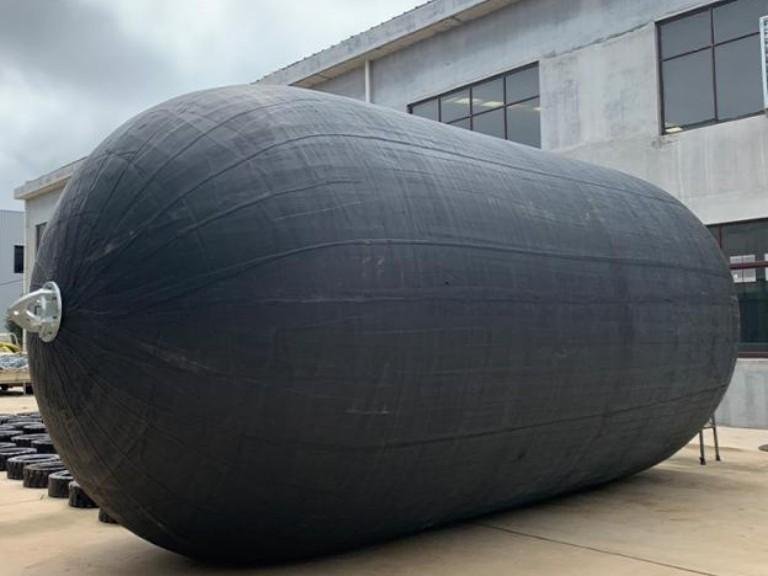
This is the latest type of rubber pneumatic fender. However, most people just call them “cone fenders”. The tapered body of the cone fender makes it stable at a higher compression angle. They are very effective and work extremely well. In addition, they can better cope with pressure and over-compression. In modern times, rubber compounds have been widely used in the maritime industry and are used to make many cone fenders.
SCK Cellular Fenders
These fenders are mainly known for being easier to assemble. They are effective and very robust. SCK cellular fenders are available in various sizes and can support very large panels. They are therefore best used in conjunction with low-level hull treatments.
Arch Fenders
Arch fenders are one of the best products in the boat equipment and fender system. This is because they require absolutely no maintenance. In addition, arch fenders can be used on small and medium-sized boats and they all work very well.
These are the perfect choice when you need a sturdy and durable boat fender system. They are the most reliable boat fender products and do a great job even in the harshest environments. They are easy to position and have excellent abrasion and shear resistance. When these boat fenders are positioned in the corners of a boat dock, they are called corner arch fenders.
Leg Fenders
These boat fenders consist of modular components and are therefore easy to install. A major advantage of leg fenders is that they require little maintenance. In most cases, leg fenders are suitable for use in places where space is limited.
Parallel-movement Fenders
If you use parallel-movement fenders instead of the usual tapered fenders, the total reaction force can be reduced by around 60%. The main difference between these boat fenders and leg fenders is that parallel-movement fenders are vertical and do not rotate. In addition, they can still protect the berth or boat at an angle of 20° without losing any energy.
Sliding Fenders
This type of marine fender is also known as a SISO fender. It has a frame at the front to which the wear pads are attached. For maintenance purposes, if a fault occurs, you do not have to replace the entire fender, just the wear pads. The wear pads usually have sliding panels, which are easily removed from the guide rods and replaced with spare panels. Maintenance and repair work on sliding fenders is therefore very easy.
Cylindrical Fenders
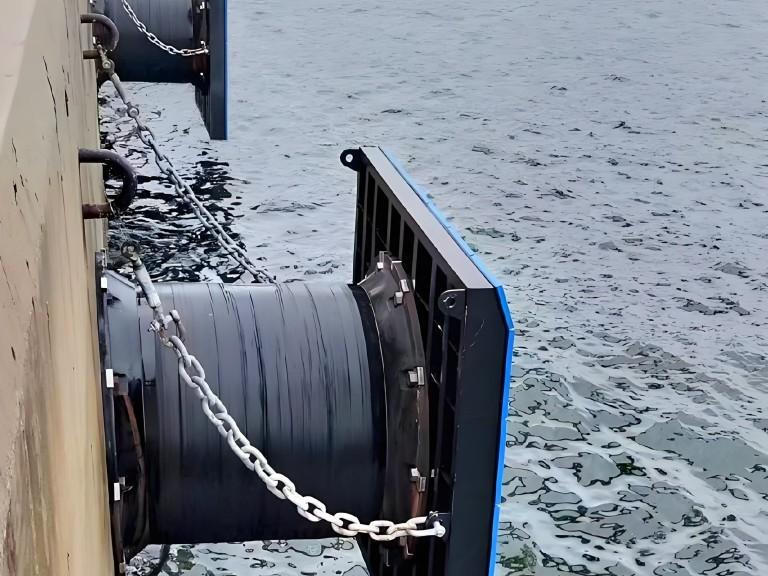
These are currently the most basic and most commonly used type of boat fender. They can be used for a wide range of boats and are not expensive to assemble. Cylindrical fenders are widely used and easy to install because they are simpler in design. These boat fenders can be used for both large and small boats.
There are currently three common sizes of cylindrical fenders: small cylindrical fenders, medium cylindrical fenders, and large cylindrical fenders. These boat fenders are inexpensive, have a thick wall, and can withstand higher loads, abrasion, and tearing.
Extruded Fenders
This boat fender is a simple design that can be bolted directly to the structure. It is very flexible and can be adapted to any length or shape.
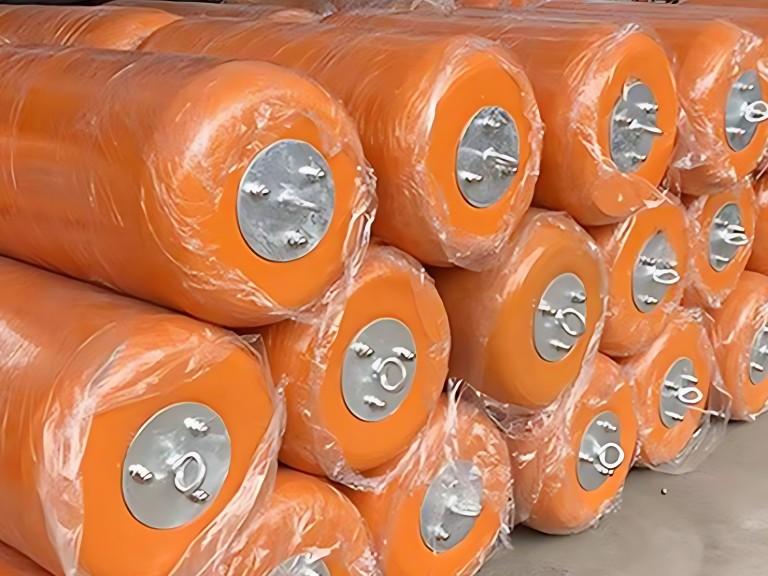
Foam Fenders
These fenders are usually constructed from a double-walled closed-cell structure. The core of the foam fender is polyethylene foam surrounded by a reinforced polyurethane elastomer. For this reason, it is also known as a polyurethane foam fender.Water finds it difficult to penetrate this marine fender. Even if the fender is damaged, it can be used again and again. There are various types of foam fender, for example the following:
Sea-Guard Fenders
These boat fenders also perform the same function when the boat is floating or raised. Sea-Guard fenders can be used on ships and in ports and are easy to maintain. They are mainly used for ship-to-ship operations and cannot be broken or damaged. Sea-Guard fenders do not sink and do not deform. Most foam fenders are manufactured according to the rules laid down by the US Navy.
Sea-cushion Fenders
These fenders are rough and sturdy. They are floating fenders that can be used in rough conditions. Sea-cushion fenders consist of a chain-link tire and a hard center, which will not sink and can act as a cushion at sea. These are the most reliable and effective foam fenders for boats and require little maintenance.
Ring Fenders
These are a unique type of boat fenders and berth fenders that can be used as a guide or turning structure. These fenders have tubular piles that can be turned to help keep the ship on course. Nylon threads are embedded in the polyurethane shell to hold it together. They are easier to see because of their bright colours. Since they are shaped fenders, they are easier to maintain.
Composite Fenders
These boat fenders can be made from any mixture of materials. This category includes all the different types of tugboat fenders:
Tugboat Fenders
These are marine fenders that are fixed to the tugboat. As these fenders are subject to the most wear and tear, they are made from the strongest materials. This makes them resistant to wear and tear from the water flow and other boats. As a result, these boat fenders are more durable and perform better.
Depending on their shape, these boat fenders can be cylindrical, conical, keyhole-shaped, M-shaped, or W-shaped. All these boat fenders look somewhat similar, with the only difference being the shape. In addition, all towing boat fenders are heavy-duty fenders, and their different designs make them useful in various situations.
Boat Fenders in Different Locations
Depending on the installation location, fenders can be divided into two types:
Boat Fenders
These are installed on boats and are used to facilitate movement between boats. Tugboat fenders belong to this category. As these fenders are used in harsher environments than dock fenders, they are made from stronger materials.
Quay Fender
This type of fender is used in docks to protect the docked ship and the quay. There are various types of fenders, such as rubber fenders and pneumatic fenders.
The main function of all fenders is to absorb high kinetic energy and reduce reaction forces. This prevents the quay or ship from being subjected to excessive impact, which could damage the cargo or injure the crew.
In Summary
Marine fenders are devices used to protect ships and their crews when docking or trading with other ships. These boat fenders absorb the impact and kinetic energy of the ship, thereby reducing the impact on the structure or hull. They are an important tool for improving ship safety. Boat fenders can be divided into different categories according to their installation location and material.
In addition, boat fenders ensure that the bow and hull do not hit other objects in the water. The sturdy materials used to make these bumpers should have a low friction coefficient and be very wear-resistant. In addition, they require little or no maintenance, have a long service life and are strong.
Zhonghaihang Shipping Supply has been dedicated to providing professional protection solutions for ships and ports. We design and manufacture a wide range of high-quality marine equipment. This includes pneumatic fenders, rubber fenders, marine airbags, and foam fenders! Zhonghaihang is known for its high-quality products at competitive prices, professional customer service, and fast delivery times.
Talk to our team.
Share a few details about your project — vessel, port, or operation. We'll reply within 24 hours.