

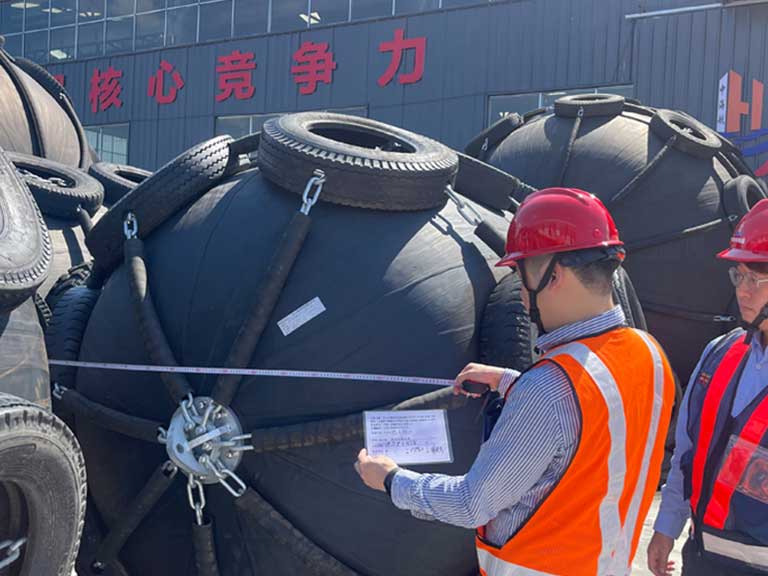
Yokohama pneumatic fenders, also called floating pneumatic rubber fenders, are vital for protecting vessels during berthing and mooring. Developed by Yokohama Rubber Co., these fenders absorb impact energy with compressed air. They are widely used for ship-to-ship transfers, docks, and offshore platforms. This guide offers practical advice based on industry standards like ISO 17357-1:2014, which covers high-pressure floating pneumatic rubber fenders.
To get the most from your fenders, you should focus on proper selection, inflation, placement, and maintenance. While this article uses the term “Yokohama-type” for designs inspired by the original, products may vary by brand. Always check your fender’s manual for specific details.
Choosing the Right Yokohama Pneumatic Fender
Selecting the right fender depends on your vessel’s size, berthing conditions, and environment. Key factors include:
- Diameter and Length: For small boats like yachts under 10 meters, choose fenders with a diameter of 0.5–1.0 meters. Larger ships might require fenders of 2.5–3.3 meters to provide adequate energy absorption.
- Pressure Rating: Standard models are rated at an initial internal pressure of 50 kPa (7.25 psi) or 80 kPa (11.6 psi), following ISO 17357. Low-pressure options exist but are less common.
- Type: A chain-and-tire net (CTN) offers durability in harsh conditions, while a sling-type is better for lighter use.
Consult a marine supplier to match fender specifications to your needs and ensure compliance with PIANC guidelines for berthing energy. This step improves safety and can reduce long-term repair costs by 20–30%.
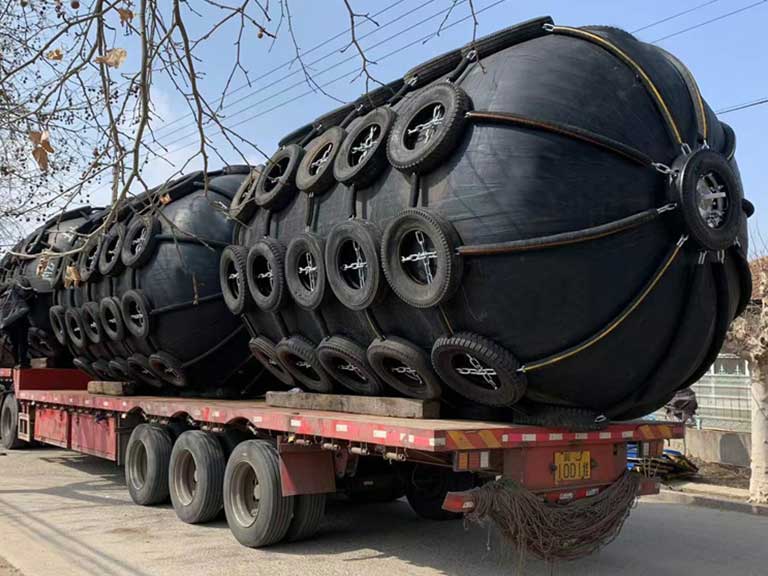
Strategic Placement and General Maintenance
Proper placement and maintenance will maximize protection and extend your fender’s life.
- Placement: Position fenders at high-contact points like the bow, stern, and midships. When docking, hang them vertically to cover at least 60% of the hull’s freeboard. Adjust for tides and currents by lowering them at low tide to prevent them from riding up.
- Inspection Schedule: Check fenders every 3–6 months for abrasion, punctures, leaks, or UV damage. Use a soapy water test to find leaks and inspect the tire net for rust or cuts. Replace damaged parts immediately to prevent failure.
- Cleaning and Protection: Rinse fenders with fresh water after use in salt water to prevent salt buildup. Apply UV-protectant coatings each year to extend rubber life, as sunlight and ozone can cause cracking.
- Storage: When not in use, deflate fenders to 20–30% pressure. Store them in a cool, dry place away from direct sunlight and avoid stacking them to prevent warping.
Regular maintenance can extend fender life from 5–10 years to over 15 years, offering significant value.
Proper Fender Air Pressure
Keeping the right air pressure is critical for performance and safety. Over- or under-inflation can reduce energy absorption or cause the fender to burst.
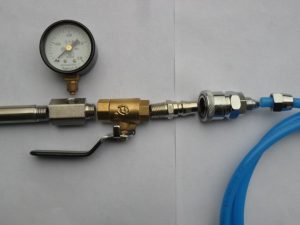
- Recommended Pressure: For standard fenders, inflate Pneumatic 50 models to an initial pressure of 50 kPa (7.25 psi) and Pneumatic 80 models to 80 kPa (11.6 psi). Always use a calibrated pressure gauge for accuracy; pressing with your finger is not reliable.
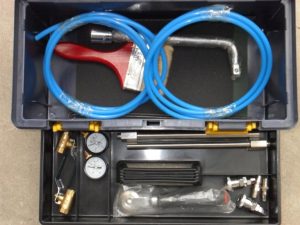
- Inflation Tools: Use an air compressor with a tapered nozzle or a bicycle pump with a suitable adapter. Avoid needle-type pumps, which can damage the valve. Larger fenders may have a globe valve for easier filling.
- Safety Note: Fenders 2.5 meters and larger often include a safety valve set to release at 175–230 kPa to prevent over-compression. Do not exceed the manufacturer’s limits.
Check the pressure before each use, as air expands in heat and can affect performance.
Deflating the Fenders
When you need to bleed air out of your Yokohama fender, simply push the pen gently into the valve. To replace a valve that is leaking air due to dirt or other reasons, you can replace the valve by screwing in the bolt M3 and then pulling it out with pliers. After checking, you can push the valve back into the fender by hand or with a pen.
Replacing the Valve
Place the bolt with 3 mm metric threads into the broken valve and turn it at least three times. Grasp the end of the bolt with pliers or a ram’s hammer and pull it out of the fender. Then insert the new valve and push it into place with your fingers. Then, use a Phillips screwdriver of the same size to push it in until it stops. Finally, you’re ready to inflate your Yokohama fender.
Preparing for Docking
Have your Yokohama fender ready by the dock for when you get close to the dock. If there are stronger winds or currents, or if the marina is crowded. Then it is very important to have your Yokohama pneumatic fender ready.
To maximize the protection of your boat, tie a dock line to a dockside post a few inches above the water. This way, the fender will go over your fenders about halfway.
After tying the rope and docking, make sure the fender is still centered between the hull and the dock. Slide the dock rope down one end of the fender and begin tying a figure-8 knot in the fender attachment rope to secure the fender in place. This is the final loop. Finally, turn the cable under itself and pull it tight to lock it in place.
Leaving the Dock
The Yokohama fender should remain in place until the dock cable is released and your boat is clear of the dock and other boats. Then, remember to remove the fender and stow it properly before moving forward. Not only is tying the fender on while traveling useless, it can also fall into the water.
Make sure to place the Yokohama fender in the same location each time while attaching the dock cable. That way, the next time you return to the dock, they will be ready to use.

Why Choose Zhonghaihang Shipping Supply?
Zhonghaihang has rich experience in ship design. We can provide you with different types of pneumatic fenders. Zhonghaihang Shipping Supply integrates the research and development, production, sales, and service of anti-collision products. We have a skilled technical team that can provide customers with the help they need. With the quality and reliability of its products as well as excellent customer service, Zhonghaihang has been well-received by our customers and recognized by the industry.
- Expertise: We started in 2015 and specialize in the production and sale of fenders, airbags, and other marine tools.
- Global Reach: With a 20,000 square meter factory and products exported to more than 80 countries and regions, we enjoy a strong reputation worldwide.
- Quality Certificates: We have certificates such as ISO9001, CCS, and BV, as well as several patented products.
Frequently Asked Questions
What is the standard initial internal pressure for Yokohama-type pneumatic fenders?
How can I tell if the fender is properly inflated?
What are the most common causes of fender damage?
Talk to our team.
Share a few details about your project — vessel, port, or operation. We'll reply within 24 hours.